Damping Off: When Seedlings Collapse at Soil Level
2026-06-07
You come to the windowsill in the morning to find several seedlings lying flat — the stem has gone dark, pinched thin, and rotted right at the soil line. This is damping off, one of the most disheartening problems in seed-starting. The good news: if you act quickly, the healthy plants around them can still be saved.
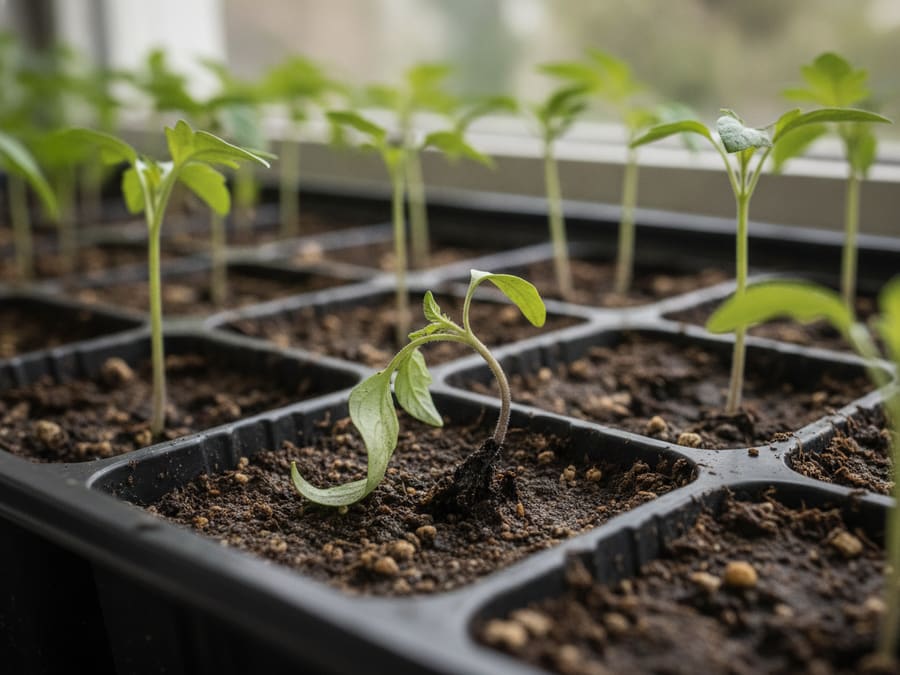
You come to the windowsill in the morning to find several seedlings lying flat — the stem has gone dark, pinched thin, and rotted right at the soil line. This is damping off, one of the most disheartening problems in seed-starting. The good news: if you act quickly, the healthy plants around them can still be saved.
What causes damping off
Damping off is caused by soil-borne fungi — most commonly Pythium, Rhizoctonia, and Fusarium. They thrive when wet conditions, overcrowded seedlings, and cold soil (below 16 °С) occur together. Other risk factors include poor drainage, watering with cold tap water, stuffy air with no ventilation, and reusing old potting mix that was never sterilised.
Emergency action: save the healthy seedlings
The moment you spot affected plants, remove them immediately along with the surrounding soil. Water the remaining seedlings at the base — not the leaves — with a copper-based fungicide solution (such as copper oxychloride or a Bacillus-based product like Fitosporin: 1 tablespoon per 10 litres of water). Stop watering for 3–5 days, then dust the soil surface with a thin layer (1–2 cm) of calcined river sand to dry out the stem collar.
Temperature, light, and airflow
Move the tray to a warmer, brighter spot: the soil temperature should reach 18–22 °С. Crack a window for 15–20 minutes each day (avoiding direct draught) to bring humidity down. If seedlings are crowded, thin them so neighbours are at least 3–4 cm apart — the fungus jumps from plant to plant on contact, so spacing matters enormously.
Watering correctly
Overwatering is the single most common trigger for damping off. Only water when the top 0.5–1 cm of soil is visibly dry to the touch. Use room-temperature water that has been allowed to sit (20–25 °С), and always direct it to the base of the plant, never over the leaves. After each watering session, ventilate the room straight away.
Prevention: soil and containers
Before sowing, sterilise your potting mix by drenching it with boiling water or a potassium permanganate solution (3 g per 10 litres), then let it cool completely before use. Even bagged commercial peat mix is not sterile — stir in a biological fungicide at mixing time. Wash trays and pots with baking soda and scald with boiling water; plastic cell trays from last season should be soaked in a bleach solution (1 part bleach to 10 parts water) for 30 minutes, then rinsed thoroughly.
Damping off is a disease of dampness and cold — address those two conditions and your seedlings will bounce back. A little warmth, drier air, and careful watering will carry your seedlings through to healthy, sturdy transplants.