Crop Rotation: What to Plant After What
2026-06-11
Planting tomatoes in the same spot year after year is a reliable recipe for a weak harvest and a host of diseases. Crop rotation is a simple tool that lets the soil recover and prevents the build-up of pathogens and pests. All you need to do is divide the garden into 3–4 sections and follow a straightforward rotation scheme.
Planting tomatoes in the same spot year after year is a reliable recipe for a weak harvest and a host of diseases. Crop rotation is a simple tool that lets the soil recover and prevents the build-up of pathogens and pests. All you need to do is divide the garden into 3–4 sections and follow a straightforward rotation scheme.
Why Rotate Crops
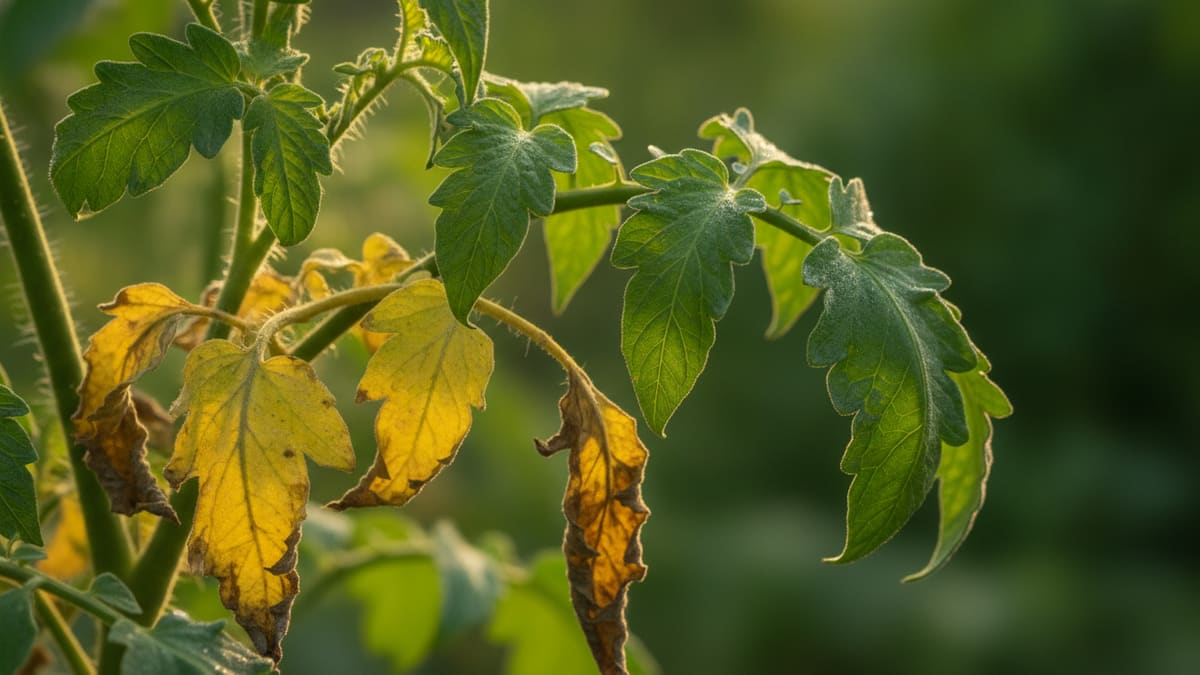
The same crop in the same spot steadily depletes specific nutrients and builds a reservoir of disease in the soil. Tomato blight, clubroot in brassicas, carrot nematodes — all overwinter in the ground and grow more dangerous each year. Rotating crops breaks the cycle: pathogens die off without their usual host within 2–4 years. As a bonus, legumes fix up to 30–40 kg of nitrogen per 100 m², giving the following crop a natural fertility boost.
The Main Plant Groups
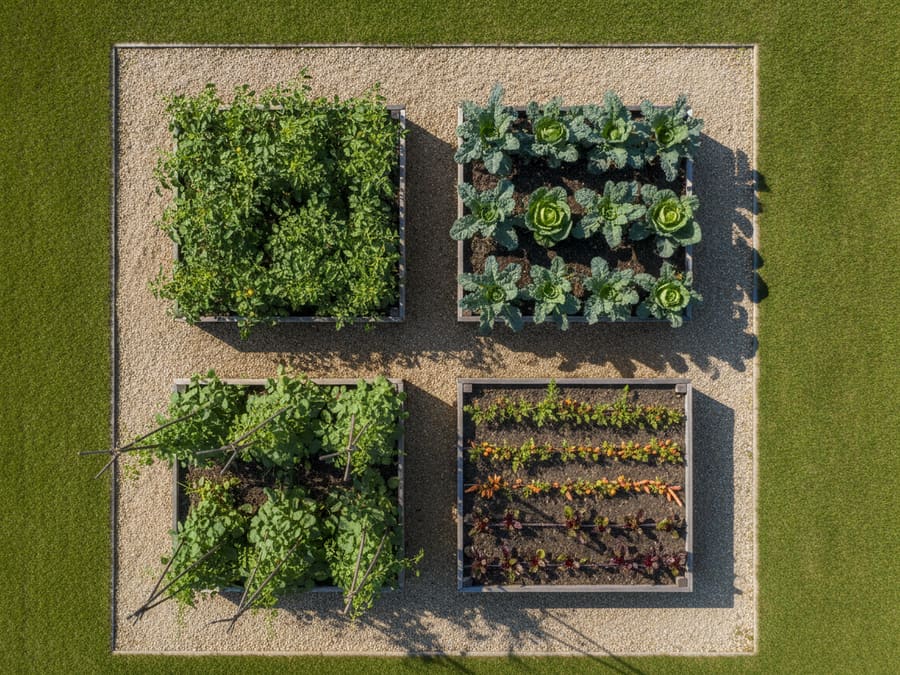
Divide all your vegetable crops into 4 groups by plant family and nutritional needs. Solanums (tomato, pepper, aubergine, potato) — the most demanding on nutrition and disease, never return to the same spot sooner than 4 years. Cucurbits (cucumber, courgette, squash, melon) — love organically rich soil, occupy a bed for 1–2 years. Legumes (peas, beans, broad beans) — improve the soil and grow well on lean ground. Brassicas (cabbage, radish, turnip, kohlrabi) and root vegetables (carrot, beetroot, parsley root) are usually grouped together or alternated with each other.
A 4-Year Rotation Scheme
Divide your garden into 4 equal plots. Plot A: year 1 — solanums, year 2 — legumes, year 3 — brassicas and roots, year 4 — cucurbits, then the cycle repeats. This scheme ensures that no plant family returns to its previous spot sooner than 3–4 years. Before planting cucurbits and solanums, add 5–8 kg of well-rotted compost per m²; before legumes, add only wood ash (20–30 g per m²) and skip nitrogen fertilisers entirely.
Good and Bad Rotation Neighbours
After solanums, plant legumes or cucurbits — they draw on different nutrients and are unaffected by residual pathogens. Tomatoes and cucumbers do well after brassicas: clubroot does not attack them. Avoid planting potatoes after tomatoes and vice versa — same family, shared diseases (blight, Rhizoctonia). Carrots are best kept away from the same spot for at least 3 years because carrot fly larvae accumulate in the soil.
If Your Garden Is Small
On a small plot of 60–80 m² it can be hard to carve out 4 full sections. In that case a three-year rotation is enough: combine brassicas and root vegetables into one group. Even shifting a bed by 1–1.5 m already reduces the disease load significantly. Herbs and salad greens (dill, lettuce, basil) can be sown anywhere — they do not accumulate specific diseases and act as handy fillers in the scheme.
Crop rotation requires no complicated maths — just keep a note of what grew where last year and move the groups around the circle. Within 2–3 seasons you will notice fewer disease problems and a steadier, more reliable harvest.