Seasonal Feeding: What to Apply and When
2026-06-15
Plants have different nutritional needs at different stages of growth: in spring they need nitrogen to build leafy mass, while during fruiting they demand phosphorus and potassium. Understanding the logic of seasonal feeding means better harvests with less guesswork and no risk of overfeeding your beds. Here is a practical schedule, the warning signs to watch for, and a clear comparison of organic versus mineral fertilizers.
Plants have different nutritional needs at different stages of growth: in spring they need nitrogen to build leafy mass, while during fruiting they demand phosphorus and potassium. Understanding the logic of seasonal feeding means better harvests with less guesswork and no risk of overfeeding your beds. Here is a practical schedule, the warning signs to watch for, and a clear comparison of organic versus mineral fertilizers.
Nitrogen in spring: kick-start growth
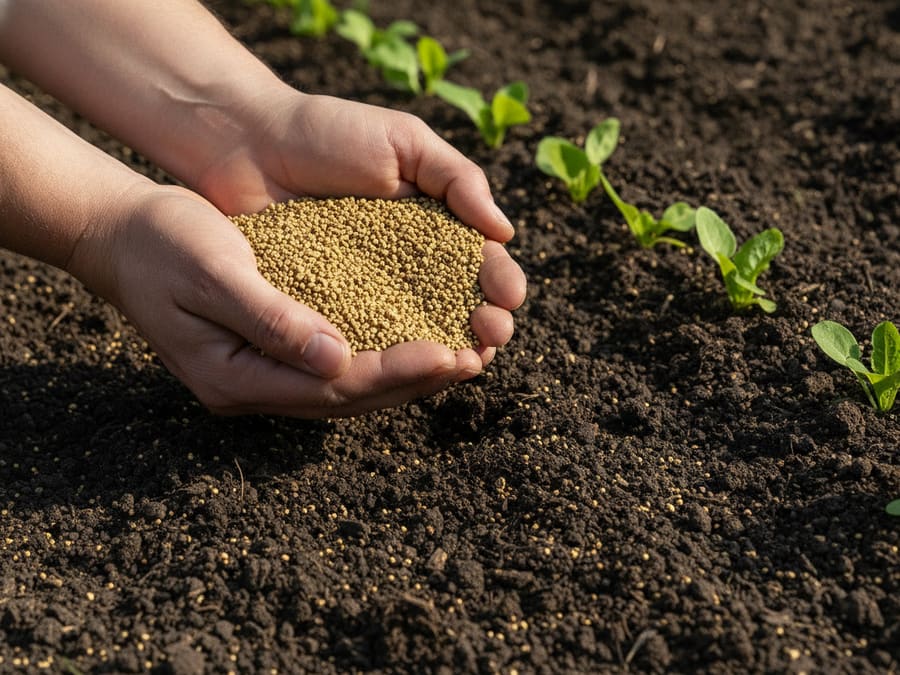
Once soil temperature reliably exceeds 8–10 °С, apply nitrogen fertilizers: urea at 15–20 g/m², ammonium nitrate at 10–15 g/m², or a diluted manure solution of 1:10 (1 liter per plant). Nitrogen drives vigorous shoot and leaf development — in April and May this is critical for tomatoes, peppers, and cabbage. Don't delay too long: nitrogen applied after June tends to push leafy growth at the expense of fruit.
Phosphorus and potassium: feeding for harvest
During fruit set and active fruiting (June–August), switch to phosphorus-potassium nutrition: superphosphate at 30–40 g/m² plus potassium sulfate at 20–25 g/m², or monopotassium phosphate in irrigation water (10–15 g per 10 l). Phosphorus strengthens roots and speeds ripening; potassium improves sweetness and shelf life while reducing disease susceptibility. For tomatoes, cucumbers, and peppers these are the season's most important feeds — apply every 10–14 days.
Organic versus mineral fertilizers
Organic matter (well-rotted manure, compost, herbal teas) releases nutrients slowly, improves soil structure, and supports beneficial microlife — apply it in autumn before digging (3–5 kg/m²) or as a mulch layer 5–7 cm deep. Mineral fertilizers act quickly and precisely: they are essential for correcting an acute deficiency or supporting plants during peak growth. The best approach is to combine both: organics in autumn, a mineral starter in spring, and targeted top-ups through summer as needed. On acidic soils, add 200–300 g/m² of dolomite lime alongside your autumn organics.
Root drenches versus foliar sprays
Root feeding goes into a shallow trench 6–8 cm from the stem or is dissolved into irrigation water — nutrients reach the root zone directly. Foliar feeding (spraying leaves) — urea at 5 g per 10 l, or chelated iron for yellowing — acts fast, within 2–4 days, but is not a substitute for soil nutrition. Spray in the morning or evening to avoid leaf scorch when temperatures exceed 25 °С. For magnesium deficiency (interveinal chlorosis), magnesium sulfate at 15 g per 10 l applied to leaves every two weeks works well.
Signs of overfeeding: knowing when to stop
Too much nitrogen shows as dark, lush foliage, poor flowering, and small watery fruit — the plant is putting energy into leaves rather than crops. Excess potassium blocks calcium and magnesium uptake: leaf tips turn brown and edges curl. If you suspect overfeeding, stop all fertilizing for 3–4 weeks and flush the bed twice with clean water at 10–15 l/m² to leach out the excess. The best prevention is measuring soil pH before the season (optimum 6.0–6.8): at the wrong pH, nutrients simply cannot be absorbed no matter how much you add.
The right feeding rhythm — nitrogen in spring, phosphorus and potassium in summer, organics in autumn — is simpler than it sounds and delivers noticeable results from your very first season. Watch your plants closely: they will always tell you what they need.