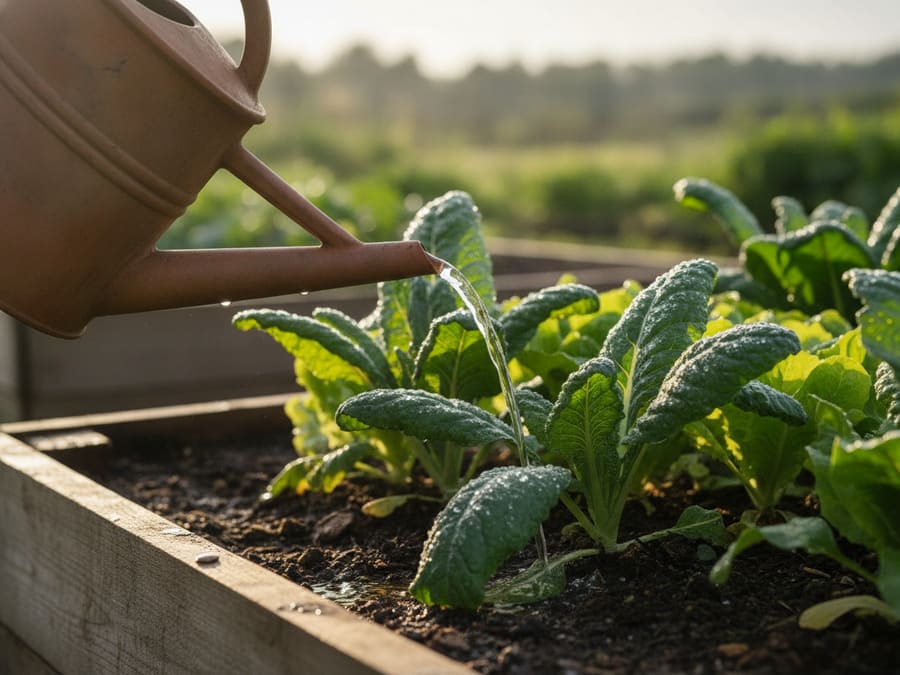
Getting Your Garden Ready for Winter
2026-07-11
October is the last month your garden will absorb your care and store energy for spring. Do it right now and the new season will open free of disease, frost-killed roots, and gnawed bark. Six steps — and your garden will head into winter well protected.
October is the last month your garden will absorb your care and store energy for spring. Do it right now and the new season will open free of disease, frost-killed roots, and gnawed bark. Six steps — and your garden will head into winter well protected.
Clear Plant Debris
Rake up leaves, spent stems, and fallen fruit as soon as night temperatures hold steadily below +5 °С. Late blight, grey mould, and scab spores all overwinter in plant debris — a layer of fallen leaves left behind guarantees a disease flare-up come spring. Healthy stems (no spots, no rot) can go on the compost heap; diseased material must be burned or removed from the site. Lightly fork the soil around tree trunks to a depth of 10–15 cm, staying at least 20 cm from the trunk, to break up overwintering pest cocoons.
Sanitary Pruning
Remove all dead, broken, and visibly diseased branches back to healthy wood — cut flush to the collar, leaving no stubs. Seal cuts wider than 1.5 cm with grafting wax or linseed-oil paint. Cut roses back to 30–40 cm; detach climbing roses from their supports, bundle the canes and lay them on spruce boughs. Disinfect cutting tools between plants with a chloramine solution or 70 % rubbing alcohol.
Deep Water-Charging Irrigation
Carry this out after leaf fall is complete but before the ground freezes — typically late October to early November. The target volume is 60–90 litres per mature fruit tree, 30–40 litres for a young tree (under 3 years old), and 20–30 litres per shrub. Soil saturated with moisture freezes more slowly and shields roots at temperatures down to −25 °С. Mulch the root zone immediately after watering.
Mulching Root Zones
Spread an 8–12 cm layer of mulch — well-rotted sawdust, peat, compost, or shredded bark all work. Mulch buffers root-zone temperature swings and prevents the soil from freezing solid in snowless cold spells down to −15 °С. Leave a 5–7 cm gap around the trunk to avoid bark rot. In spring, remove the mulch gradually as the soil warms.
Covering Frost-Sensitive Plants
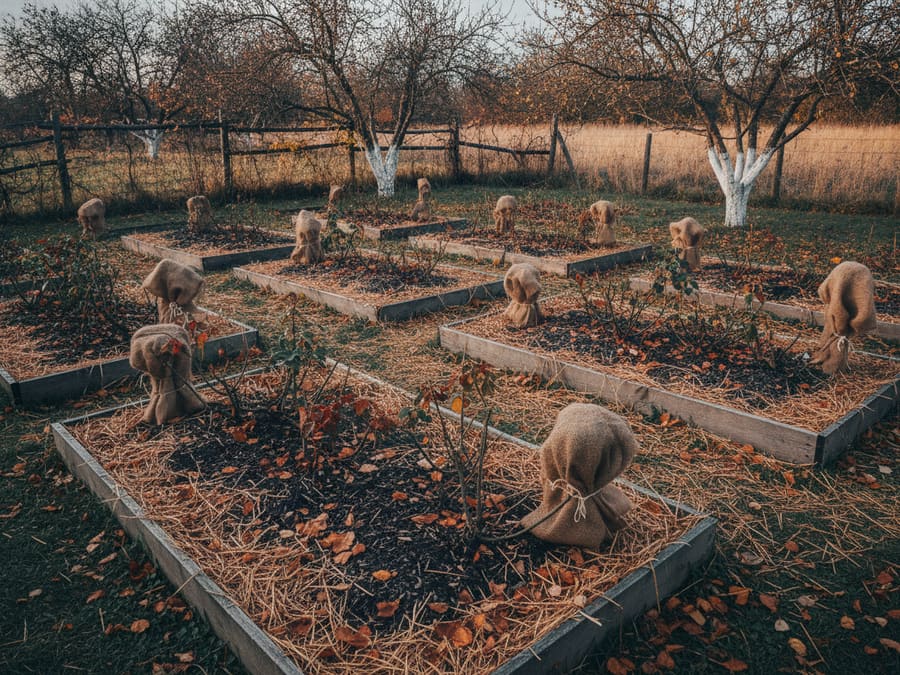
Cover panicle hydrangeas when temperatures drop to −7 °С or below: bend the stems down, pin them with hoops, and drape two layers of frost fleece (60 g/m²) over the top. Take grapevines off their wires after the first light frosts (−3…−5 °С), bundle the canes, and cover with spruce boughs plus perforated plastic sheeting. Protect roses with the air-dry method: heap 20–25 cm of dry leaves around the crown, then place a wooden box or wire-mesh frame on top and finish with plastic. Don't rush — wrapping plants too early during warm nights causes rotting faster than any freeze.
Rodent Protection
Mice and hares damage bark in January–February when other food runs out. Wrap the trunk and the base of scaffold branches with burlap, metal mesh with 1 cm openings, or a dense frost-fleece strip up to a height of 60–80 cm. Set out poisoned bait in tamper-proof bait stations at the base of trees and along the fence line before the first snow falls. Remove the wrapping in March once overnight temperatures stop dropping below freezing.
The garden doesn't forgive autumn rush jobs, but it rewards careful preparation generously come spring. Six hours of work in October, and your trees, shrubs, and roses will face the frost fully prepared.