Hardening Off Seedlings Before Transplanting
2026-06-21
Seedlings raised indoors live a sheltered life — steady warmth, gentle diffused light, no wind whatsoever. Planting them straight into the garden is a shock that can set them back for a week or more. A 10–14 day hardening-off period gradually acclimates them to outdoor conditions so they hit the ground running after transplant.
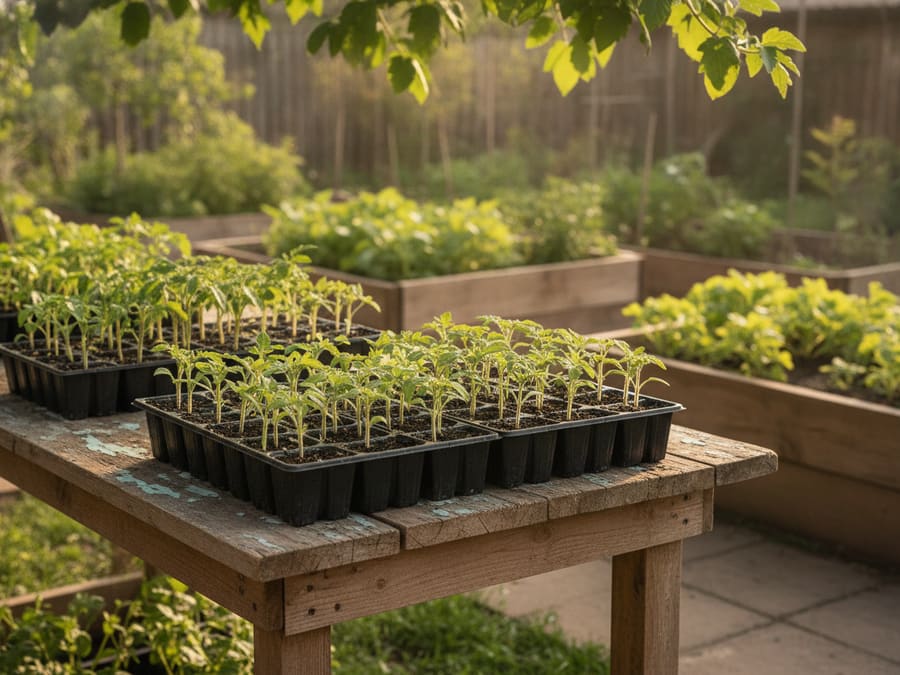
Seedlings raised indoors live a sheltered life — steady warmth, gentle diffused light, no wind whatsoever. Planting them straight into the garden is a shock that can set them back for a week or more. A 10–14 day hardening-off period gradually acclimates them to outdoor conditions so they hit the ground running after transplant.
First outings: fresh air only
Start 12–14 days before your planned transplant date. For the first 2–3 days, take seedlings to a sheltered, wind-protected spot when temperatures are at least +10 °C — just 1–2 hours around midday. Keep them in partial shade for now; direct sun can wait. The goal at this stage is simply to introduce plants to moving air and mild temperature swings.
Introduce sunlight gradually
From days 4–5, give seedlings 30–40 minutes of gentle morning sun (before 10:00 a.m.), then move them back to shade. Add another 30–40 minutes of sun exposure each day. By days 8–9, plants should comfortably handle 3–4 hours of direct sun without bleaching or scorch. Pale white or brown patches on leaves mean you've moved too fast — step back a day and slow down.
Getting used to cool nights
From days 6–7, if nights stay above +8 °C, start leaving seedlings outside through the afternoon, then eventually overnight. Heat-loving crops — tomatoes, peppers, eggplants, cucumbers — cannot tolerate temperatures below +8…+10 °C. Cabbage, celery, and onion seedlings can handle brief dips to +3…+5 °C. Keep a close eye on the forecast and have row cover fabric (17–30 g/m²) ready to hand.
A two-week hardening schedule
Days 1–3: partial shade, 1–2 hours, above +10 °C. Days 4–5: diffused morning sun, 2–3 hours. Days 6–8: morning sun plus mild afternoon light, 4–5 hours. Days 9–11: full daylight hours; bring indoors only if frost threatens. Days 12–14: seedlings stay outside around the clock (only if nights are reliably mild). Reduce watering by 20–30 % during this period — a slight moisture stress thickens cell walls and toughens the plants.
Protecting against late frosts
Late spring frosts can strike through the end of May across much of temperate Europe and Russia, and into early June in Siberia and northern Kazakhstan. If sub-zero temperatures are forecast, bring tender seedlings indoors or cover them with a double layer of row cover fabric. Avoid leaving pots directly on a cold concrete balcony floor — roots chill much faster than the foliage above: slip a wooden board or a few layers of newspaper underneath.
Two weeks of patient hardening and your seedlings will enter the garden tough, thick-leaved, and ready to grow. Plants like these settle in within 3–5 days instead of the usual two weeks of sulking.