Aphids: sticky leaves and ants — how to stop the infestation
2026-06-05
Aphids are among the most common garden pests: tiny insects that form dense colonies on shoot tips and leaf undersides, draining plant sap and leaving behind a sticky residue called honeydew. If you spot curled leaves, a glistening coating on foliage, or a purposeful line of ants heading for a plant — it is time to act. The earlier you step in, the easier it is to solve the problem without reaching for chemicals.
Aphids are among the most common garden pests: tiny insects that form dense colonies on shoot tips and leaf undersides, draining plant sap and leaving behind a sticky residue called honeydew. If you spot curled leaves, a glistening coating on foliage, or a purposeful line of ants heading for a plant — it is time to act. The earlier you step in, the easier it is to solve the problem without reaching for chemicals.
Identifying aphids
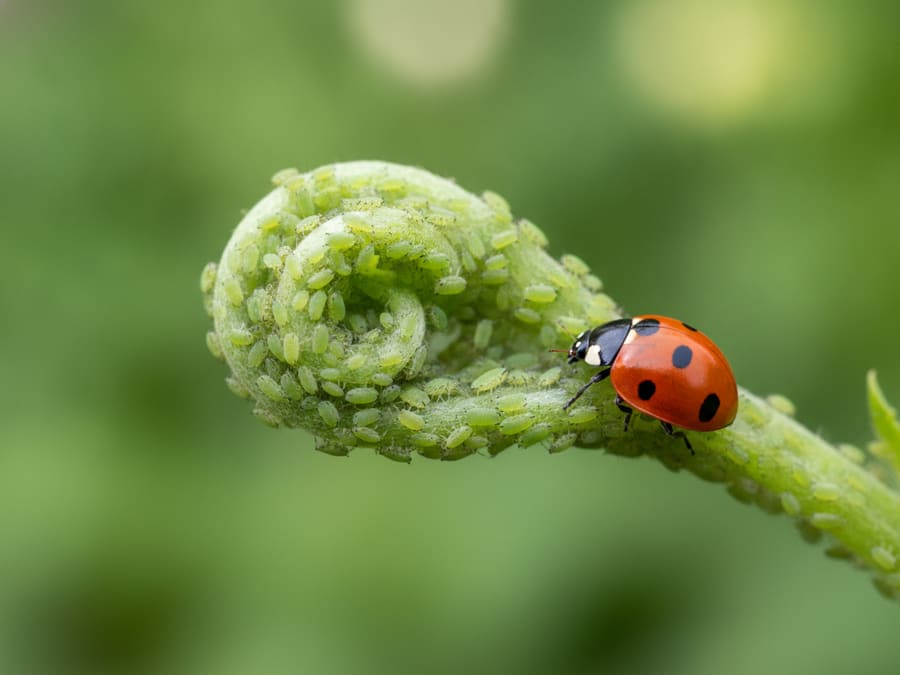
Aphids are soft-bodied insects 1–3 mm long, green, black or grey depending on species. Colonies first hide on the tips of young shoots and on the undersides of leaves, so always inspect plants from below. Telltale signs include sticky, shiny leaves (honeydew) and twisted, distorted growing tips. Ants clustering around a plant are an almost certain giveaway — they 'herd' aphids for the honeydew and actively defend them against predators.
Biological allies
A single adult ladybird can eat 50–100 aphids per day, and its larva even more. Avoid chasing these insects away from your beds, and hold off on insecticides unless absolutely necessary — they will wipe out beneficial predators along with the pests. Planting dill, coriander and fennel near your crops in flower attracts and retains lacewings, parasitic wasps and hoverflies, all valuable allies in aphid control.
Soap spray and homemade treatments
The simplest recipe: dissolve 1–2 tablespoons of unscented dish soap or pure soap flakes in 1 litre of water. Spray every leaf surface thoroughly, paying special attention to the undersides. Repeat every 3–5 days for 3–4 consecutive rounds. For extra punch, add 1–2 crushed garlic cloves or half a teaspoon of chilli powder, steep for 24 hours, strain and mix into the soapy water. Treat in the morning or evening — at +25 °C and above, soap solution can scorch foliage.
Dealing with the ants
As long as ants guard an aphid colony, full control is difficult. Wrap a sticky-tape barrier or a 5–7 cm band of petroleum jelly around the trunk or main stem of the affected plant. Sprinkle wood ash, ground cinnamon or mustard powder along ant trails — they dislike strong scents. Disturb nearby ant nests and pour boiling water over them (2–3 litres for a small nest).
Season-long prevention
Aphids favour soft, over-fertilised growth — go easy on high-nitrogen feeds in midsummer. In autumn, clear away plant debris and lightly fork the soil under shrubs, where aphid eggs overwinter. Border your beds with lavender, mint, marigolds or garlic — their scent deters aphids from settling. Check plants every 5–7 days throughout the season: spotting the first 10–20 insects early means you can simply blast them off with a jet of water.
Aphids yield to persistence: two or three soap sprays, a sticky barrier to block the ants, and a few flowering dill plants nearby — and your garden will be back on track. Your natural allies will take care of the rest.