How to Water Your Vegetable Garden the Right Way
2026-07-09
Watering is one of those tasks where more is definitely not better. Wrong timing and technique lead to disease, shallow root systems, and poor harvests. Here is when, how much, and how to water so your plants get exactly what they need — nothing more, nothing less.
Watering is one of those tasks where more is definitely not better. Wrong timing and technique lead to disease, shallow root systems, and poor harvests. Here is when, how much, and how to water so your plants get exactly what they need — nothing more, nothing less.
When to water: morning or evening
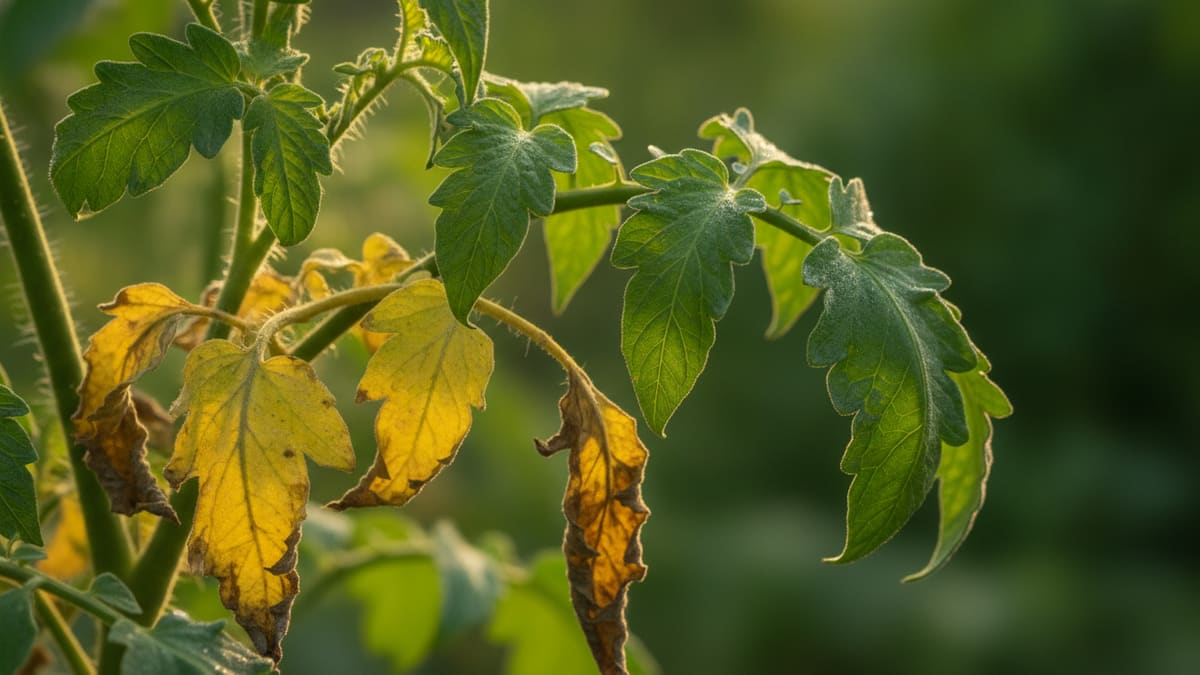
Early morning, between 6 and 9 a.m., is the ideal window. The soil soaks up moisture before the sun starts evaporating it, and foliage dries out by nightfall, greatly reducing the risk of fungal disease. Evening watering after 6 p.m. is fine once the heat breaks, but direct it at the base only — wet leaves overnight are an open invitation to blight and powdery mildew. Avoid watering during the heat of the day (11 a.m. to 4 p.m.): up to 40% of the water evaporates on contact, and droplets on leaves can act as magnifying glasses and scorch the tissue.
How much water: less often, but deeply
Frequent shallow watering trains roots to stay near the surface, leaving plants vulnerable to even brief dry spells. The rule is simple: water less often but deeply — the soil should be moist to 20–30 cm depth. For most vegetables that means 10–20 litres per m² per session, 2–3 times a week in hot weather and once a week during cool spells. The easiest moisture test: push your finger or a wooden skewer 5 cm into the soil — if it comes out dry, it is time to water.
Technique: at the base, never overhead
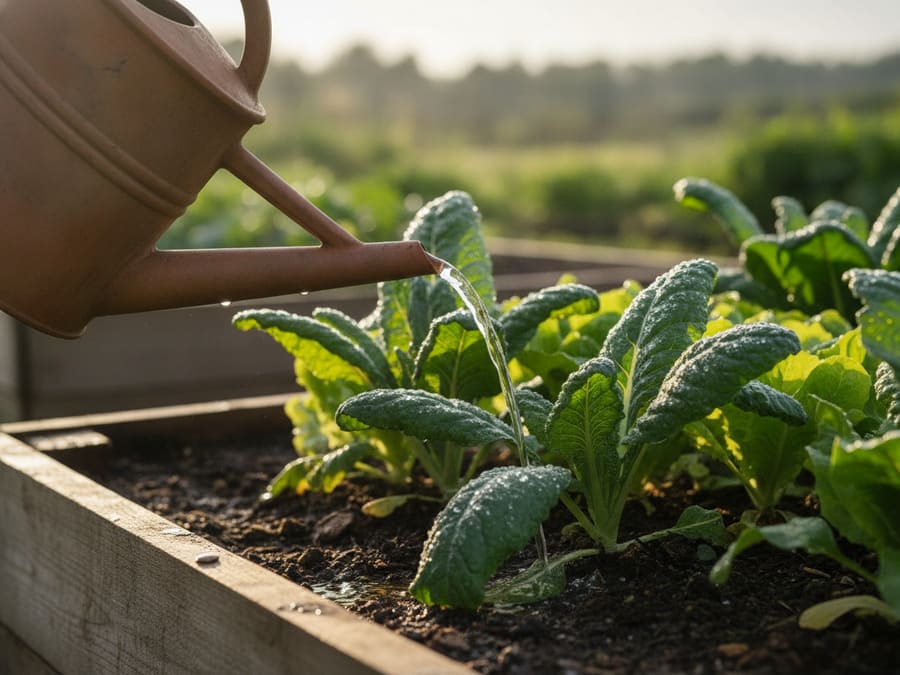
Deliver water directly to the root zone, not over the top of the plant. Use a watering can with a long spout or a hose with a downward-pointing nozzle. For tomatoes, peppers, and cucumbers, create a shallow ring in the soil around the stem and fill it with water — this keeps moisture off the foliage and trunk entirely. Water temperature matters too: cold water straight from a well or borehole (below 12–14 °С) stresses warm-season crops; let it warm up in a barrel in the sun to 18–22 °С before using.
Watering needs by crop
Tomatoes need steady, moderate moisture — swinging from dry to drenched causes fruit to split; aim for 4–5 litres per plant every 3–4 days. Cucumbers are thirstier — 8–10 litres per m² every other day, especially once they start fruiting. Carrots and beets benefit from infrequent but deep watering (every 5–7 days at 15–20 litres per m²) so roots are driven downward rather than sideways. Zucchini and winter squash should be watered deeply at the base once every 5–7 days — about 10–15 litres per plant.
Mulch and drip irrigation: cut your water use in half
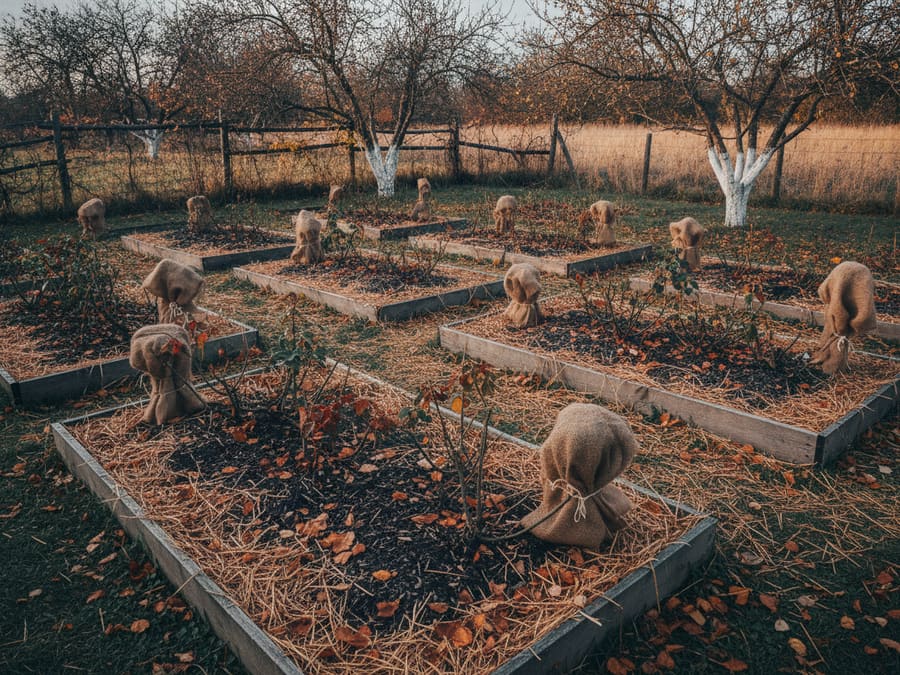
A 5–8 cm layer of straw, grass clippings, or compost mulch cuts evaporation by roughly half and keeps soil moisture stable for 3–5 days longer between waterings. Drip irrigation takes it further: water is delivered slowly right to the roots, reducing consumption by 30–50% compared to overhead sprinklers while keeping foliage completely dry. A simple drip system using a soaker hose and a basic timer is inexpensive and pays for itself within a single growing season.
Common mistakes and how to avoid them
The most frequent errors: watering a little every single day (promotes shallow roots and encourages fungal problems), spraying foliage at noon (scorching and disease), using ice-cold tap water, and neglecting to water after transplanting seedlings — for the first 5–7 days young plants need watering every 1–2 days until they establish. Another trap is judging soil moisture by surface appearance alone: the top inch can look bone-dry while 10 cm down the soil is still perfectly moist.
Get your watering routine right once, and your plants will reward you with deep roots, vibrant foliage, and a generous harvest season after season.