Leaf Spots: Fungus, Bacteria, Sunscald, or Nutrient Deficiency?
2026-06-25
Leaf spots are one of the most common worries for home gardeners, but the causes can be completely different. Fungal disease, bacterial infection, sunscald, and nutrient starvation all look similar at first glance but call for opposite remedies. Learn to read the "signature" of a spot and you can nail the right diagnosis in minutes.
Leaf spots are one of the most common worries for home gardeners, but the causes can be completely different. Fungal disease, bacterial infection, sunscald, and nutrient starvation all look similar at first glance but call for opposite remedies. Learn to read the "signature" of a spot and you can nail the right diagnosis in minutes.
Fungal spots
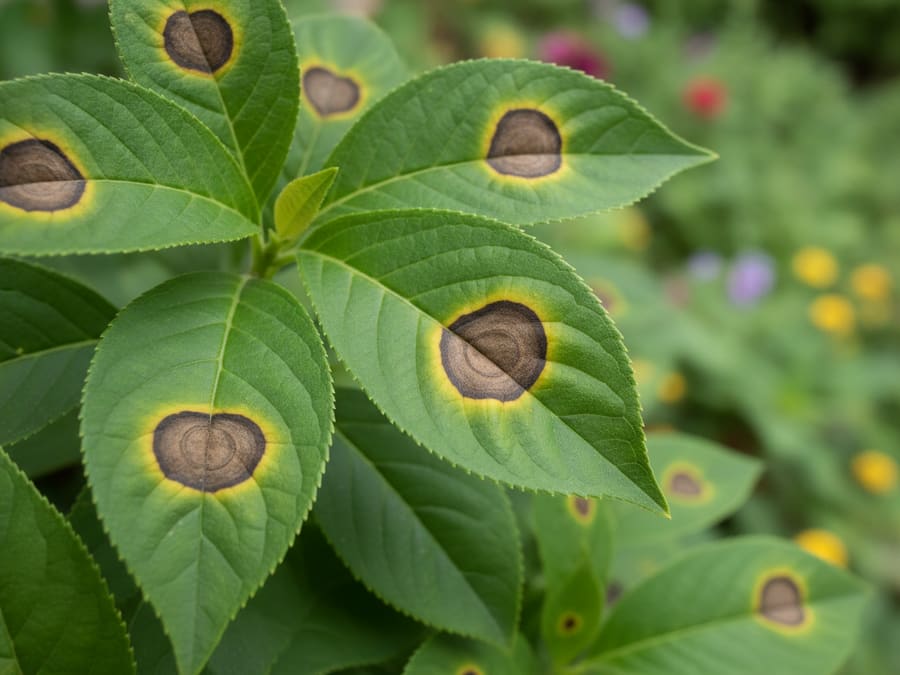
Fungi leave sharply defined round or angular spots with a dark border and often a pale or grayish center. Key tells: concentric rings (like a target), a velvety or powdery coating on the surface, and gradual expansion from 2–3 mm to 1–2 cm over 5–7 days. Treatment: apply a fungicide — Bordeaux mixture 1%, Skor/Score (0.2 ml/l), or other copper-based products. Spray when temperatures are above 10 °C and no rain is expected for at least 4–6 hours. Remove and destroy leaves where spots cover more than 30% of the leaf area.
Bacterial spots
Bacterial leaf spot is easy to identify by its water-soaked, greasy-looking patches with ragged, angular edges — they are bounded by leaf veins and are never perfectly round. As they dry out, the spots turn brown or black, often with a yellow halo 2–5 mm wide. Fungicides won't help here: use copper-based preparations (copper oxychloride 0.5%) or the antibiotic Fitolavin (20 ml per 10 L of water). Remove affected leaves and disinfect cutting tools with alcohol or a potassium permanganate solution between cuts.
Sunscald
Sunscald develops within a few hours of intense midday sun, especially if you've just watered or misted the plant — water droplets act as magnifying lenses and focus the heat. The spots are white or straw-yellow, dry and papery to the touch, with sharp edges, and always appear on the upper leaf surface where direct light fell. No product will cure this: damaged tissue is dead. New leaves will grow in healthy if you move the plant to part shade for 7–10 days. Water at the base only, in the morning or evening, never over the foliage.
Nutrient deficiency
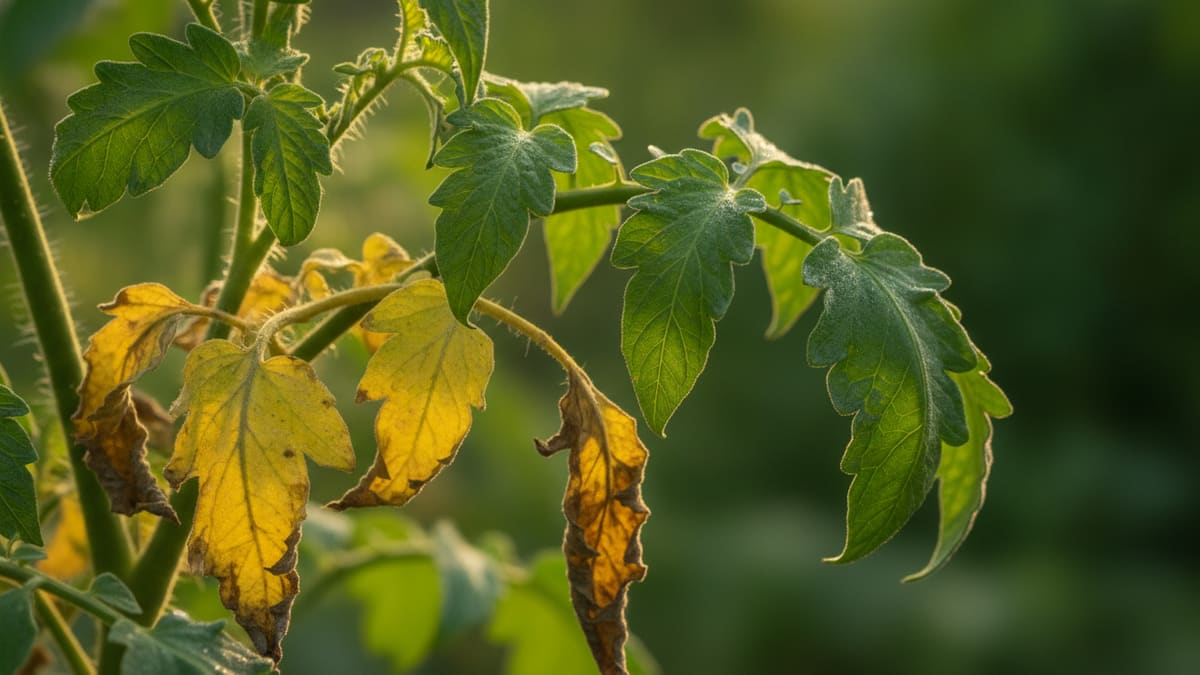
Deficiency symptoms follow predictable patterns: magnesium (Mg) shortage causes interveinal chlorosis — veins stay green while the tissue between them turns pale yellow; potassium (K) deficiency shows up as marginal scorch — leaf tips and edges brown and dry out. Importantly, Mg and K symptoms appear first on older, lower leaves, while iron (Fe) and manganese (Mn) deficiencies target young growth at the shoot tips. Fix it with a foliar spray: 1% magnesium sulfate (10 g/l) or 0.2% monopotassium phosphate shows results in 3–5 days. Test your soil first, or use a balanced fertilizer with trace elements to cover multiple bases.
When to remove leaves and what to do next
Pull the entire leaf if spots cover more than 30–40% of its surface, if it's curling, or if it has turned fully yellow — it no longer contributes to photosynthesis but remains a reservoir of infection. One or two small spots on an otherwise healthy leaf don't require panic: treat and monitor for 5–7 days. After any treatment, improve airflow — crowded planting and stagnant air are the number-one reason fungal and bacterial problems come back. Preventative sprays with a biological fungicide (Fitosporin-M at 5 g/l) every 10–14 days throughout the growing season reliably keep recurrence at bay.
Getting the diagnosis right is half the battle — look at the shape and location of the spot and the correct answer becomes obvious. Act quickly, remove the sick leaves, and keep up with preventative treatments, and your plants will stay healthy right through to harvest.