Mulch: less watering, fewer weeds
2026-06-27
Mulching is one of the simplest techniques that solves several problems at once: it retains moisture, suppresses weeds, and stabilises soil temperature. Lay down a layer of mulch once in spring and you will noticeably cut back on watering and weeding for the rest of the season.
Mulching is one of the simplest techniques that solves several problems at once: it retains moisture, suppresses weeds, and stabilises soil temperature. Lay down a layer of mulch once in spring and you will noticeably cut back on watering and weeding for the rest of the season.
Why mulch
Bare soil loses moisture 2–3 times faster than covered soil. A mulch layer 5–8 cm thick reduces evaporation, prevents weed seeds from germinating, and smooths out daily temperature swings in the top layer by 3–5 °С. Organic mulch breaks down by autumn, adding nutrients back into the soil.
What to use as mulch
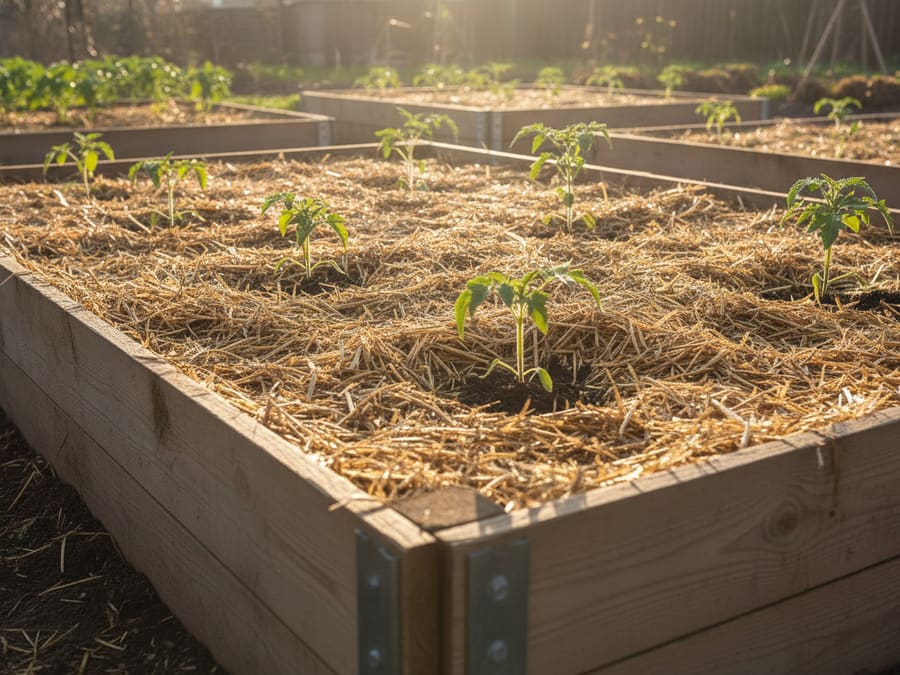
Straw is the classic choice: it holds its shape well, does not compact, and works beautifully around tomatoes and strawberries. Grass clippings act fastest but apply them no more than 3–4 cm thick, otherwise they mat and begin to rot. Shredded bark or wood chips last longest (2–3 years) and are ideal for paths and around tree trunks. Compost mulches and fertilises at the same time — a 4–5 cm layer suits any vegetable bed.
When and how to apply
Mulch once the soil has warmed to 10–12 °С — for most temperate regions this means late April to early May. Laying mulch on cold ground slows warming and delays root development. Before applying, water the bed thoroughly, weed it, and fertilise if needed — it will be awkward to do so under mulch later. Leave a clear gap of 3–5 cm around each plant stem to prevent rot at the crown.
Optimal layer thickness
For most vegetable crops the sweet spot is 5–8 cm. A thin layer (under 3 cm) does not suppress weeds well and dries out quickly. Too thick a layer (over 10 cm) can create anaerobic conditions and attract slugs. For fine-seeded sowings such as carrots and salad greens, 2–3 cm is enough so the seedlings can push through.
Common mistakes
Do not mulch immediately after sowing — wait until seedlings are 5–7 cm tall. Avoid using large amounts of fresh softwood sawdust: it acidifies the soil and locks up nitrogen. Never push mulch tightly against stems, and do not cover wet soil with grass clippings right after rain — both invite fungal disease.
One hour in May with a wheelbarrow of mulch means watering far less all summer, almost no weeding, and richer, looser soil by autumn. Try it on just one bed and you will never look back.