Reading your plants: spotting nutrient deficiencies by leaf
2026-06-29
Leaves are your plant's built-in dashboard. The colour, pattern, and location of symptoms tell you exactly which nutrient is missing — so you can fix it before the harvest suffers.
Leaves are your plant's built-in dashboard. The colour, pattern, and location of symptoms tell you exactly which nutrient is missing — so you can fix it before the harvest suffers.
Nitrogen: yellowing from the bottom up
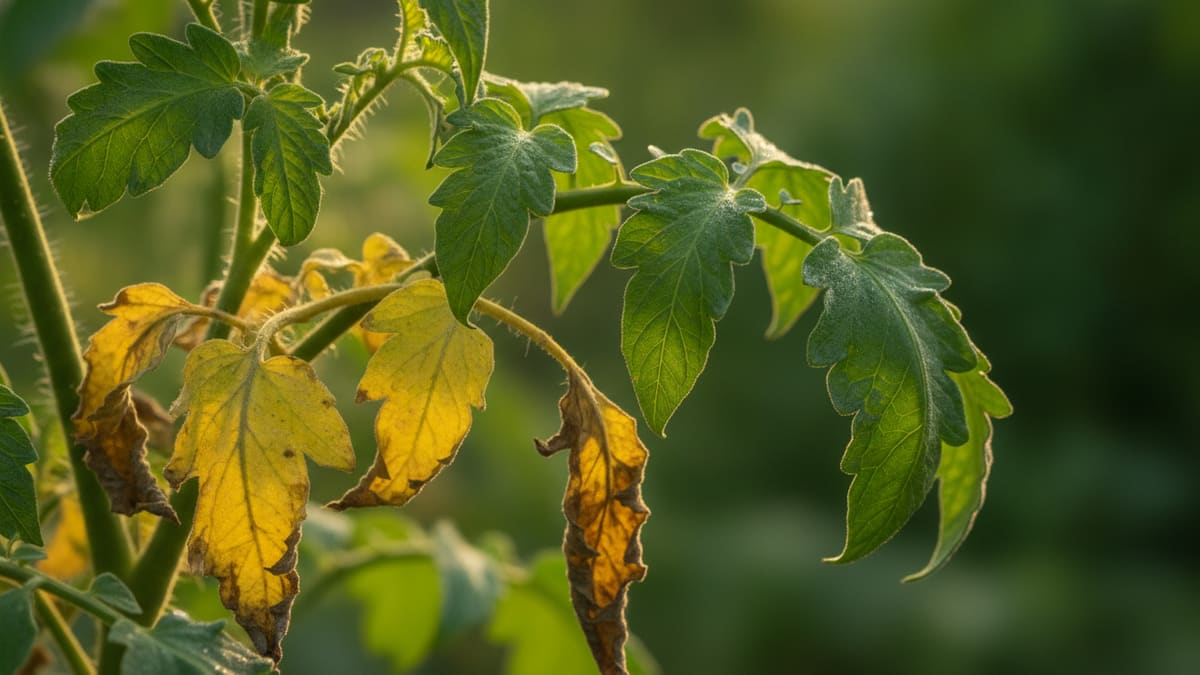
Nitrogen deficiency always starts on the oldest lower leaves: they turn uniformly pale yellow, then dry up and drop. Upper leaves stay green. Tomato and pepper stems often take on a purplish tint. Quick fix — water with a urea solution (20–25 g per 10 l) or diluted manure tea 1:10; you should see improvement within 5–7 days.
Phosphorus: purple undersides
When phosphorus is short, the undersides of leaves, petioles, and stems turn a deep violet-red. Leaves become smaller and growth stalls. Seedlings suffer most when soil temperature drops below 12–14 °С — roots simply cannot take up phosphorus in cold soil. A foliar spray of monopotassium phosphate (5–10 g per 10 l) or a soil drench with superphosphate (40–50 g per 10 l, pre-soaked for 24 hours) will sort it out.
Potassium: scorched leaf margins on older leaves
Potassium deficiency first shows as a dry, scorched-looking edge on older leaves. The browning works inward while the centre of the leaf stays green for a long time. Crucially, it appears on older leaves first, not new growth. Apply potassium sulphate at 15–20 g per 10 l, or water with wood-ash tea (300 g ash steeped in 10 l for 48 hours, strained).
Magnesium and iron: interveinal chlorosis
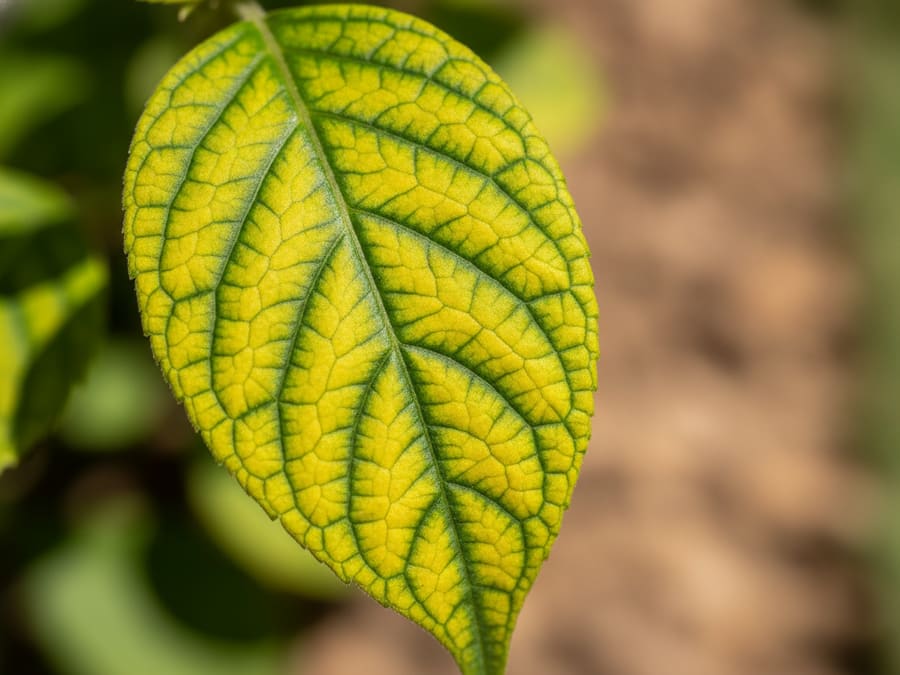
Both deficiencies produce interveinal chlorosis — the leaf turns yellow between the veins while the veins themselves stay green. The key to telling them apart: magnesium deficiency yellows the old, lower leaves first, while iron deficiency hits the youngest, freshly opened leaves. Correct magnesium with a foliar spray of magnesium sulphate (15 g per 10 l). Iron is best delivered through the leaf: chelated iron at 5–8 g per 10 l, repeated 2–3 times at 7-day intervals.
Calcium: distorted young tips and blossom-end rot
Unlike most nutrients, calcium deficiency strikes young leaves and the growing tip first. Apical leaves curl and their edges turn brown and die; in tomatoes this is often accompanied by blossom-end rot on the fruit. Calcium uptake is blocked by high soil acidity (pH below 5.5) and by waterlogging. A foliar spray of calcium nitrate (15–20 g per 10 l) takes effect in 3–4 days; also check that you are not overwatering.
Getting the diagnosis right: three golden rules
Before reaching for fertiliser, confirm three things. First: are old or young leaves affected? This splits all nutrients into two camps (nitrogen, potassium, magnesium — old leaves; iron, calcium, boron — young leaves). Second: check soil pH — above pH 7, iron, manganese and boron are locked up even when physically present in the soil. Third: never mix calcium-based fertilisers with sulphate or phosphate fertilisers in the same spray tank — they react to form an insoluble sludge and the plant receives nothing.
A quick scan of your plants once a week is all it takes — most nutrient issues are easy to catch early, when one or two targeted feeds are enough to bring your plants back to full health.