Overwatered or Underwatered: How to Tell the Difference
2026-07-01
Wilting leaves do not always mean your plant is thirsty. This is where gardeners most often go wrong — they add even more water and finish the plant off for good. Learn to read the signals from the soil and the foliage, and watering will stop being a guessing game.
Wilting leaves do not always mean your plant is thirsty. This is where gardeners most often go wrong — they add even more water and finish the plant off for good. Learn to read the signals from the soil and the foliage, and watering will stop being a guessing game.
Signs of overwatering
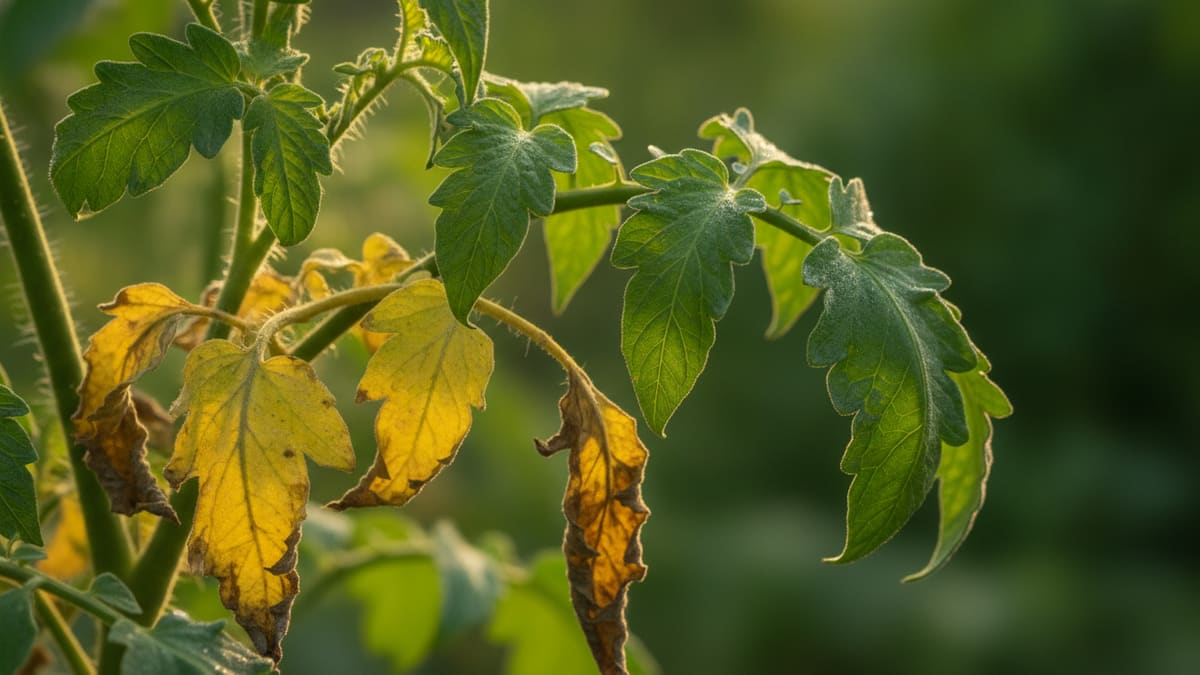
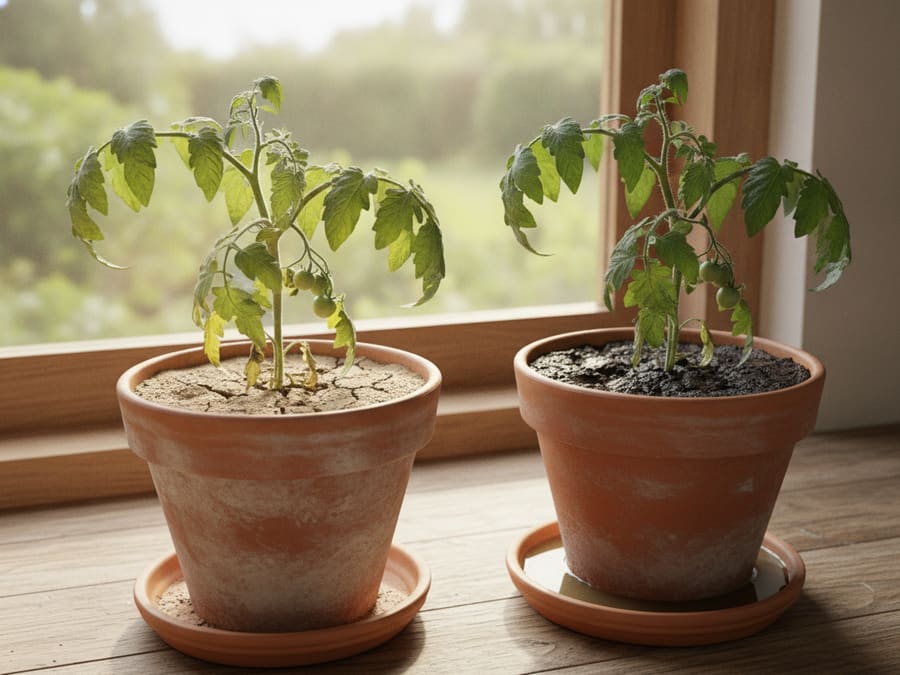
Leaves are limp and drooping, but the soil feels wet or soggy to the touch — that is classic overwatering. Lower leaves turn yellow and drop, and the stem near the base can become soft or discoloured. Small fungus gnats often appear in pots: their larvae thrive in constantly damp soil. With prolonged overwatering the roots begin to rot — a sour or musty smell from the pot confirms it.
Signs of underwatering
A lack of water also causes wilting, but the soil is dry, pale and pulling away from the sides of the pot. Leaf edges and tips dry out and turn brown — usually starting with the youngest or oldest leaves first. In open beds the soil cracks and crumbles when pressed rather than holding its shape. Unlike an overwatered plant, an underwatered one bounces back quickly after a thorough drink.
The finger test — more reliable than any fixed schedule
Push your finger 3–5 cm into the soil: if it feels moist, it is too soon to water; if it is dry, it is time. For large pots (3 litres and above) check at 5–7 cm deep. A wooden skewer works just as well: if it comes out clean and dry — water now; if it comes out with soil clinging to it — wait another day. This simple check beats any rule of thumb like «every three days».
How to fix overwatering
Stop watering and let the soil dry out — usually 3–5 days in a warm spot (22–25 °С) is enough. Move the pot outdoors or improve airflow around it to speed up evaporation. If you smell rot, gently remove the plant, cut away any dark or soft roots back to healthy tissue, dust the cut ends with powdered activated charcoal, and repot in fresh, slightly moist potting mix with good drainage.
How to build a sensible watering routine
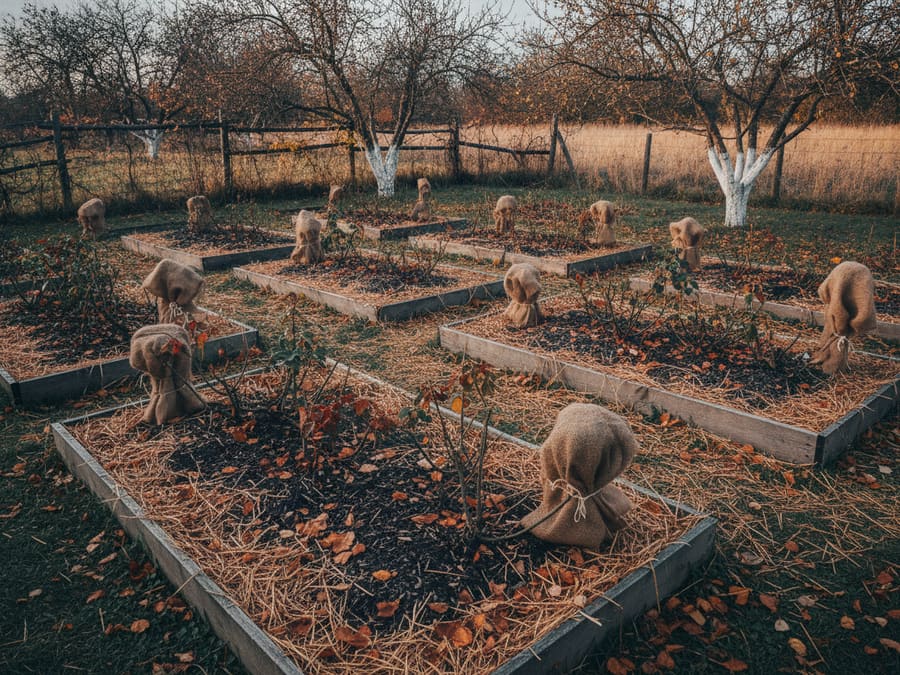
There is no one-size-fits-all schedule: in summer heat, greenhouse tomatoes may need water every day, while succulents need watering only every 10–14 days. Water in the morning so the soil can dry out a little during the day and roots can breathe overnight. Use water at room temperature (no cooler than 18 °С) — cold water slows nutrient uptake. In open beds, apply a 5–7 cm layer of mulch to cut watering frequency roughly in half.
Check the soil before you reach for the watering can, and most watering problems will sort themselves out. Healthy roots in moderately moist soil mean harvests, not headaches.