
Powdery Mildew: White Coating on Your Leaves
2026-07-03
A white powdery coating on cucumber, zucchini, or rose leaves is the unmistakable first sign of powdery mildew, one of the most common fungal diseases in the garden. The fungus overwinters in plant debris and soil, then spreads to leaves whenever conditions turn in its favour. Learn when and why it strikes, and a few simple techniques will let you stop it before it sweeps across the entire plant.
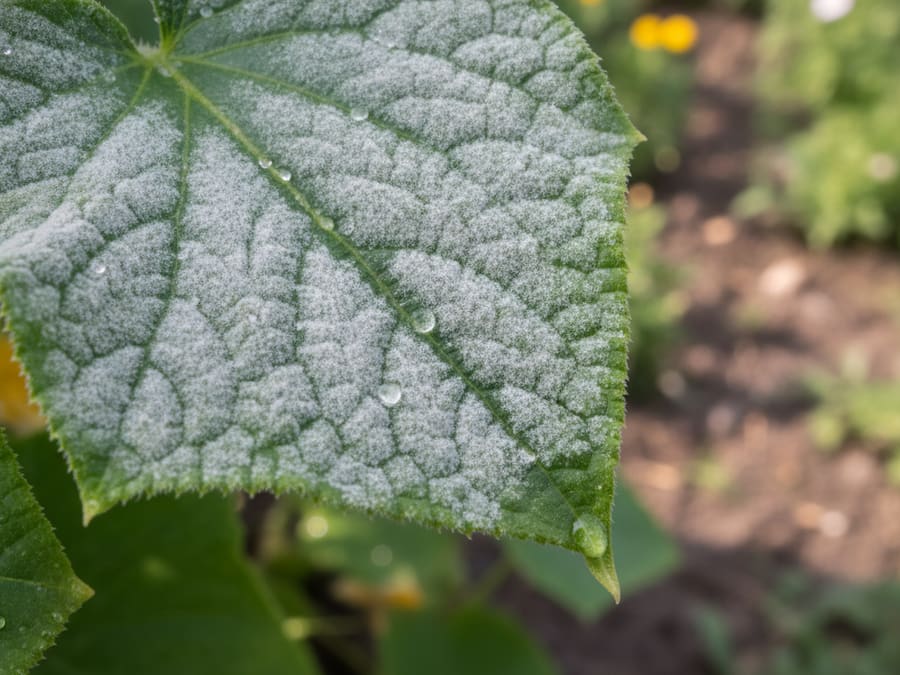
A white powdery coating on cucumber, zucchini, or rose leaves is the unmistakable first sign of powdery mildew, one of the most common fungal diseases in the garden. The fungus overwinters in plant debris and soil, then spreads to leaves whenever conditions turn in its favour. Learn when and why it strikes, and a few simple techniques will let you stop it before it sweeps across the entire plant.
Why powdery mildew appears
The fungus thrives on sharp temperature swings: hot days (28–32 °С) followed by cool nights (10–15 °С) create perfect conditions for spore release. Crowded plantings and poor air circulation keep humidity high around the foliage even without rain. An excess of nitrogen fertiliser also raises the risk — lush, soft new growth is always the first to be hit.
First signs and what to look for
Start checking your plants from mid-July, when the first patches most often appear. White floury spots 1–3 cm across form first on the upper surface of young leaves and stems, then merge and spread to the underside. On cucumbers and zucchini, affected leaves yellow and wither within 7–10 days, cutting yields by as much as 30–50 %.
Home remedies and biological controls
At the first signs, spray with a baking-soda solution: 1 tablespoon of baking soda plus 1 teaspoon of liquid soap per 1 litre of water. Repeat every 5–7 days. Diluted milk whey (1 part whey to 10 parts water) also works well — the lactic-acid bacteria inhibit fungal growth. For biological fungicides, reach for Bacillus subtilis-based products (such as Fitosporin-M) or Trichoderma: apply preventively every 10–14 days before any visible symptoms appear.
Cultural control measures
Avoid crowding: leave at least 50–60 cm between cucumber and zucchini plants. In a greenhouse, ventilate for at least 2–3 hours every day while keeping the night temperature above 18 °С. Remove affected leaves immediately and burn or bin them — never compost them. In autumn, clear all plant debris and lightly dig over the beds.
Prevention for next season
Choose resistant varieties: most F1 cucumber hybrids labelled 'mildew-resistant' perform well, and there are similarly resistant zucchini selections available. Rotate your crops: keep cucurbits off the same patch for at least 3–4 years. Apply your first preventive Fitosporin (or equivalent) treatment as soon as seedlings have 2–3 true leaves.
Powdery mildew is beaten by attention, not by chemistry: regular inspection, good airflow, and a timely home remedy will protect your harvest without extra expense.