
Kolomikta actinidia
Actinidia kolomikta
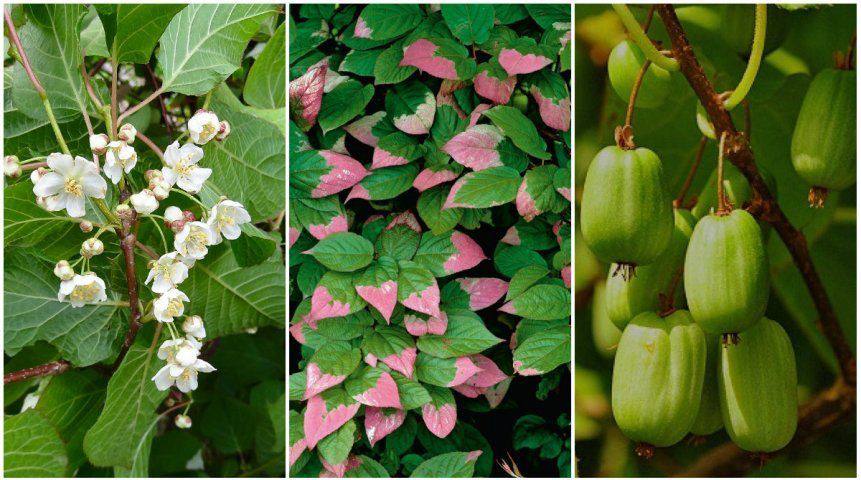
Woody vine from the Russian Far East. Bears amazingly sweet berries (flavour between kiwi and pineapple) as early as September. Leaves turn white and pink in early summer—decorative year-round. Hardy to −40 °C, undemanding, produces fruit in 3–4 years.
Stages of growth
Planting calendar
How to care
Abundant watering immediately after planting. For the first month, soil should always be moist but not waterlogged.
- •Choose a location with sturdy support (trellis, fence, pergola)—actinidia doesn't climb on its own and needs tying
- •Mulch with peat or compost to a depth of 5 cm around the base
- •Plant in spring (April–May) before buds break
Difficulty growing
Requires basic knowledge and regular care.
Growing conditions
Nice neighbors.
Soil preparation
Planting parameters
💡Preparation Tips
- •Dig the bed to a depth of 25-30 cm
- •Add compost or humus (5-10 kg per m²)
- •If necessary, adjust pH with lime or peat
Frequently asked questions(6)
The first harvest appears in 3–4 years after planting a well-developed seedling. If grown from cuttings, the timeline may shift by another year. Young plants may flower earlier but fail to set fruit—this is normal.
The main cause is lack of a pollinator. Kolomikta actinidia requires both male and female plants. If you only have a female vine, attract bees by planting flowers nearby or purchase a male plant. Also check that there is enough light (minimum 5 hours of sun) and that you are not over-applying nitrogen fertilizer.
Male plants have white flowers without a pistil, clustered together. Female plants have solitary flowers with a clearly visible pistil in the centre. If unsure, wait for fruiting: only female vines produce berries.
Kolomikta actinidia is very hardy (to −40 °C) and requires no winter protection in temperate zones. In harsh regions (Siberia, northern Kazakhstan) you can bend young vines to the ground and cover with snow. The key is good drainage and mulching the base with 10–15 cm of compost.
No, this is a characteristic of the kolomikta variety. Leaves naturally change colour in June–July to white and pink—this provides the plant extra sun protection and is very decorative. After August, leaves return to green. Colour intensity depends on sun exposure.
The main enemy is cats, which eat the leaves (similar to catnip). Among insects, Japanese beetles (if you live in the Far East) and spider mites during dry periods are dangerous. Regular watering and leaf spraying prevent drying and mite attacks. Protect young vines from cats.
Benefits and nutrition
Sweet berries (flavour between kiwi and pineapple) by September. Leaves turn white and pink in early summer—decorative year-round. Hardy to −40 °C, undemanding, produces fruit in 3–4 years.
*The information is for informational purposes only and does not constitute medical advice.
Do you like the plant card?
In the application you will receive personal tasks and a plan for the season specifically for your garden.


