
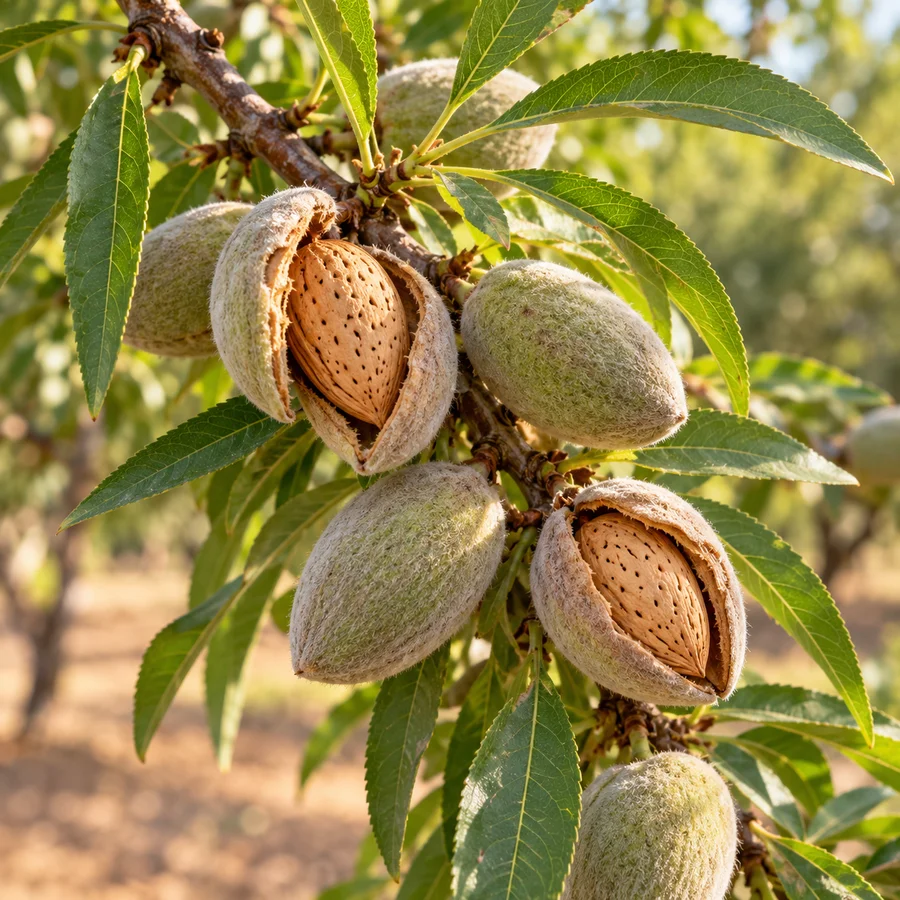
Common Almond
Prunus dulcis
A fruit tree of the Rose family, grown for sweet edible almond kernels. In CIS conditions, it requires warmth and is suitable for southern regions (zone 6–7). Medium-sized tree, blooms early spring with beautiful pink flowers, begins fruiting in the 2–3rd year. Caution: only the sweet kernels of grafted cultivars are edible — bitter-tasting kernels (bitter almond and seedling trees), leaves, bark and the green hull contain amygdalin, which releases hydrogen cyanide; a few bitter kernels can be fatal to a child, and leaves and pits are toxic to cats, dogs, horses and birds.
Stages of growth
Planting calendar
How to care
Plant in spring (March–April) in a prepared hole with drainage. Planting depth: the root collar should be at ground level.
Water thoroughly after planting, then water moderately during dry weather. In the first year, keep the soil moist but not waterlogged.
- •Choose seedlings from healthy grafted trees aged 1–2 years
- •Protect young trees from wind with ties
- •Mulch the root zone with 5–8 cm layer to retain moisture
Difficulty growing
Requires basic knowledge and regular care.
Growing conditions
Soil preparation
Planting parameters
💡Preparation Tips
- •Dig the bed to a depth of 25-30 cm
- •Add compost or humus (5-10 kg per m²)
- •If necessary, adjust pH with lime or peat
Frequently asked questions(5)
Plant in spring (March–April) in southern regions with hardiness zone 6–7. In colder regions, fall planting (October–November) 3–4 weeks before soil freezes is recommended. Choose a wind-protected location with good sun exposure.
Yes, reliable fruit set requires cross-pollination. Plant two or three trees of different varieties nearby to ensure good fruiting. Main pollinators: 'Marcona', 'Valencia', 'Ferragnes'. Space trees at least 7–8 m apart.
Water regularly (20–30 liters per week in dry weather), mulch the root zone, shape the crown by removing competing shoots. In winter in cold regions, mulch the root collar with well-rotted manure 10–15 cm deep. Protect the tree from wind with ties to stakes for the first 2–3 years.
Main causes: lack of pollinators, cold spring (frost damage to flowers at –5° and below), poor light (less than 6 hours of sun per day), waterlogged soil, excess nitrogen in fertilizers. Check for neighboring trees of different varieties, improve drainage, reduce nitrogen, switch to phosphorus and potassium fertilizers.
In the CIS countries, moniliosis (gray mold on flowers and fruit), clasterosporosis (shot-hole disease), and gummosis are common. Pests include almond fruit moth and spider mites. Prevention: spring applications of 3% Bordeaux mixture before flowering, removal of affected branches, sanitary pruning. For severe infestations, use insecticides following phytopathologist recommendations.
Benefits and nutrition
Benefit information coming soon
Do you like the plant card?
In the application you will receive personal tasks and a plan for the season specifically for your garden.


