
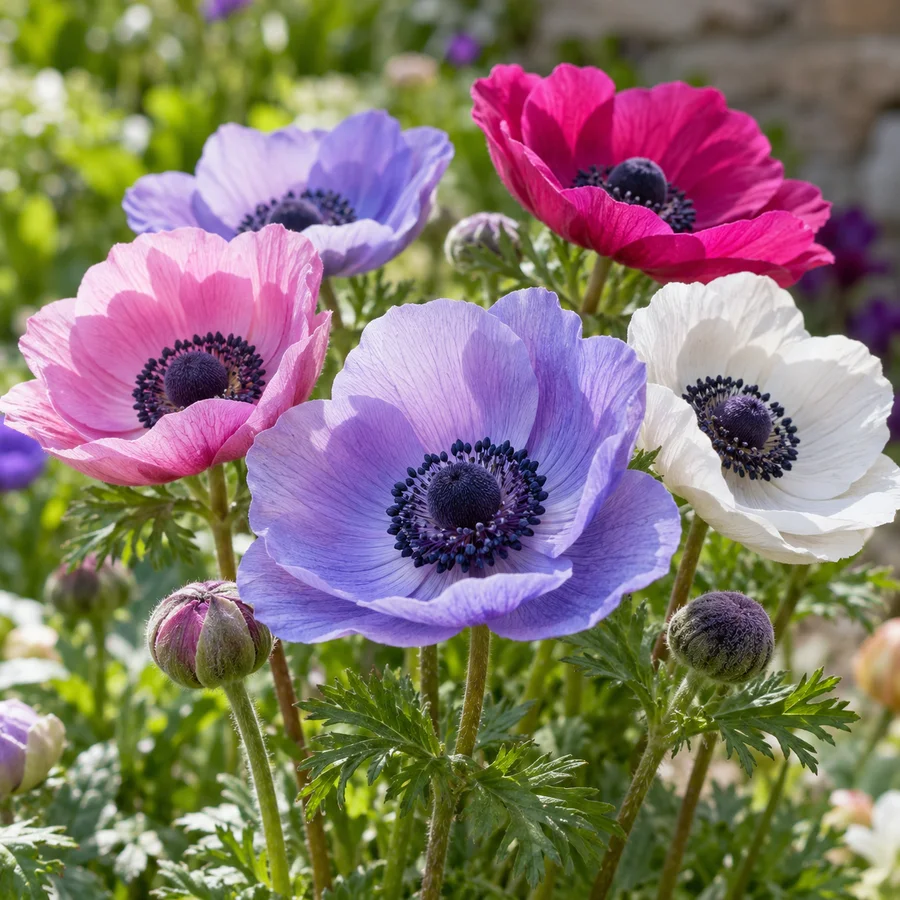
Anemone
Anemone
Delicate anemone flowers with enchanting thin petals will charm any garden. Plant tubers in spring or autumn for early spring flowering. They love partial shade and loose, moist soil. Warning: all parts of anemone are toxic — the sap contains irritant protoanemonin that burns skin and mucous membranes, and eating leaves, flowers or tubers can poison children, cats, dogs and horses; never use it as food and handle it with gloves.
Stages of growth
Calendar in the garden
How to care
Treat tubers with fungicide before planting in a protected location
Not required
No watering required before planting
- •Inspect tubers for rot and damage
- •Select large, firm tubers for planting
- •Soak in growth stimulant solution if needed
Difficulty growing
Suitable for beginners. Minimal maintenance, error-resistant.
Growing conditions
Nice neighbors.
Soil preparation
Planting parameters
💡Preparation Tips
- •Dig the bed to a depth of 25-30 cm
- •Add compost or humus (5-10 kg per m²)
- •If necessary, adjust pH with lime or peat
Frequently asked questions(5)
Anemones can be planted in two periods: spring (March–April) for April–May flowering and autumn (September–October) for spring flowering next year. Autumn planting is often preferable as plants root better over winter.
No, anemones prefer partial shade or dappled light. They grow well under trees and on northeast-facing beds. Direct sun can lead to rapid soil drying and flower fading.
Water regularly but moderately. Soil should be moist but not waterlogged. During flowering period, reduce watering, and after blooming gradually decrease water volume.
In CIS climates, most anemones (especially windflower), planted in autumn, overwinter in the ground without digging up. Spring plantings can be left in the ground or dug up after foliage dies and stored in a dry, cool place.
Reasons for lack of flowering: insufficient winter chilling of tubers (dormancy period), excess nitrogen fertilizer (stimulates foliage at expense of flowers), too-deep planting, waterlogged soil. Ensure tubers received stratification and are not overwatered in spring.
Role in the garden
Delicate spring bloomers with graceful thin petals in white, pink, red, and purple hues; attract pollinators; excellent for naturalizing under trees and shaded borders.
*For reference: the plant is grown primarily as an ornamental.
Do you like the plant card?
In the application you will receive personal tasks and a plan for the season specifically for your garden.


