
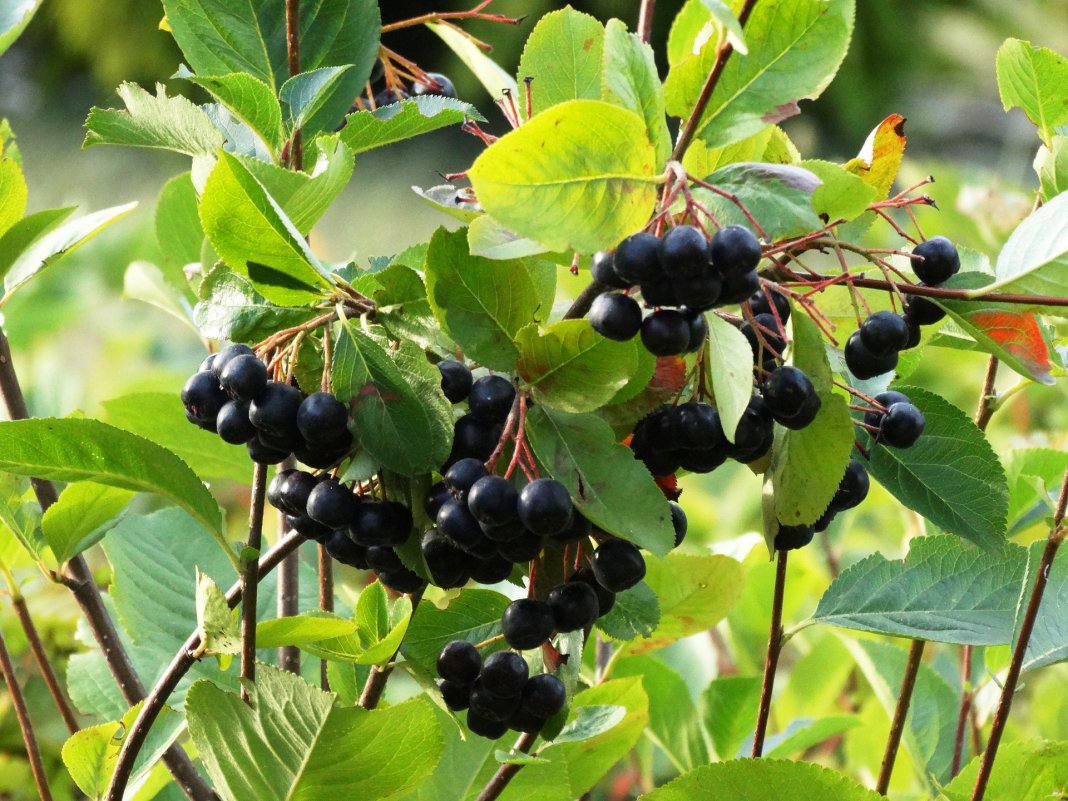
Black Chokeberry
Aronia melanocarpa
Unpretentious ornamental shrub with black berries rich in antioxidants. Bears fruit from July through September and attracts beneficial insects. Hardy to -40°C, excellent for preserving and health drinks.
Stages of growth
Planting calendar
How to care
Plant in a hole 50-70 cm deep with drainage at the bottom. Mulch around the base 5-7 cm.
Regular watering 2-3 times per week, keep soil moist but not waterlogged
- •Protect young seedlings from strong winds with a screen
- •If planting in spring, shade from midday sun for the first 2 weeks
- •Check regularly — soil should not dry out
Difficulty growing
Suitable for beginners. Minimal maintenance, error-resistant.
Growing conditions
Nice neighbors.
Soil preparation
Planting parameters
💡Preparation Tips
- •Dig the bed to a depth of 25-30 cm
- •Add compost or humus (5-10 kg per m²)
- •If necessary, adjust pH with lime or peat
Frequently asked questions(5)
Best to plant in early spring (March-April) or early fall (September-October). Spring planting is preferable as seedlings have time to establish roots before winter. Container planting is possible throughout the season.
During growing and fruiting season — 1-2 times per week with 10-15 l per bush. After establishment (2-3 years), the shrub becomes drought-tolerant and needs water only during prolonged dry spells. Mulching helps retain moisture.
In spring use nitrogen fertilizers (urea, ammonium nitrate) for growth. From June switch to phosphorus-potassium (superphosphate, potassium sulfate) for fruit set and ripening. Responds well to organic matter — compost, manure, wood ash.
Yes, pruning is necessary. In spring (March-April) remove broken, diseased, and crowding shoots. Perform shaping pruning in the first 2-3 years to create a nice form. In fall (October) remove old stems (older than 5-6 years) to stimulate new growth.
Aronia is extremely cold-hardy — withstands freezes to -40°C. Protection is not needed. In regions with low-snow winters, it's recommended to mulch the root circle with 7-10 cm layer to protect roots.
Benefits and nutrition
Benefit information coming soon
Do you like the plant card?
In the application you will receive personal tasks and a plan for the season specifically for your garden.