
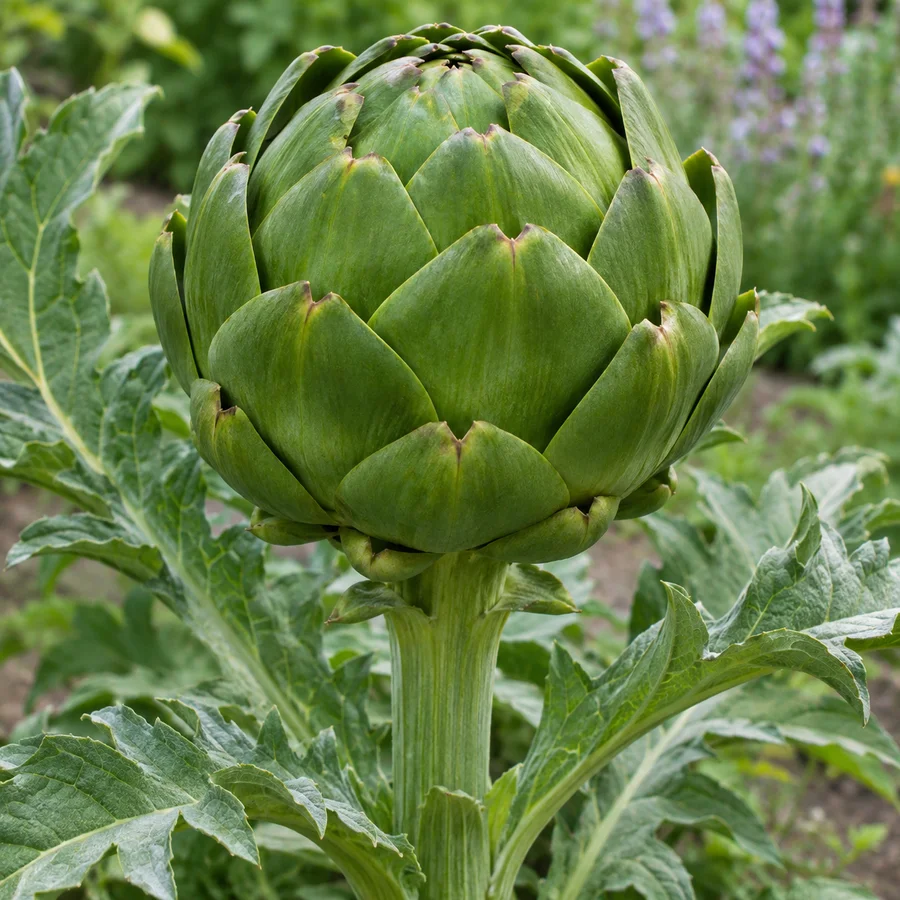
Artichoke 'Green Globe'
Cynara cardunculus var. scolymus 'Зелёный шар'
Artichoke 'Green Globe' — one of the most popular varieties for open ground cultivation. Forms large, compact green heads weighing 100–150 g with a sweetish flavour. Can be grown as an annual (from seedlings) or perennial in mild climates. Harvest in late summer to early autumn.
Stages of growth
Planting calendar
How to care
Move to a bright location when seedlings emerge. Prick out into individual pots at 2 true leaves.
Keep soil moist but not waterlogged. Ventilate daily.
- •Artichoke seeds germinate slowly (7–10 days)
- •Optimal germination temperature: 20–25°C
- •Use light seed compost (peat, coconut coir, perlite)
Difficulty growing
Requires basic knowledge and regular care.
Growing conditions
Nice neighbors.
Unwanted Neighbors
Soil preparation
Planting parameters
💡Preparation Tips
- •Dig the bed to a depth of 25-30 cm
- •Add compost or humus (5-10 kg per m²)
- •If necessary, adjust pH with lime or peat
Frequently asked questions(5)
Sow seeds in March in seed trays. Move to a bright location when seedlings appear. Prick out into individual pots at 2 true leaves. Harden off 2 weeks before planting. Plant in the ground in late April–early May, spaced 50–60 cm apart.
In zones 6–9 (south of Voronezh, Kyiv), plants can overwinter in open ground under a thick mulch layer (20–30 cm) and protection. In colder regions, grow as annuals or dig up plants in autumn and store in a basement at 3–5°C.
Harvest 2–3 weeks after flowering begins, when the head is firm, closed, and 8–10 cm in size. Cut with a sharp knife along with the stem (5–10 cm). If harvested early, the plant will produce secondary (small) heads. Whole heads keep in the refrigerator for up to 2 weeks.
Artichoke heads contain inulin (a prebiotic beneficial for the gut), vitamins C, B1, B3, K, magnesium, potassium, and fiber. Caloric content is about 28 kcal per 100 g of raw product. The tender leaf bases and soft heart are eaten.
Main pests: aphids, spider mites, cutworms, slugs. Diseases: powdery mildew, gray mold, late blight. Prevention: thin plantings, mulching, spraying with biopreparations. For light infestations, spray with soapy water; for severe ones, use insecticides (in early growth phase).
Benefits and nutrition
Benefit information coming soon
Do you like the plant card?
In the application you will receive personal tasks and a plan for the season specifically for your garden.


