
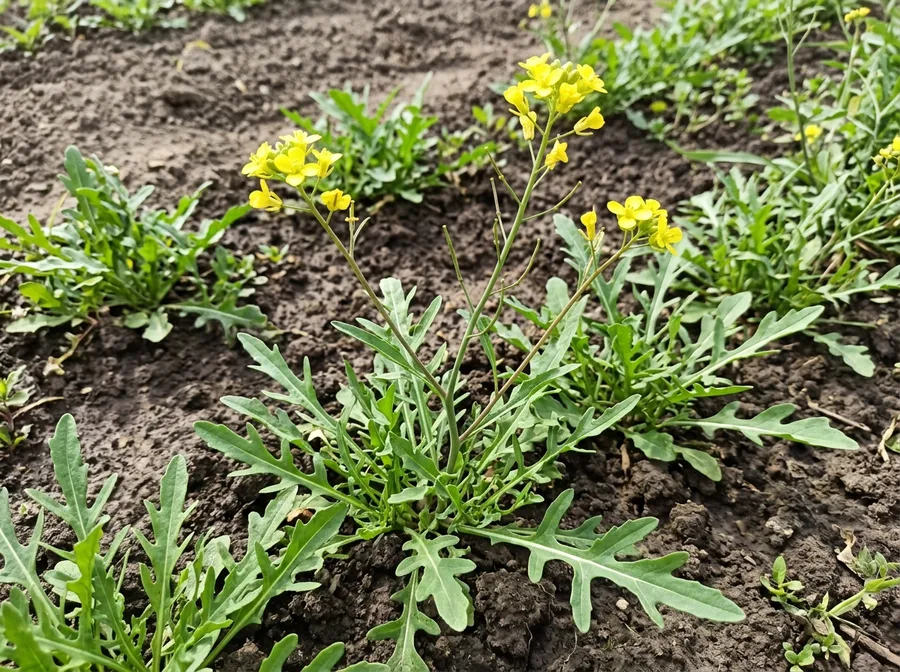
Diplotaxis tenuifolia
Diplotaxis tenuifolia
An unpretentious early ripening green with carved leaves and a mustard-nut flavor. Cold-resistant; In hot weather and drought, it shoots quickly, the leaves become coarse and bitter.
Stages of growth
Planting calendar
How to care
- •Sow in small batches every ~2 weeks - a continuous “green conveyor”
- •Immediately after sowing, cover the bed with agril/lutrasil or pollinate the seedlings with wood ash - less damage from flea beetles
Difficulty growing
Suitable for beginners. Minimal maintenance, error-resistant.
Growing conditions
Nice neighbors.
Unwanted Neighbors
Soil preparation
Planting parameters
💡Preparation Tips
- •Dig the bed to a depth of 25-30 cm
- •Add compost or humus (5-10 kg per m²)
- •If necessary, adjust pH with lime or peat
Frequently asked questions(3)
Double-row (often sold as “wild arugula”) has narrower, heavily dissected leaves, a more pronounced pungent mustard-nutty taste and aroma. In nature it is a perennial: it can overwinter in mild climates.
Most often - lack of moisture against a background of high temperature. Arugula is moisture-loving and in the heat it quickly turns to seeds: the leaves become smaller, coarser and more bitter.
Arugula belongs to the cruciferous family. The main pest is the cruciferous flea beetle. Regular sprinkling, a mixture of ash and tobacco dust on the leaves, or covering the bed with non-woven material help.
Benefits and nutrition
The leaves are rich in essential mustard oils, vitamins and microelements; gently stimulate appetite and digestion, have a slight diuretic and antibacterial effect. A successful piquant addition to salads, meat and fish, a source of vitamin C and iron.
*The information is for informational purposes only and does not constitute medical advice.
Nutritional value
(per 100 g)| Calories | ~25 kcal | 1.2% |
| Carbohydrates | ~3.7 g | 1.4% |
| Protein | ~2.6 g | 5% |
| Vitamins and minerals | Vitamins K, C, beta-carotene, folic acid; potassium, calcium, magnesium, iron, iodine | — |
% of daily value
Do you like the plant card?
In the application you will receive personal tasks and a plan for the season specifically for your garden.