
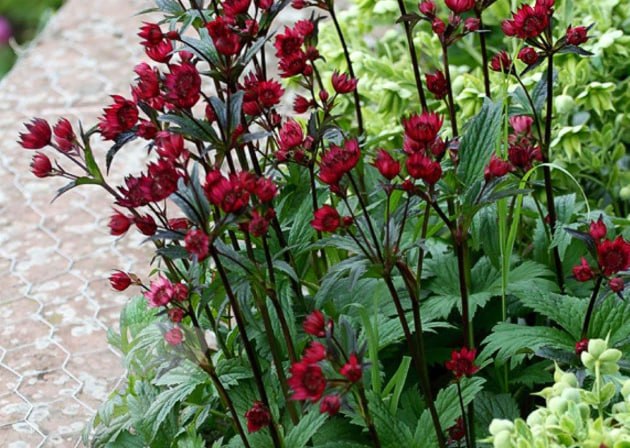
Astrantia
Astrantia major
An elegant perennial with delicate pink or white lace-like flowers that resemble intricate stars. Blooms throughout summer, undemanding, thrives in partial shade, perfect for cutting and garden arrangements.
Stages of growth
Calendar in the garden
How to care
Не требуется
Constantly moist substrate, no waterlogging
- •Astrantia seeds require cold stratification for 4-6 weeks
- •Cover sowings with film to retain moisture
- •Germination temperature 15-18°C
Difficulty growing
Suitable for beginners. Minimal maintenance, error-resistant.
Growing conditions
Nice neighbors.
Soil preparation
Planting parameters
💡Preparation Tips
- •Dig the bed to a depth of 25-30 cm
- •Add compost or humus (5-10 kg per m²)
- •If necessary, adjust pH with lime or peat
Frequently asked questions(5)
Astrantia can be planted in spring (April-May) or autumn (September-October). Best time is early autumn when the plant has time to establish before winter. Seedlings can be pricked out 3-4 weeks after sowing.
Propagation is possible in three ways: from seeds (requiring stratification), by dividing the bush in spring (each part must have 2-3 buds), and from cuttings. The easiest way is bush division every 4-5 years.
Astrantia may not flower due to excess nitrogen (stimulates leaf growth), insufficient light (needs partial shade or sun), or young plant age (1-2 years after planting). Use phosphate-potassium fertilizers before flowering.
With proper care, astrantia blooms continuously from June to September (or until the first frost). Removing faded flowers extends blooming and stimulates new bud formation.
At the end of autumn, cut stems to 5-10 cm above ground. Mulch plants with a 5-7 cm layer (sawdust, dry straw, peat). In most of the CIS, astrantia winters well without cover, but in harsh winters additional protection helps.
Role in the garden
Benefit information coming soon
Do you like the plant card?
In the application you will receive personal tasks and a plan for the season specifically for your garden.