
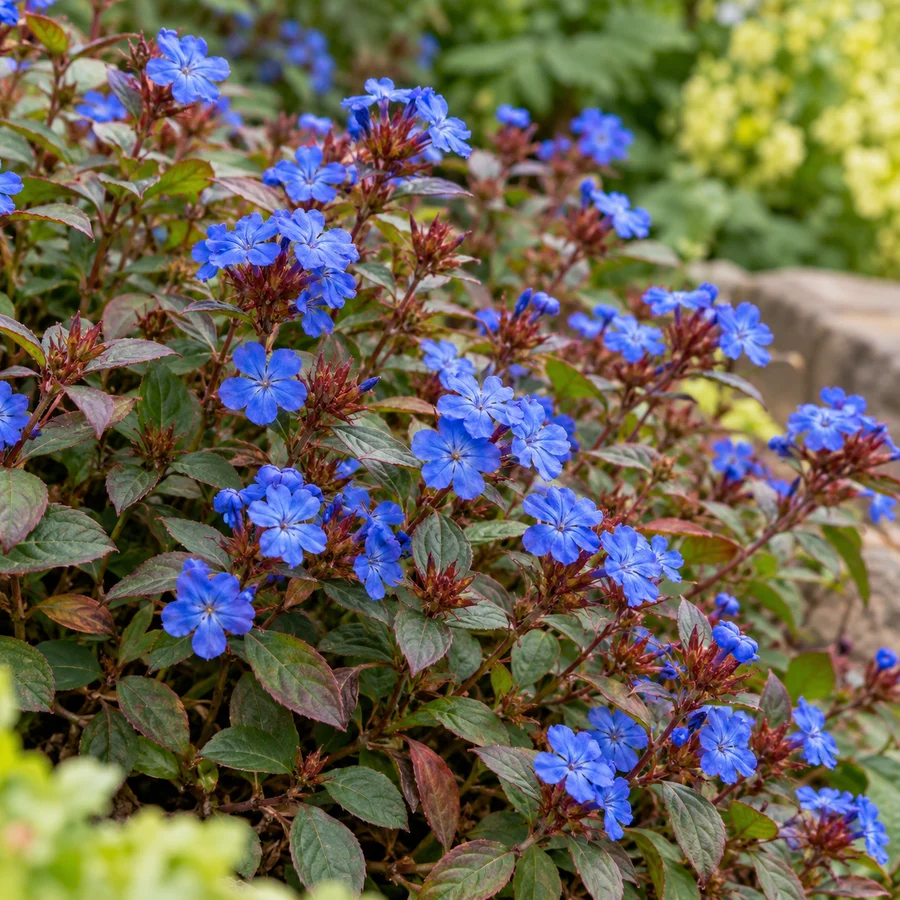
Azure Plumbago
Ceratostigma plumbaginoides
Azurea (Ceratostigma plumbaginoides) is a hardy perennial subshrub with bright blue flowers that bloom from midsummer until the first frost. A resilient, low-maintenance plant ideal for alpine rock gardens, containers, and mixed borders. Spreads quickly as a low mat 20-30 cm tall. The plant is not edible: it contains plumbagin, and its sap can irritate skin and mucous membranes — keep it away from children and pets.
Stages of growth
Calendar in the garden
How to care
Keep soil moist but not waterlogged. Regularly mist cuttings to reduce evaporation.
- •Plant cuttings in loose substrate (peat + sand 1:1)
- •Maintain high humidity under cover
- •Rooted plants can be transplanted to open ground after 3-4 weeks
Difficulty growing
Suitable for beginners. Minimal maintenance, error-resistant.
Growing conditions
Nice neighbors.
Soil preparation
Planting parameters
💡Preparation Tips
- •Dig the bed to a depth of 25-30 cm
- •Add compost or humus (5-10 kg per m²)
- •If necessary, adjust pH with lime or peat
Frequently asked questions(5)
Plant in open ground in April–May when soil warms. Fall planting is possible in September, but young plants may not survive winter. Root cuttings in containers during summer.
The plant prefers sunny locations and well-drained soil. It tolerates partial shade but flowers less abundantly. On waterlogged sites it is prone to root rot.
After the first frost, cut back all above-ground growth, leaving 2–3 cm. Mulch with a layer of leaves (5–7 cm) or peat. In harsh winters provide additional protection. The plant overwinters in the soil and regenerates in spring.
Insufficient sunlight is the main cause of weak flowering. Excess nitrogen in fertilizers also inhibits bud formation. Increase light exposure and switch to fertilizers high in phosphorus and potassium.
Division in spring is the easiest method. In summer, take herbaceous cuttings (7–10 cm) and root them in a peat and sand mix under cover. Sow seeds in early spring in containers.
Role in the garden
Benefit information coming soon
Do you like the plant card?
In the application you will receive personal tasks and a plan for the season specifically for your garden.


