
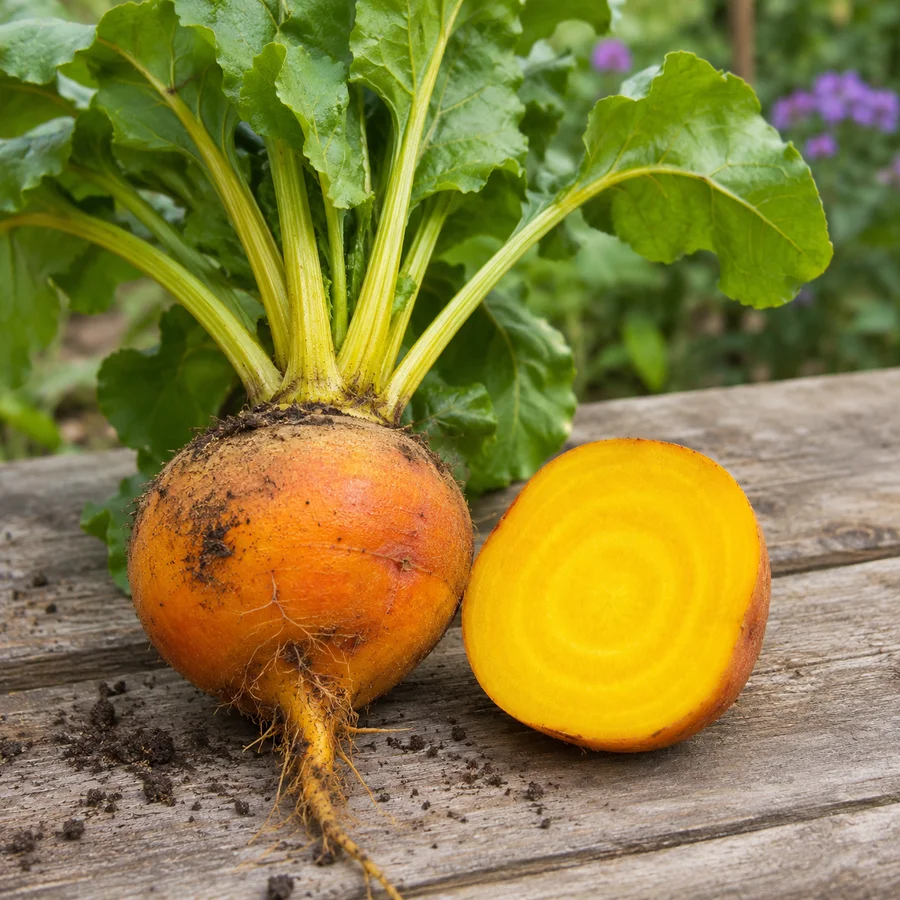
Yellow Table Beet 'Boldon'
Beta vulgaris ssp. vulgaris 'Boldon'
Yellow table beet 'Boldon' with mild, sweet flavor and tender flesh. Roots are round, weighing 200–300 g, ideal for fresh eating, canning, and cooking. This variety is not used for livestock feed—it is a delicate vegetable for home kitchen use.
Stages of growth
Planting calendar
How to care
Keep soil moist but not waterlogged. Water gently every 2–3 days or when the top 1 cm of soil becomes dry.
- •Soak seeds for 24 hours before sowing to speed up germination.
- •Sow at a depth of 2–3 cm, keeping in mind that beet seeds are seed clusters, often producing multiple seedlings.
- •After sowing, mulch the top layer with peat or compost to retain moisture.
- •Seedlings typically emerge within 7–12 days.
Difficulty growing
Suitable for beginners. Minimal maintenance, error-resistant.
Growing conditions
Nice neighbors.
Unwanted Neighbors
Soil preparation
Planting parameters
💡Preparation Tips
- •Dig the bed to a depth of 25-30 cm
- •Add compost or humus (5-10 kg per m²)
- •If necessary, adjust pH with lime or peat
Frequently asked questions(5)
Sow seeds directly into soil from late April through June, when soil warms to +10–12 °C and the risk of late frosts has passed. In central regions, May through early June is optimal. Earlier sowing often produces flowering shoots, while later sowing may not mature in time.
Cracking occurs from uneven watering and excess moisture before harvest. Woodiness indicates overmaturity, potassium deficiency, or growing in very poor soil. Water regularly 1–2 times per week, avoiding both drying out and waterlogging. Reduce watering 2 weeks before harvest.
Yes, the young tender greens of 'Boldon' beets are edible and delicious in salads and borscht. Harvest the greens along with the root harvest. However, if you plan long-term storage of the roots, trim the greens completely, leaving 1–2 cm of stem.
Bitterness and poor flavor result from potassium deficiency, insufficient light (less than 6 hours per day), or harvesting too early. Provide full sunlight, fertilize with potassium (wood ash, potassium magnesium salt) during root formation. Harvest at 6–8 cm size for best flavor.
Dry the roots after harvest by trimming the tops to 1–2 cm. Store in a cellar or refrigerator at 2–4 °C and 90–95% humidity in boxes with damp sand or sawdust. Under these conditions they will keep for 4–6 months. Store separately from red beets in a cool, dark place.
Benefits and nutrition
Benefit information coming soon
Do you like the plant card?
In the application you will receive personal tasks and a plan for the season specifically for your garden.


