
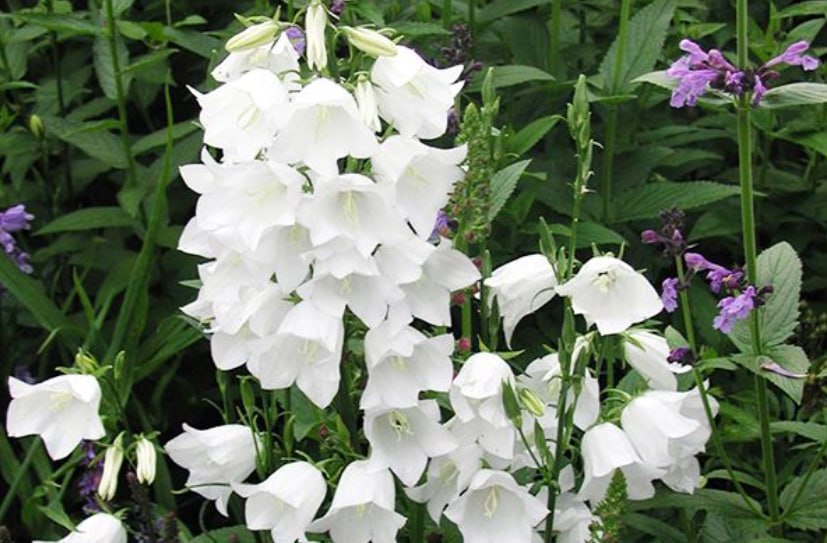
Garden Bellflower
Campanula
Perennial ornamental flower with charming bell-shaped blooms that decorate the garden throughout summer. Unpretentious, grows well in the temperate climate of the CIS and is a favourite among gardeners.
Stages of growth
Calendar in the garden
How to care
Keep soil consistently moist but not waterlogged. Mist with a spray bottle.
- •Bellflower seeds germinate more slowly than annuals
- •Light is needed for germination — don't completely cover seeds with soil
- •Temperature 18-22°C is optimal
Difficulty growing
Suitable for beginners. Minimal maintenance, error-resistant.
Growing conditions
Nice neighbors.
Soil preparation
Planting parameters
💡Preparation Tips
- •Dig the bed to a depth of 25-30 cm
- •Add compost or humus (5-10 kg per m²)
- •If necessary, adjust pH with lime or peat
Frequently asked questions(6)
Sow seeds in February–March for seedlings (bellflowers germinate slowly — 3-4 weeks). Transplant seedlings to open ground in late April – early May, after the danger of frost has passed. You can plant in autumn (September) by division.
They grow well in sun or part shade. They prefer loose, well-drained soil rich in humus, neutral to slightly alkaline (pH 6.0–7.5). Drainage is necessary on wet sites.
Water approximately every 3 days in hot weather, depending on how dry the soil surface is. Bellflowers don't like excess moisture, but drought also negatively affects blooming.
Remove spent flowers — this stimulates new blooms. This technique will extend flowering for several weeks. If you want to collect seeds, leave a few flowering stems until the seed pods fully mature.
Most garden bellflowers are frost-hardy (to -35°C). In autumn, cut back the above-ground parts and mulch the base with compost or leaves (5-10 cm layer). In spring, carefully remove the mulch and the plant will quickly regrow.
Three methods: seeds (lengthy but interesting), division in spring or autumn (quick, retains variety characteristics) and cuttings (young shoots in early summer). The most reliable for gardeners is division.
Role in the garden
Benefit information coming soon
Do you like the plant card?
In the application you will receive personal tasks and a plan for the season specifically for your garden.