
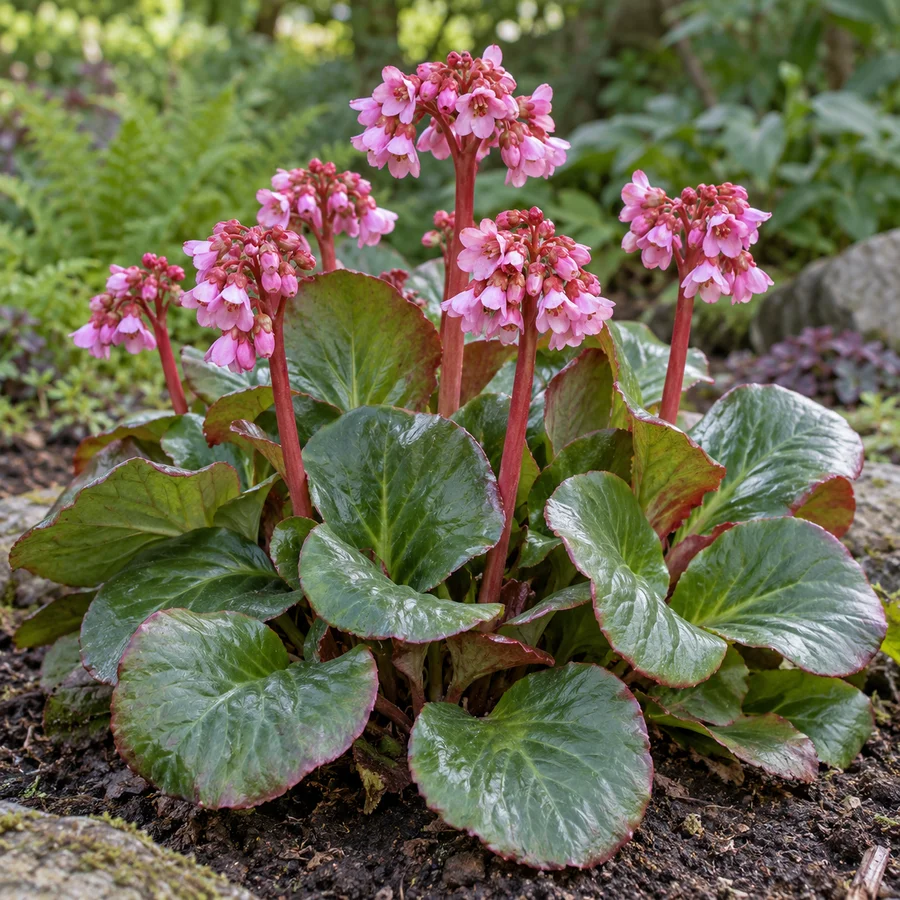
Siberian tea plant, Elephant ears
Bergenia crassifolia
A perennial with large succulent leaves and pink flowers in dense panicles. One of the most undemanding and long-lived perennials for flower gardens, ideal for continuous bloom gardens thanks to early spring flowering and beautiful autumn foliage color. The plant is not poisonous, but it is not a food plant: fresh leaves and the rhizome are very high in tannins and arbutin, and the famous "Siberian tea" is brewed only from blackened old leaves that have overwintered under snow, and should be drunk in moderation (avoid in pregnancy and kidney disease).
Stages of growth
Calendar in the garden
How to care
Add well-rotted compost to the planting hole; no additional feeding required
Balanced fertilizer NPK 10:10:10
Water regularly for the first 2–3 weeks after planting to keep soil moist but not waterlogged. After establishment (3–4 weeks), reduce watering to 1–2 times per week.
- •Mulch soil with 3–5 cm of peat or compost to retain moisture
- •Check rhizome position — it must not be planted too deep; the top of the rosette should be above soil level
- •Remove weeds around the young plant
Difficulty growing
Suitable for beginners. Minimal maintenance, error-resistant.
Growing conditions
Soil preparation
Planting parameters
💡Preparation Tips
- •Dig the bed to a depth of 25-30 cm
- •Add compost or humus (5-10 kg per m²)
- •If necessary, adjust pH with lime or peat
Frequently asked questions(5)
Siberian tea plant begins flowering in late April — early May and continues for 4–6 weeks (until mid-June). It is one of the first perennials to flower in spring, making it an excellent choice for continuous bloom.
Bergenia is undemanding: it grows in sun and partial shade, though in hot regions it prefers afternoon shade. Soil must be loose and well-draining (loamy, rocky, or garden soil mixed with sand); it tolerates poor drainage poorly. pH 6.0–7.5 is optimal.
Division of the rhizome is the easiest method. Divide clumps in spring (March–April) or autumn (September–October); each division should have at least one leaf rosette. Seeds are sown in late autumn or after 4–6 weeks of cold stratification.
Yes, bergenia is fully hardy (zones 3–9, tolerating temperatures down to –30 °C). In winter, mulch lightly with peat (2–3 cm). In spring, rake away the mulch to prevent rhizome rot. Winter protection is usually not necessary.
Common causes are planting the rhizome too deep (the rosette top should be at soil level) or excess nitrogen, which promotes leaf growth at the expense of flowering. Ensure good drainage and reduce nitrogen fertilization. Young plants grown from seed flower from the second year onward.
Role in the garden
Benefit information coming soon
Do you like the plant card?
In the application you will receive personal tasks and a plan for the season specifically for your garden.


