
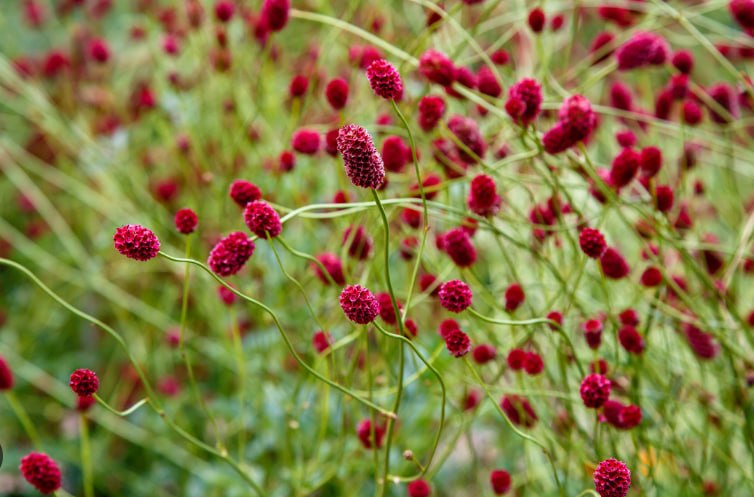
Bloodwort
Sanguisorba
A perennial plant with beautiful dark red or burgundy flower spikes and delicate lacy foliage. Distinguished by its hardiness, winter tolerance, and long blooming period. Ideal for flower beds, mixed borders, and cut flowers.
Stages of growth
Calendar in the garden
How to care
After 2-3 true leaves appear, thin seedlings to 10 cm spacing.
Keep soil moist but not waterlogged. Light watering every 2-3 days.
- •Bloodwort seeds germinate at 18-20°C
- •Soil surface should remain moist but well-drained
- •Provide diffuse light for early seedlings
Difficulty growing
Suitable for beginners. Minimal maintenance, error-resistant.
Growing conditions
Nice neighbors.
Soil preparation
Planting parameters
💡Preparation Tips
- •Dig the bed to a depth of 25-30 cm
- •Add compost or humus (5-10 kg per m²)
- •If necessary, adjust pH with lime or peat
Frequently asked questions(5)
Plant bloodwort in spring (April-May) or autumn (September-October). Spring planting is preferable for rooting before winter. Seeds can be sown in March-April as seedlings or directly into soil after the last frost.
Bloodwort prefers full sun or light partial shade. Grows well on well-drained loams and chernozem with pH 5.5-7.0. Drought-tolerant but blooms better with moderate moisture.
During vegetation and flowering, water 1-2 times per week, keeping soil moderately moist. Avoid overwatering and water stagnation. In dry summers, increase watering frequency. Reduce watering after flowering.
Apply balanced fertilizer (10-10-10) in spring. During flowering, use potassium-phosphorus fertilizer (10-20-20) for abundant blooms. Fertilize every 3-4 weeks. Responds well to organic matter — compost, manure.
Bloodwort is hardy to zone 3 (freezes to -35°C). In autumn, cut stems to 10-15 cm. Mulch rhizome with 5-7 cm of peat or fallen leaves. In snowy regions, no additional protection needed. Remove mulch in spring.
Role in the garden
Benefit information coming soon
Do you like the plant card?
In the application you will receive personal tasks and a plan for the season specifically for your garden.