Vaccinium corymbosum
Vaccinium corymbosum
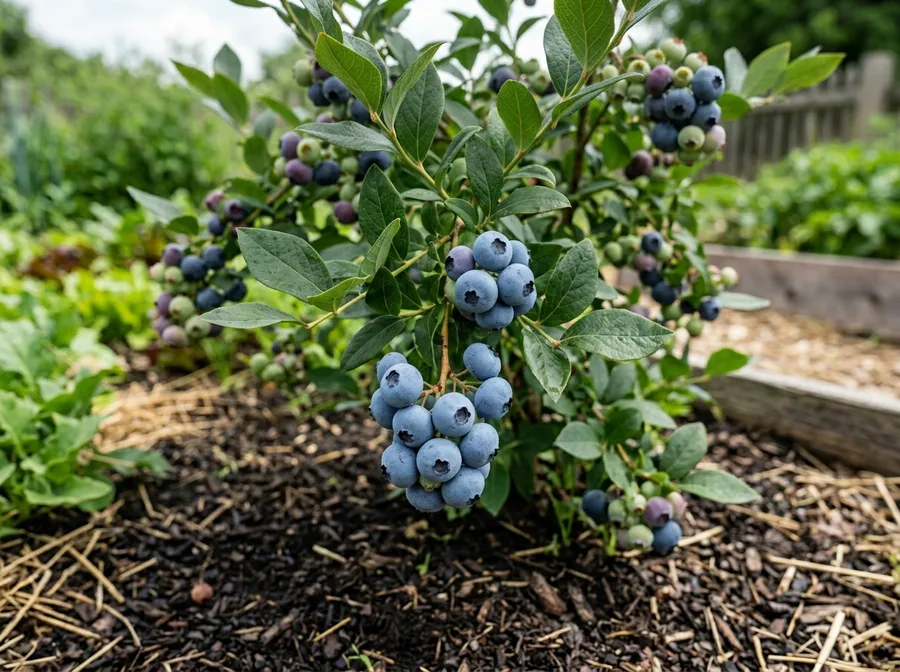
Cultivated blueberry is a berry grown in acidic soil with mycorrhiza; the roots are small, without root hairs. For the CIS, winter-hardy varieties, prepared planting “pockets” of peat and sand, mulch and pH maintenance are important. For pollination, at least two different varieties are planted.
Stages of growth
Planting calendar
How to care
- •A hole or trench is 60–80 cm wide, 30–40 cm deep; on dense clay - drainage 8–10 cm of crushed stone.
- •Substrate: high peat + coarse sand (often 5:1...6:1) without fresh humus and ash - they destroy acidity.
- •Spring: planting before buds open (mid-April - May for the middle zone and the Volga region).
- •Autumn: only during a long warm season (southern CIS, mild winter); in the middle zone spring is often more reliable.
Difficulty growing
Requires basic knowledge and regular care.
Growing conditions
Nice neighbors.
Unwanted Neighbors
Soil preparation
Planting parameters
💡Preparation Tips
- •Dig the bed to a depth of 25-30 cm
- •Add compost or humus (5-10 kg per m²)
- •If necessary, adjust pH with lime or peat
Frequently asked questions(4)
Often iron chlorosis is caused by a lack of absorbable iron due to high pH or waterlogging. Check the acidity, acidify the soil if necessary and fertilize with iron according to the instructions.
We recommend at least two different varieties with a close flowering period - this increases pollination and berry size. One bush often produces a smaller ovary.
It is more reliable to plant in spring before the soil warms up and the buds open. Autumn is possible in the south or with container seedlings and sufficient time before frost, but there is a risk of freezing of unrooted roots.
In open ground, winter watering is not necessary; In the fall, after harvesting the leaves, moisture-recharging watering in the dry autumn before frost is useful.
Benefits and nutrition
Anthocyanins, vitamins C and K, fiber; low calorie content. The information is generally known, not medical advice.
*The information is for informational purposes only and does not constitute medical advice.
Nutritional value
(per 100 g)| Anthocyanins | Blue pigments | — |
| Vitamin C | Moderately in fresh berries | — |
| Fiber | ≈2.5 g / 100 g guideline | — |
% of daily value
Do you like the plant card?
In the application you will receive personal tasks and a plan for the season specifically for your garden.