
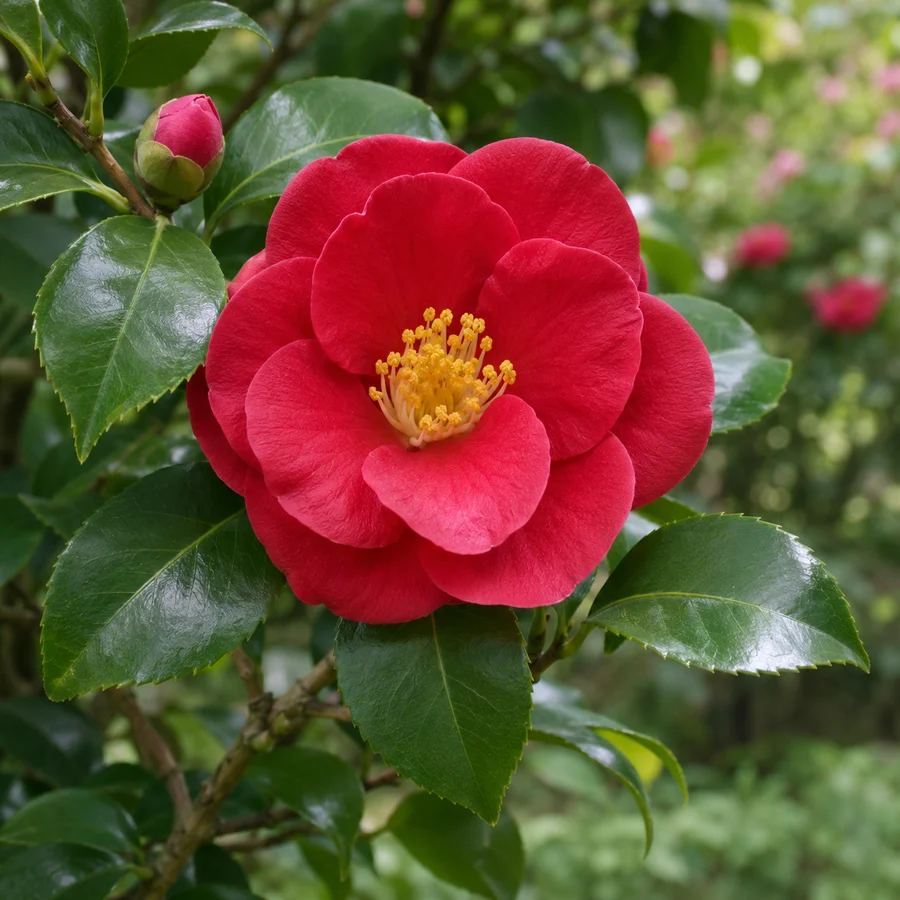
Japanese Camellia
Camellia japonica
Evergreen ornamental shrub with dense glossy foliage and large single or double flowers blooming in winter and spring. Grown in open ground in southern regions of the CIS and as a container plant in temperate zones.
Stages of growth
Calendar in the garden
How to care
2–3 weeks after planting if the plant is vigorous
Fertilizer for acid-loving plants (iron chelate)
Water thoroughly immediately after planting, then maintain evenly moist soil (not waterlogged) for the first 4–6 weeks
- •Plant in acidic, well-draining soil, slightly raised above ground level
- •Mulch with peat or conifer litter to a depth of 5–7 cm
- •Protect from direct midday sun and wind for the first month
- •The bush will begin growing slowly; do not disturb it during the first season
Difficulty growing
Requires basic knowledge and regular care.
Growing conditions
Nice neighbors.
Unwanted Neighbors
Soil preparation
Planting parameters
💡Preparation Tips
- •Dig the bed to a depth of 25-30 cm
- •Add compost or humus (5-10 kg per m²)
- •If necessary, adjust pH with lime or peat
Frequently asked questions(5)
Main causes: insufficient winter cold (10–15°C needed during bud formation), erratic watering (drying out or waterlogging), low air humidity, too much bright sun, or cold drafts. Move container plants to an unheated room (6–10°C) for November–December, keep soil moist, and keep away from radiators and vents.
Acidic (pH 5.5–6.5), light, and well-draining. Ideal is a rhododendron and azalea mix, or make your own: peat moss + conifer litter + compost + coarse sand (3:2:1:1). Water stagnation causes root rot; drainage is essential.
Semi-hardwood cuttings in July–August under plastic in a peat and sand mix (rooting in 15–20 days). Air layering in spring–summer is more reliable and faster. Seeds grow slowly; sow in autumn with stratification, germinating in 2–3 months.
Frost-hardy cultivars (hardy to −10°C with protection) grow in Crimea, the Black Sea coast, and southern Moldova. In central regions (Belarus, Moscow region, central Ukraine), grow in containers, moving them indoors to an unheated cellar or house for winter. In northern Kazakhstan and Siberia, camellia is indoor-only.
Yellowing often signals iron deficiency (alkaline soil, excess calcium) — apply iron chelate. Spotting indicates fungal disease in high humidity without air circulation, or spider mites in dry conditions. Improve drainage and ventilation, spray with soft water.
Role in the garden
Stunning winter and spring flowering with glossy evergreen foliage; attracts pollinators; ideal for adding color to cooler gardens during colder months
*For reference: the plant is grown primarily as an ornamental.
Do you like the plant card?
In the application you will receive personal tasks and a plan for the season specifically for your garden.


