
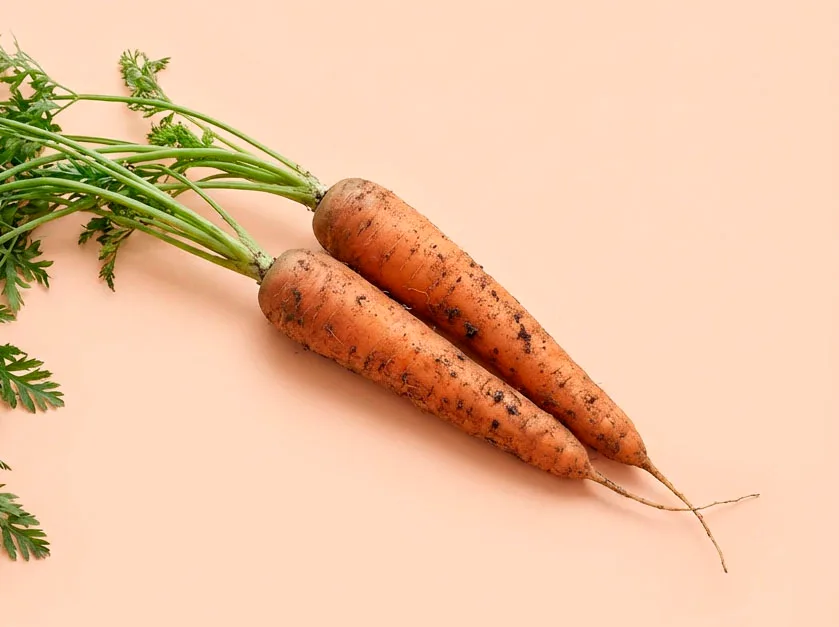
Carrot
Carrot
Requires loose soil and fits well with onions.
Stages of growth
Planting calendar
How to care
Maintain humidity
- •Mix seeds with sand for even sowing
- •Sow in furrows to a depth of 1 cm
- •Cover with film until germination
Difficulty growing
Suitable for beginners. Minimal maintenance, error-resistant.
Growing conditions
Nice neighbors.
Unwanted Neighbors
Soil preparation
Planting parameters
💡Preparation Tips
- •Dig the bed to a depth of 25-30 cm
- •Add compost or humus (5-10 kg per m²)
- •If necessary, adjust pH with lime or peat
Frequently asked questions(8)
Carrots are planted in open ground in April–June. Optimal temperature for growth: 7°-24°. Sowing depth: 0.5-1 cm. Distance between plants: 5-8 cm.
Carrots require regular watering, especially during the period of active growth and fruit formation. Water with warm water at the root, avoiding getting on the leaves. Lighting conditions: full sun. In hot weather, watering is increased; in cool weather, watering is reduced. Mulching helps retain moisture in the soil.
Carrots grow best in sandy, loamy, loose soils. Optimal acidity (pH): 6.0-6.8. Before planting, it is recommended to add compost or humus. Planting pattern: 5-8 cm. Good drainage is important to prevent water stagnation.
Carrots grow well next to: onions, tomatoes, peas, rosemary. Unwanted neighbors: dill. These plants may inhibit growth or attract common pests. Proper proximity helps protect against pests and improve yields.
The carrot harvest is harvested in August–October. Regular collection stimulates the formation of new fruits. Do not overexpose the crop in the garden - this reduces the overall yield and quality.
Carrots are an unpretentious crop suitable for beginning gardeners. It does not require complex care and tolerates minor mistakes in agricultural technology.
The main problems when growing carrots: fungal diseases (powdery mildew, late blight), aphids, spider mites. For prevention, observe crop rotation (do not plant carrots in one place for 2 years in a row), provide good ventilation, and water at the root. At the first signs of illness, use biological products (Fitosporin, Trichodermin).
The harvested carrots are stored in a cool, dark place. Before storing, sort them - use damaged fruits first. Optimal storage temperature: 2–5°C at 85–90% humidity. In the right conditions, carrots remain fresh for several weeks.
Benefits and nutrition
Carrots are a champion in beta-carotene content, which is converted into vitamin A. Good for vision, skin and immunity.
*The information is for informational purposes only and does not constitute medical advice.
Nutritional value
(per 100 g)| Calories | 41 kcal | 2% |
| Carbohydrates | 9.6 g | 7.4% |
| Fiber | 2.8 g | 11% |
| Vitamin A | 835 mcg | 93% |
| Vitamin K | 13 mcg | 11% |
| Potassium | 320 mg | 9% |
% of daily value
Do you like the plant card?
In the application you will receive personal tasks and a plan for the season specifically for your garden.