
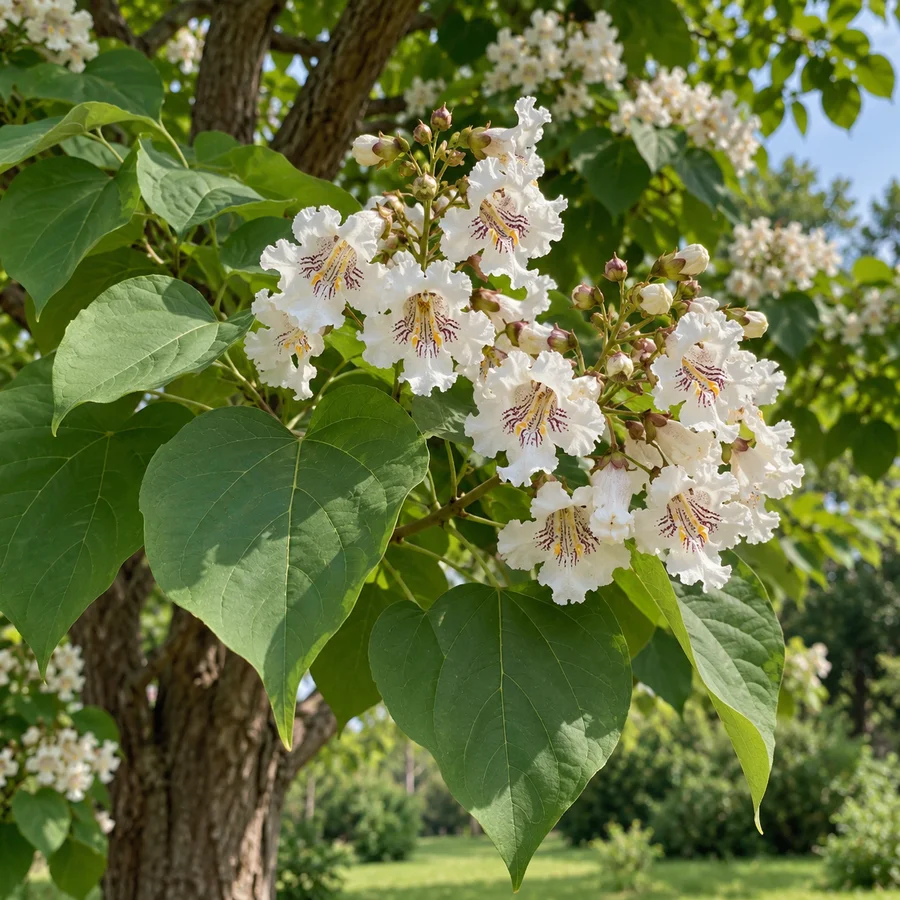
Northern Catalpa
Catalpa speciosa
Beautiful deciduous tree with large heart-shaped leaves and funnel-shaped white or pale purple flowers. A cold-hardy species suitable for temperate climates. Ornamental during bloom and autumn, with long pod-like fruits resembling beans. The tree is purely ornamental: pods, seeds and leaves are not edible, and the roots and bark are poisonous — keep the pods away from children and pets.
Stages of growth
Calendar in the garden
How to care
Transplanting young saplings in spring (March-April) to permanent location
Add compost and bone meal at planting
Balanced fertilizers
Abundant watering at planting time, soil must be moist
- •Choose a place protected from wind
- •Prepare a planting hole 60-80 cm in size
- •Install saplings so that the root collar is level with the ground
Difficulty growing
Requires basic knowledge and regular care.
Growing conditions
Soil preparation
Planting parameters
💡Preparation Tips
- •Dig the bed to a depth of 25-30 cm
- •Add compost or humus (5-10 kg per m²)
- •If necessary, adjust pH with lime or peat
Frequently asked questions(5)
Catalpa typically blooms in late May — early June, approximately 3-4 years after planting a sapling. Blooming lasts 2-3 weeks.
Catalpa loves full sun (at least 6 hours per day), fertile well-drained soil, and protection from strong winds. Hardy to -30°C.
During active growing season (May-August) water 2-3 times per week when there is no natural rainfall. Young trees require more frequent watering.
Annual pruning is not required. Perform sanitary pruning of damaged and diseased branches. Crown formation is done at a young age (first 3-5 years).
Insufficient light, excessive nitrogen, young tree (blooms from 3-4 years). Ensure full lighting and use fertilizers with high phosphorus content.
Role in the garden
Benefit information coming soon
Do you like the plant card?
In the application you will receive personal tasks and a plan for the season specifically for your garden.


