
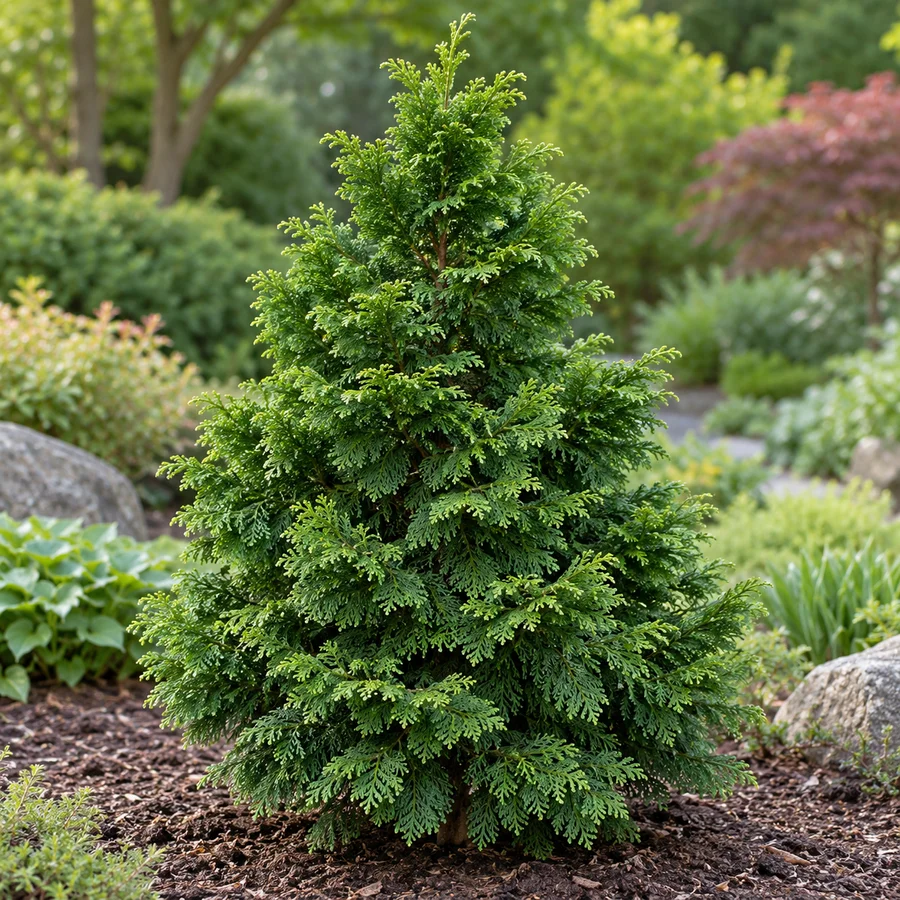
Hinoki cypress
Chamaecyparis obtusa
Evergreen coniferous tree with flat, lacy foliage and a dense pyramidal crown. Native to Japan, highly valued in landscape design for its elegant form and smoky green or golden colour. Slow-growing, frost-hardy tree, ideal for large gardens and parks. The plant is not edible: foliage, cones and bark contain essential oils that cause vomiting and stomach upset in people and pets, and contact with the foliage and resinous sap may irritate the skin — keep it away from children and animals.
Stages of growth
Calendar in the garden
How to care
Abundant watering after planting; soil should remain moist for the first 2-3 months
- •Dig a hole slightly larger than the sapling's root ball
- •Add peat or compost to the soil to improve drainage
- •Water regularly during the first year when there is no rain
- •Mulch around the tree to retain moisture
Difficulty growing
Requires basic knowledge and regular care.
Growing conditions
Soil preparation
Planting parameters
💡Preparation Tips
- •Dig the bed to a depth of 25-30 cm
- •Add compost or humus (5-10 kg per m²)
- •If necessary, adjust pH with lime or peat
Frequently asked questions(5)
Size depends on the variety and conditions: dwarf varieties grow to 0.5-1 m, common wild forms — to 30-50 m, ornamental garden varieties — to 3-20 m. Growth is slow, adding 15-30 cm per year.
Yes, this is a frost-hardy plant (down to -30°C) for hardiness zones 4-8. However, young saplings in the first 2-3 years should be wrapped with burlap or agricultural fabric. Adult trees usually winter without protection.
Main causes: waterlogging or poor drainage, hard water or excessively dry climate (dry air). Improve drainage, mist the crown during heat, avoid soil compaction around roots.
The tree tolerates light pruning in late spring or early summer. Shape into pyramidal or columnar form by removing dead branches and slightly shortening lateral shoots. Do not touch the main trunk if you want a tall tree.
Chamaecyparis obtusa is rarely attacked by pests in open ground. The main problem is fungal diseases in waterlogged conditions (root rot, phytophthora). Prevention: good drainage, air circulation, sanitary pruning.
Role in the garden
Benefit information coming soon
Do you like the plant card?
In the application you will receive personal tasks and a plan for the season specifically for your garden.


