
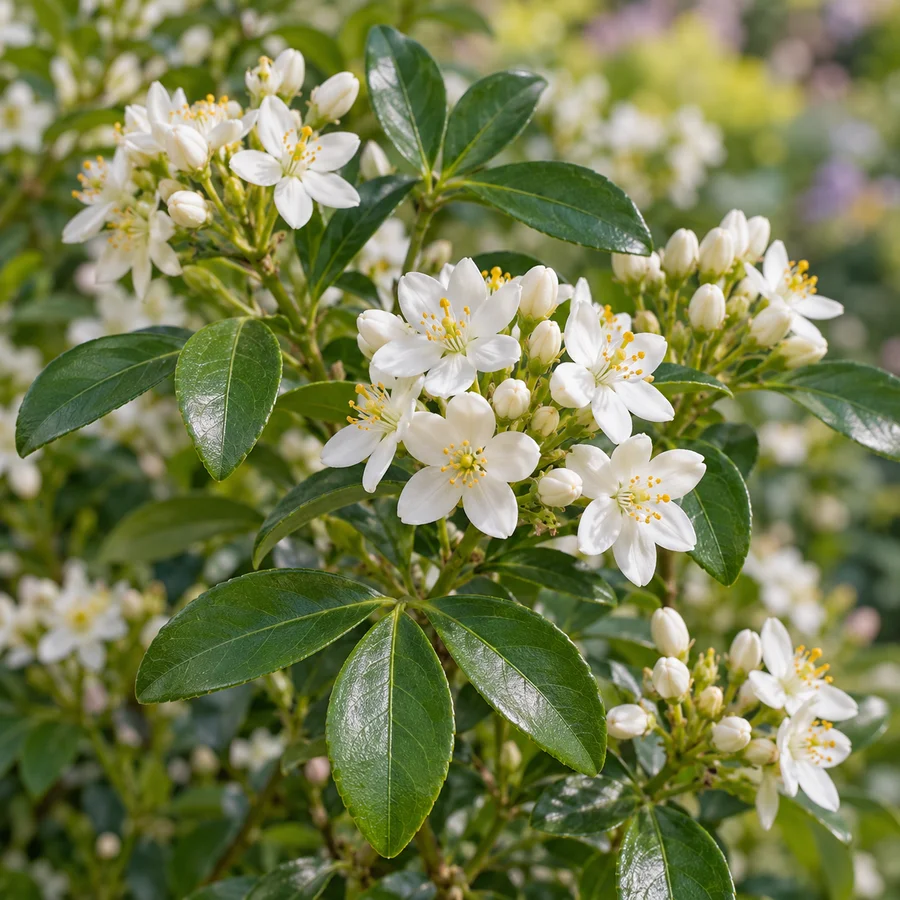
Mexican Orange Blossom
Choisya ternata
An evergreen ornamental shrub with fragrant white flowers arranged in umbels. Native to Mexico, in the CIS it is grown in protected locations or in container culture. Flowers for an extended period with an intense orange aroma, especially in the evening. Despite the name and citrus scent, the plant is purely ornamental: it bears no edible fruit, and the leaves, flowers and seed capsules must not be eaten (they may cause nausea and stomach upset); the sap can irritate skin — keep the plant away from children and pets.
Stages of growth
Calendar in the garden
How to care
Plant the sapling in spring (April–May) in a 50×50 cm hole with drainage. The root collar should be at soil level. Fill with fertile soil mixed with peat or compost.
Regular watering for the first 2–3 weeks, keep soil moist but not waterlogged
- •Mulch the root zone 5–7 cm deep (bark, wood chips)
- •Protect young plant from wind with a screen
- •Do not feed during the first month
Difficulty growing
Requires basic knowledge and regular care.
Growing conditions
Nice neighbors.
Soil preparation
Planting parameters
💡Preparation Tips
- •Dig the bed to a depth of 25-30 cm
- •Add compost or humus (5-10 kg per m²)
- •If necessary, adjust pH with lime or peat
Frequently asked questions(5)
The optimal period is spring (April–May) in mild climates, or container planting for mobility. In the south, fall planting (September–October) is acceptable. Ensure that frost danger has passed.
Carry out formative pruning in April–May, removing 1/3 of old shoots to rejuvenate. After flowering, remove spent flower clusters. Maintain a compact shape year-round by pruning incorrectly growing branches. The shrub tolerates pruning well down to a dense framework.
Main causes: insufficient sunlight (needs at least 6 hours of direct light), excess nitrogen in fertilizer (promotes foliage at the expense of flowers), young plant age (first flowering after 2–3 years). Check drainage and soil pH (should be slightly acidic or neutral). Stop nitrogen feeding in summer and switch to phosphorus and potassium fertilizers.
In zones 8–11 (south, Crimea, Sochi) it can overwinter in open ground with light protection of spunbond or burlap. In central regions and further north, grow in containers, which are moved indoors for winter to an unheated basement, greenhouse, or enclosed covered gallery at 0–10°C. In open air it dies at frosts below -5°C.
The flowers emit an intense, pleasant aroma reminiscent of fresh oranges (especially in the evening). This is one of the plant's main attractions. The aroma intensifies in warmth and evening hours. However, the scent is purely decorative: Mexican orange blossom does not bear edible oranges or other fruits, and its flowers and leaves are not used in tea or food.
Role in the garden
Intensely fragrant white flowers, prolonged blooming (April–September), evergreen foliage, responds well to pruning, attracts pollinators
*For reference: the plant is grown primarily as an ornamental.
Do you like the plant card?
In the application you will receive personal tasks and a plan for the season specifically for your garden.


