
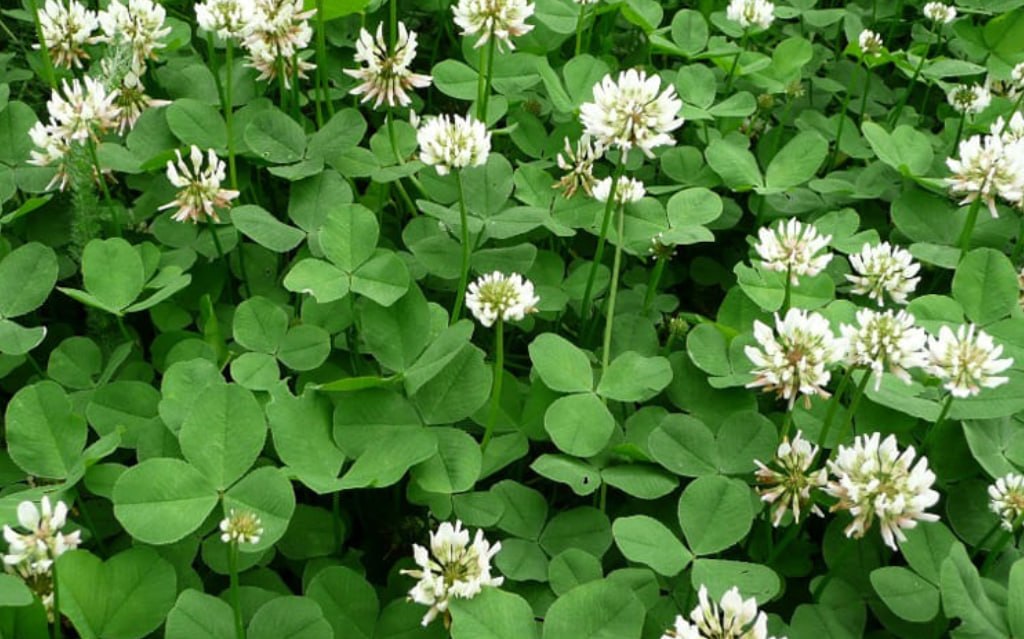
Red Clover (Meadow Clover)
Trifolium pratense
A perennial herbaceous plant of the legume family with red rounded flower heads. Grown in gardens as a honey plant, forage crop, and soil improver due to its nitrogen-fixing ability. Used in tea and traditional medicine.
Stages of growth
Planting calendar
How to care
Not required
once
humus
Keep soil moist until seedlings emerge
- •Lightly scarify seeds with sandpaper before sowing
- •Soak seeds for 12 hours in room temperature water
- •Sow in well-prepared soil
Difficulty growing
Suitable for beginners. Minimal maintenance, error-resistant.
Growing conditions
Nice neighbors.
Soil preparation
Planting parameters
💡Preparation Tips
- •Dig the bed to a depth of 25-30 cm
- •Add compost or humus (5-10 kg per m²)
- •If necessary, adjust pH with lime or peat
Frequently asked questions(5)
You can sow in spring (March-April) or late summer (August-September). Spring sowing is preferable for obtaining a harvest in the current year. Fall sowing is suitable for reseeding depleted areas.
Clover, as a legume plant, is capable of nitrogen fixation, so nitrogen fertilizers are not required. After the first cutting, apply phosphate and potassium fertilizers (superphosphate, potassium sulfate) to stimulate regrowth. On poor soils, adding organic matter (humus, compost) is acceptable.
Collect flower heads in the early morning after dew dries, when they are fully open. Cut flowers with scissors. Dry in air in the shade in a well-ventilated room for 7-10 days, spread in a thin layer on clean cloth. Store in airtight glass jars.
Red clover is usually productive for 2-3 years. After this, yields decline, and it is recommended to move the planting to a new location. You can leave perennial clover on a plot as a green manure and soil improver.
Main diseases: mold, rust, powdery mildew. Prevention — good air circulation, avoiding waterlogging, soil loosening. If disease is detected, remove affected plant parts. Pests rarely affect clover due to its properties, but if necessary, use organic preparations (garlic decoction, tobacco infusion).
Benefits and nutrition
Benefit information coming soon
Do you like the plant card?
In the application you will receive personal tasks and a plan for the season specifically for your garden.