
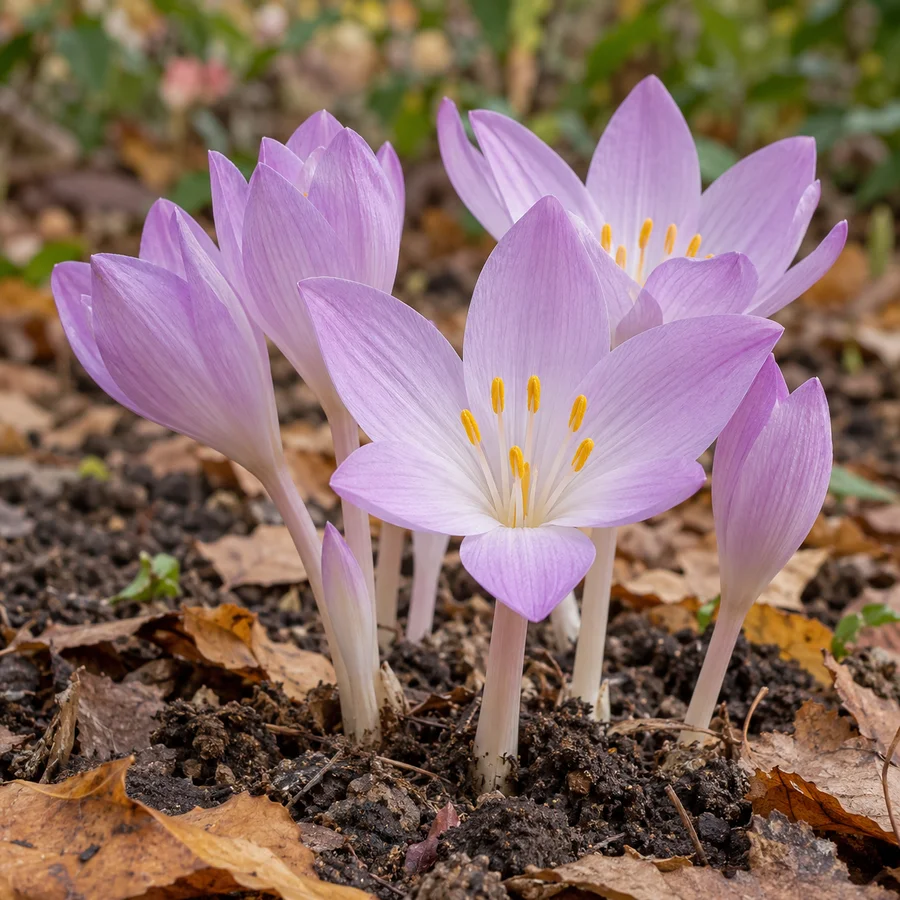
Autumn Crocus
Colchicum autumnale
Elegant autumn-blooming bulbous plant with lilac, pink, or white flowers appearing August–October. Leaves emerge in spring of the following year. Perfect for continuous-bloom gardens and naturalization beneath trees. Height 10–20 cm, extremely hardy and low-maintenance. Warning: every part of the plant (corm, leaves, flowers, seeds) contains the alkaloid colchicine and is deadly poisonous — never eat any part, handle the corms with gloves, and keep the plant away from children and pets; the spring leaves are easily mistaken for wild garlic, so never pick them.
Stages of growth
Calendar in the garden
How to care
No watering needed — bulbs are dormant in a warm location
- •Inspect bulbs before planting — they should be firm with no rot
- •Select large healthy bulbs 2–3 cm in diameter
Difficulty growing
Suitable for beginners. Minimal maintenance, error-resistant.
Growing conditions
Soil preparation
Planting parameters
💡Preparation Tips
- •Dig the bed to a depth of 25-30 cm
- •Add compost or humus (5-10 kg per m²)
- •If necessary, adjust pH with lime or peat
Frequently asked questions(5)
Plant bulbs in July–August during their natural dormancy period. This is the optimal time for rooting before autumn flowering. Do not delay planting until fall — the plant will not have time to develop roots.
This is a unique feature of autumn crocus: flowers appear in autumn, while leaves develop only the following spring. The leaves accumulate nutrients in the bulb for the entire next season. Do not cut leaves until they completely yellow.
Plant bulbs 8–10 cm deep so they are completely underground. The bulb tip should be covered with at least 3–4 cm of soil. This depth protects from frost and prevents bulb heaving.
Yes, autumn crocus is fully winter-hardy in zones 3–8 (throughout central Russia, Belarus, and Ukraine). It requires no winter protection and overwinters excellently under snow. In snowless winters, light mulching (5 cm of peat or compost) is possible.
Yes, all plant parts (bulbs, leaves, flowers, seeds) contain the alkaloid colchicine and are poisonous to humans and animals. Handle the plant with gloves. Keep away from children and pets. This is an ornamental plant only, not for collection or consumption.
Role in the garden
Benefit information coming soon
Do you like the plant card?
In the application you will receive personal tasks and a plan for the season specifically for your garden.


