
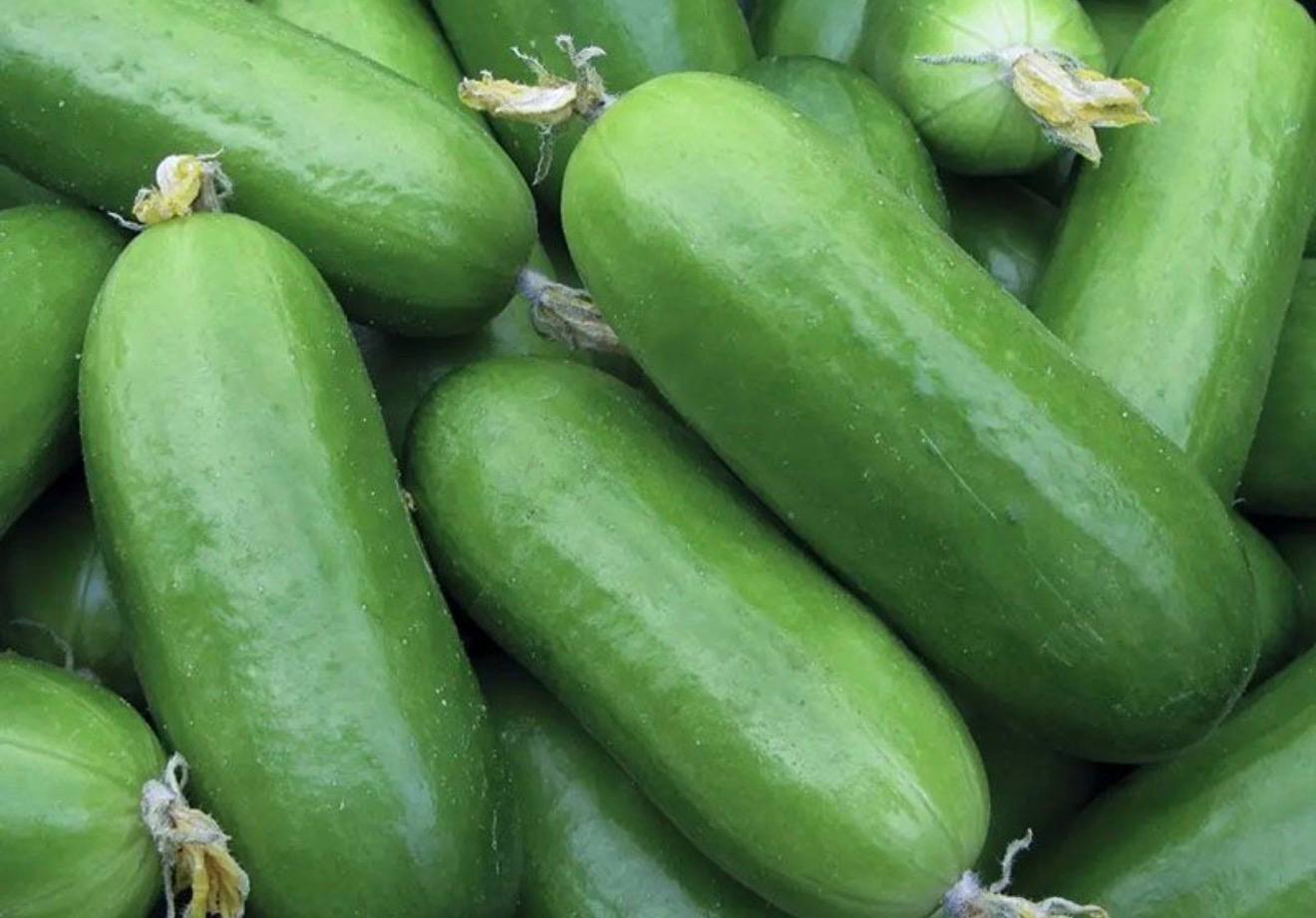
Cucumber 'Fontina' F1
Cucumis sativus 'Fontina' F1
Early-maturing parthenocarpic cucumber hybrid for open ground and greenhouses. The plant is compact with short lateral shoots. Fruits are of cornichon type (8-10 cm), crispy, excellent for fresh consumption and pickling. A stably productive variety resistant to major diseases.
Stages of growth
Planting calendar
How to care
Not required at this stage
Soil should be moist but not waterlogged. Water gently with soft water to avoid washing away seeds.
- •Soil temperature should be 20-25°C for rapid germination
- •Use pre-germinated seeds for faster results
- •Cover seeds with film to maintain moisture
Difficulty growing
Suitable for beginners. Minimal maintenance, error-resistant.
Growing conditions
Nice neighbors.
Unwanted Neighbors
Soil preparation
Planting parameters
💡Preparation Tips
- •Dig the bed to a depth of 25-30 cm
- •Add compost or humus (5-10 kg per m²)
- •If necessary, adjust pH with lime or peat
Frequently asked questions(5)
In open ground — in the second half of May or early June when soil warms to 15-20°C. For earlier harvest use seedlings: start cultivation in late April, transplant to permanent location at age 20-25 days.
Water frequently and abundantly — 2-3 times per week in cool weather, daily in heat. Soil should always be moist at 5-10 cm depth. Best to water at the root early morning or evening with soft settled water. Avoid waterlogging — can cause root rot.
During vegetative growth — nitrogen fertilizers (urea, ammonium nitrate). During flowering and fruiting — potassium and phosphorus (superphosphate, potassium sulfate). Good results from organic feeding: cow manure tea (1:8), poultry manure (1:15), grass tea. Feed every 10-14 days.
Bitterness appears under plant stress (water shortage, temperature fluctuations, overmature fruit). Provide regular abundant watering, harvest cucumbers young (8-10 cm), maintain soil moisture at 60-70%. Pick frequently — every 1-2 days, don't wait for overripening.
'Fontina' hybrid has good resistance to major diseases (powdery mildew, true mildew, olive spot). However, prevention never hurts: avoid leaf wetness, ensure good ventilation, use fungicides if needed (copper sulfate, sulfur, bioprepares).
Benefits and nutrition
Benefit information coming soon
Do you like the plant card?
In the application you will receive personal tasks and a plan for the season specifically for your garden.