
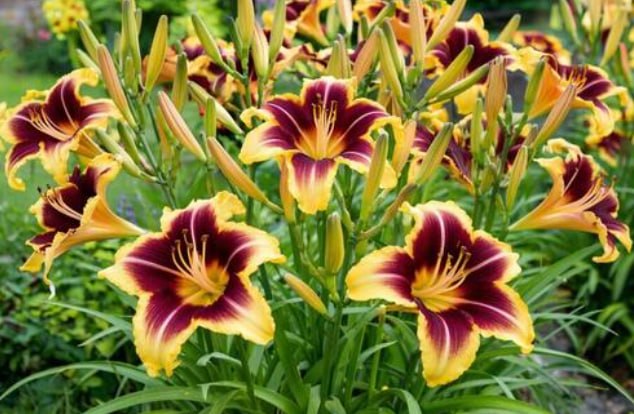
Daylily
Hemerocallis
Perennial flower with exotic blooms that open and close throughout the day. Ideal for decorating flower beds and mixed borders due to its undemanding nature and wide variety of cultivars in flower color and form.
Stages of growth
Calendar in the garden
How to care
When planting divisions, add organic matter to the bottom of the planting hole
Regular watering, keep soil moist but not waterlogged
- •Protect from direct sun in the first days
- •Mulch low vegetation
- •Transplant seedlings to open ground after rooting
Difficulty growing
Suitable for beginners. Minimal maintenance, error-resistant.
Growing conditions
Nice neighbors.
Soil preparation
Planting parameters
💡Preparation Tips
- •Dig the bed to a depth of 25-30 cm
- •Add compost or humus (5-10 kg per m²)
- •If necessary, adjust pH with lime or peat
Frequently asked questions(5)
Daylily is best planted in spring (April-May) or fall (August-October) in the temperate zone. Seedlings or divisions can be planted in open ground after frost danger passes.
Insufficient light (needs at least 6 hours daily), excessive nitrogen in fertilizer (promotes foliage instead of flowers), young plants bloom from the second year of growth, or improper clump division.
During the growing and blooming season (May-September) water 2-3 times per week in dry weather. Daylily is drought-tolerant but blooms more vibrantly with consistent soil moisture. Reduce watering in fall.
In spring (May) use complete NPK fertilizer or organic matter (compost, manure). In summer (June-July) add phosphorus and potassium for blooming. In fall (September) feed with potassium for winter hardiness.
Daylily is hardy to -40°C. Cut back foliage to 10 cm in winter, apply mulch (manure, peat) layer 5-8 cm thick. In snowy regions, natural snow cover is sufficient.
Role in the garden
Benefit information coming soon
Do you like the plant card?
In the application you will receive personal tasks and a plan for the season specifically for your garden.