
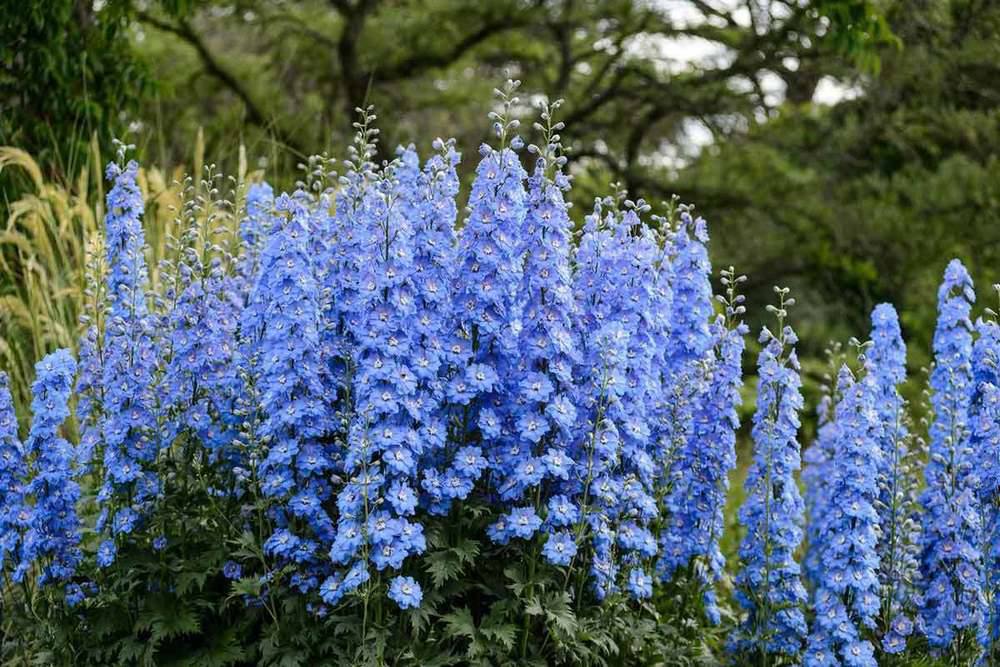
Tall Delphinium
Delphinium elatum
Majestic perennial with stately flower spikes up to 200 cm tall, adorned with dense racemes of blue, purple, white or pink flowers. Popular for cutting and tall garden arrangements. Requires staking, bright location and well-enriched soil. Warning: all parts of the plant, especially the seeds, are poisonous (diterpene alkaloids) — never eat any part, keep away from children, cats, dogs and horses, and wear gloves when handling.
Stages of growth
Calendar in the garden
How to care
Moderate watering, soil slightly moist
- •Protect from strong winds
- •Ensure good drainage
- •Prepare support structures in advance
Difficulty growing
Requires basic knowledge and regular care.
Growing conditions
Nice neighbors.
Soil preparation
Planting parameters
💡Preparation Tips
- •Dig the bed to a depth of 25-30 cm
- •Add compost or humus (5-10 kg per m²)
- •If necessary, adjust pH with lime or peat
Frequently asked questions(5)
Plant seedlings after the last frost in late April–early May, or sow seeds directly into the garden in March–April. Seeds need light to germinate and should be lightly pressed into the soil. Space plants 60–90 cm apart.
Main causes: insufficient light (needs at least 6 hours of direct sun), acidic or poor soil (requires neutral, well-fertilized soil), excess nitrogen (promotes foliage at the expense of flowers), or young plant (first bloom sometimes occurs in the second year).
Insert a stake or bamboo pole next to the plant 20–30 cm deep at planting time. As growth progresses, tie the stem with soft twine in 2–3 places. For tall varieties, use a special flower cage or three stakes around the clump.
Cut off spent flower spikes, leaving the upper leaf. This encourages new flowering stems to develop. After the first bloom wave, cut the stem at 30 cm height and feed — a second bloom may occur in late summer.
Yes, all parts of the plant contain toxins and are dangerous to children and pets. Always wear gloves when cutting and planting, avoid contact with the mouth, and keep seeds out of reach.
Role in the garden
Benefit information coming soon
Do you like the plant card?
In the application you will receive personal tasks and a plan for the season specifically for your garden.


