
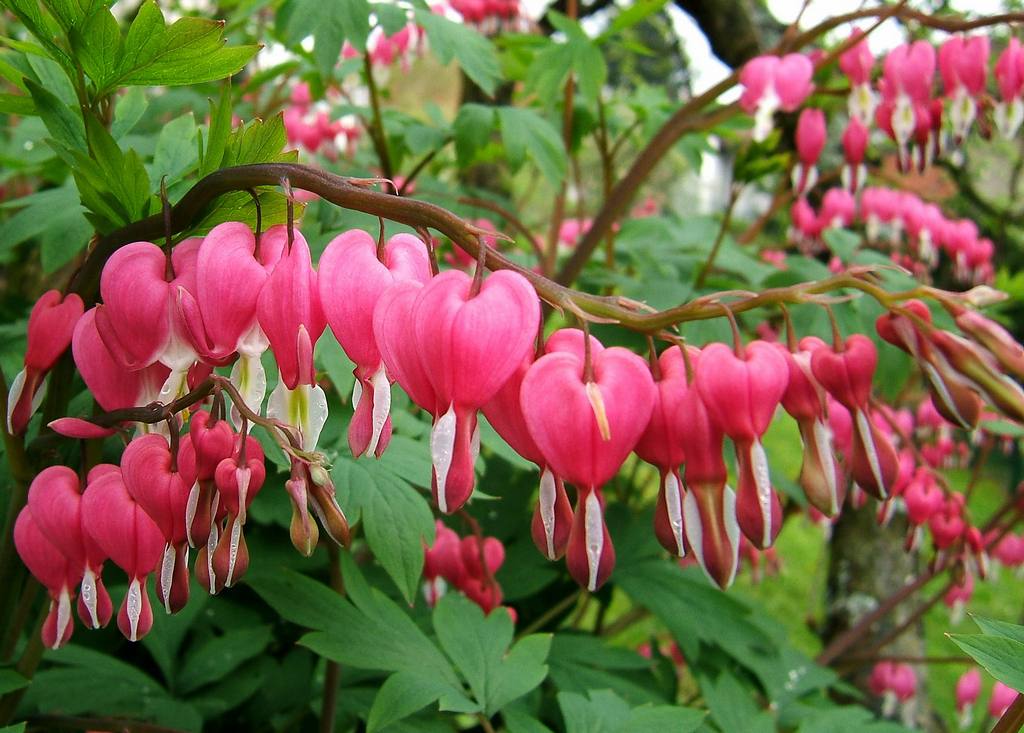
Bleeding Heart
Dicentra spectabilis
A perennial with delicate, feathery foliage and elegant heart-shaped flowers in pink or white. Blooms in late spring to early summer. Shade-tolerant and prefers moist soils.
Stages of growth
Calendar in the garden
How to care
Prepare hole with enriched soil
Store rhizomes in cool, moist place until planting
- •Choose a partially shaded location
- •Prepare soil with compost or peat added
- •Ensure good drainage
Difficulty growing
Suitable for beginners. Minimal maintenance, error-resistant.
Growing conditions
Nice neighbors.
Soil preparation
Planting parameters
💡Preparation Tips
- •Dig the bed to a depth of 25-30 cm
- •Add compost or humus (5-10 kg per m²)
- •If necessary, adjust pH with lime or peat
Frequently asked questions(6)
Best planted in early spring (March-April) or early fall (September-October) when soil is still cool. This allows the plant to establish well.
Bleeding heart prefers partial shade or shade. In full sun, leaves may scorch in hot regions. Ideal location is under tree canopy or on the north side of a building.
Bleeding heart loves moist soil. Water regularly every 3-4 days depending on rainfall and temperature. The key is to avoid drying out but also avoid waterlogging.
Fertilize once a month with complex perennial fertilizer from March to June. During blooming, you can use fertilizers with higher phosphorus content.
Bleeding heart is cold hardy (zones 3-9) and tolerates cold well. In winter, mulch around the plant with compost or leaves 5-7 cm. In very cold regions, additional protection is recommended.
Yes, bleeding heart can be easily propagated by rhizome division in fall or very early spring. Each division should have 2-3 buds. This is the best propagation method for cultivars.
Role in the garden
Benefit information coming soon
Do you like the plant card?
In the application you will receive personal tasks and a plan for the season specifically for your garden.


