
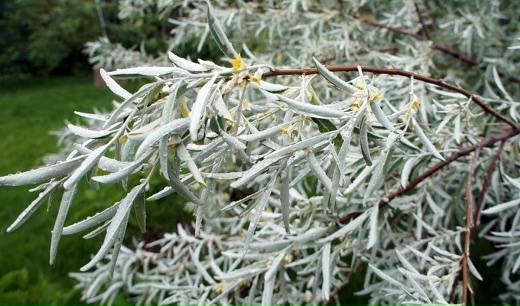
Russian Olive (Oleaster)
Elaeagnus angustifolia
Ornamental deciduous shrub or small tree with silvery-grey leaves and fragrant yellow flowers. Undemanding, drought-tolerant, thrives on poor soils. Produces small yellow-red fruits with silvery coating in late summer.
Stages of growth
Calendar in the garden
How to care
Plant at 2-3 m spacing. Dig a hole 1.5 times larger than the root ball. Drainage is essential.
Water regularly for the first 3-4 weeks, maintaining soil moisture. After establishment, transition to infrequent watering—Russian olive is drought-tolerant.
- •Seedlings require protection from strong winds in the first month
- •Avoid overwatering—excess moisture is more dangerous than drought
- •Add sand to the planting hole for drainage on heavy clay soils
Difficulty growing
Suitable for beginners. Minimal maintenance, error-resistant.
Growing conditions
Soil preparation
Planting parameters
💡Preparation Tips
- •Dig the bed to a depth of 25-30 cm
- •Add compost or humus (5-10 kg per m²)
- •If necessary, adjust pH with lime or peat
Frequently asked questions(5)
The optimal time is early spring (March–April) or autumn (October–November). Spring planting is preferable as it gives more time for rooting.
Russian olive is one of the most drought-tolerant ornamental plants. After establishment (first season), no additional watering is required. It grows well on sandy and poor soils.
Formative pruning is conducted annually in autumn (September–October): remove dry, damaged, and excess branches. Spring sanitizing pruning follows. Russian olive tolerates pruning well and regrows quickly.
Yes, small yellowish-red fruits with a silvery coating form in September, resembling dates. They are edible, sweet-tart, and suitable for jams and compotes. The fruits attract birds.
Yes, Russian olive is winter-hardy to -35°C and survives well in the CIS temperate zone without cover. Mulching the root circle in winter protects the root system.
Role in the garden
Highly decorative with silvery foliage and fragrant flowers; extremely drought and frost-tolerant; thrives on poor soils; produces edible, bird-attracting fruits; minimal maintenance required.
*For reference: the plant is grown primarily as an ornamental.
Do you like the plant card?
In the application you will receive personal tasks and a plan for the season specifically for your garden.


