
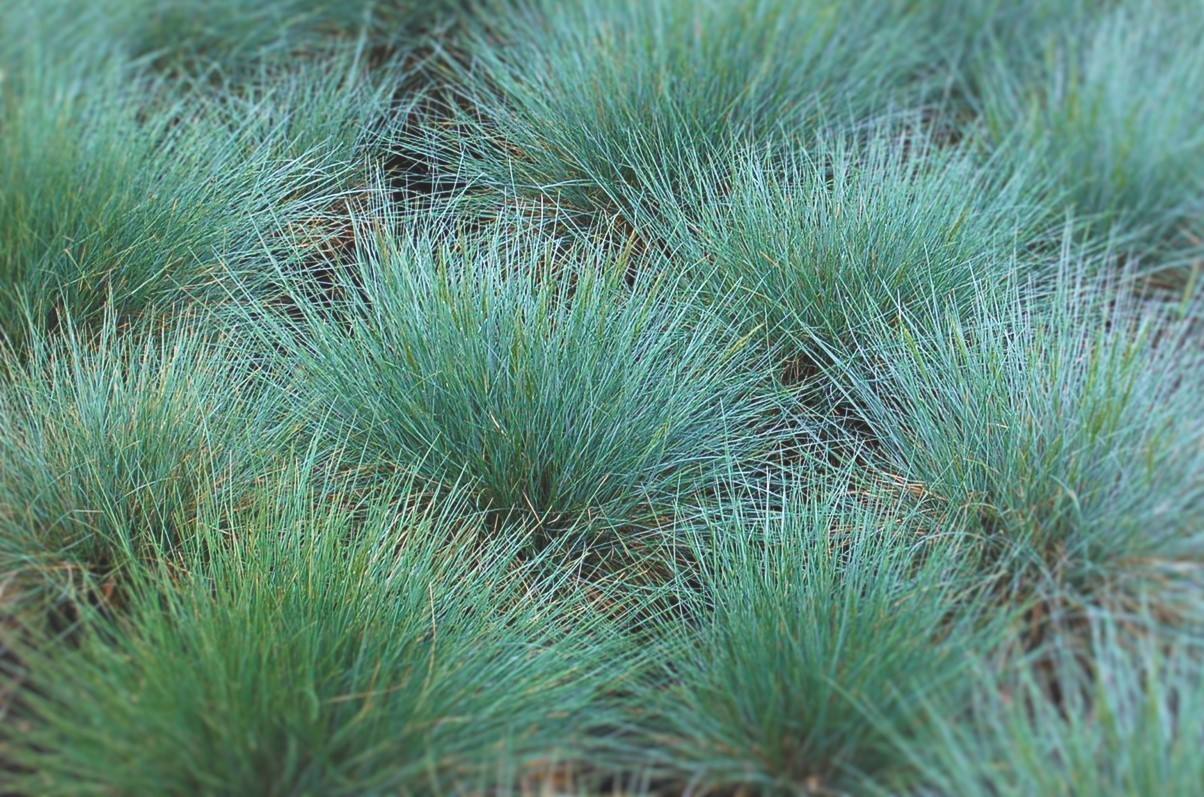
Sheep's Fescue
Festuca ovina
Decorative perennial grass with fine blue-green foliage forming dense tufts. Undemanding, drought-tolerant, ideal for alpine gardens, containers and ornamental compositions. Flowers in summer with delicate panicles.
Stages of growth
Calendar in the garden
How to care
Even moisture during sowing, without overwatering
- •Seeds can be sown directly in the ground or start indoors
- •Seed scarification is recommended before sowing
- •Soil should be moist but not waterlogged
Difficulty growing
Suitable for beginners. Minimal maintenance, error-resistant.
Growing conditions
Soil preparation
Planting parameters
💡Preparation Tips
- •Dig the bed to a depth of 25-30 cm
- •Add compost or humus (5-10 kg per m²)
- •If necessary, adjust pH with lime or peat
Frequently asked questions(5)
Sheep's fescue can be planted in spring (March-April) or fall (September-October). Seeds are sown at 0.5 cm depth in moist, well-drained soil. You can sow directly in the ground or start seedlings indoors 4-6 weeks before transplanting.
Fescue is undemanding and grows in full sun or partial shade. It requires well-drained, preferably poor soil (pH 5.5-7.0). It is drought-tolerant and excess moisture is harmful. It tolerates frosts down to -40°C.
Young plants require moderate watering. Mature plants are drought-tolerant and only need water during prolonged dry periods. Excessive moisture can lead to root rot.
Fescue grows well in poor soils, so fertilizing is rarely needed. Once every 4-5 weeks you can apply a balanced fertilizer with low nitrogen. Excess nitrogen makes the plant loose.
Propagates by seeds and clump division. Seeds are sown in spring or fall. Clump division is done in fall or early spring, dividing overgrown tufts into several parts.
Role in the garden
Benefit information coming soon
Do you like the plant card?
In the application you will receive personal tasks and a plan for the season specifically for your garden.


