
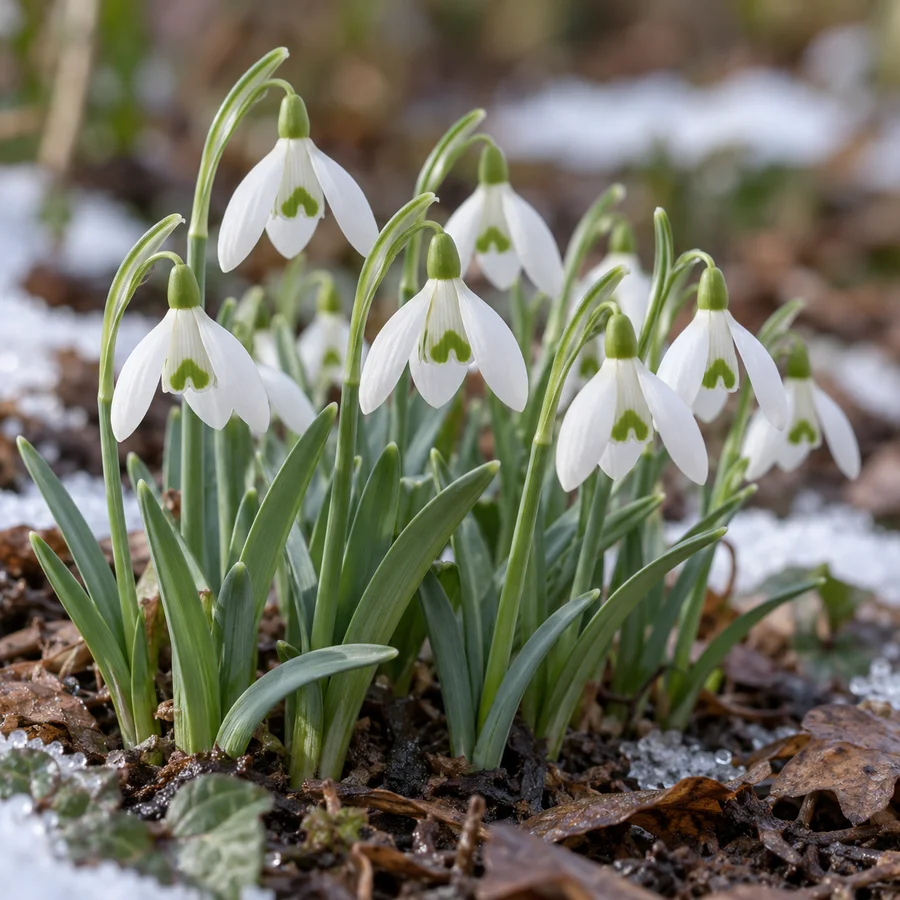
Snowdrop
Galanthus
Snowdrop is an elegant early-spring ephemeral with delicate white drooping flowers appearing in late winter. A hardy, deciduous bulbous perennial requiring minimal care, perfect for creating carpets in continuous-bloom gardens. Propagates readily via offsets and self-seeding. Warning: all parts of the plant are poisonous, especially the bulbs (the alkaloids lycorine and galantamine) — never eat any part, and keep it away from children, cats and dogs; bulbs are easily mistaken for small onions.
Stages of growth
Calendar in the garden
How to care
Plant bulbs 8–10 cm deep (measured from base), spaced 7–10 cm apart, in well-draining soil.
Plant from September to November. Lightly moisten soil at planting time if it is dry.
- •Choose healthy, firm bulbs without spots or damage
- •Prepare a site with good aeration; avoid waterlogging
- •If soil is poor, add compost before planting
Difficulty growing
Suitable for beginners. Minimal maintenance, error-resistant.
Growing conditions
Nice neighbors.
Soil preparation
Planting parameters
💡Preparation Tips
- •Dig the bed to a depth of 25-30 cm
- •Add compost or humus (5-10 kg per m²)
- •If necessary, adjust pH with lime or peat
Frequently asked questions(5)
Plant bulbs from September to November, 4–6 weeks before the first frost, so they establish roots before winter. Earlier planting promotes better root development. In southern regions, November planting is acceptable.
Yes, they are cold-hardy plants (zones 3–9). Bulbs tolerate frosts down to –30°C under snow or even without it. In severe winters, a mulch layer of leaves or compost 3–5 cm deep is beneficial.
No, snowdrops are perennials. They can remain in the soil for many years, forming beautiful clumps. Dig up only for propagation or replanting to a new location, recommended every 4–5 years.
Mature plants reach 10–15 cm in height with nodding, very elegant flowers. Clump width without division is 15–20 cm, but over time they spread into dense carpets. Ideal for perennial borders and alpine rockeries.
They are the first flowers to bloom after winter (late February to early March), when other plants still sleep. White, elegant blooms can push through snow, creating dramatic contrast. Pairs well with hellebores, primroses, and creeping sedums.
Role in the garden
Benefit information coming soon
Do you like the plant card?
In the application you will receive personal tasks and a plan for the season specifically for your garden.


