
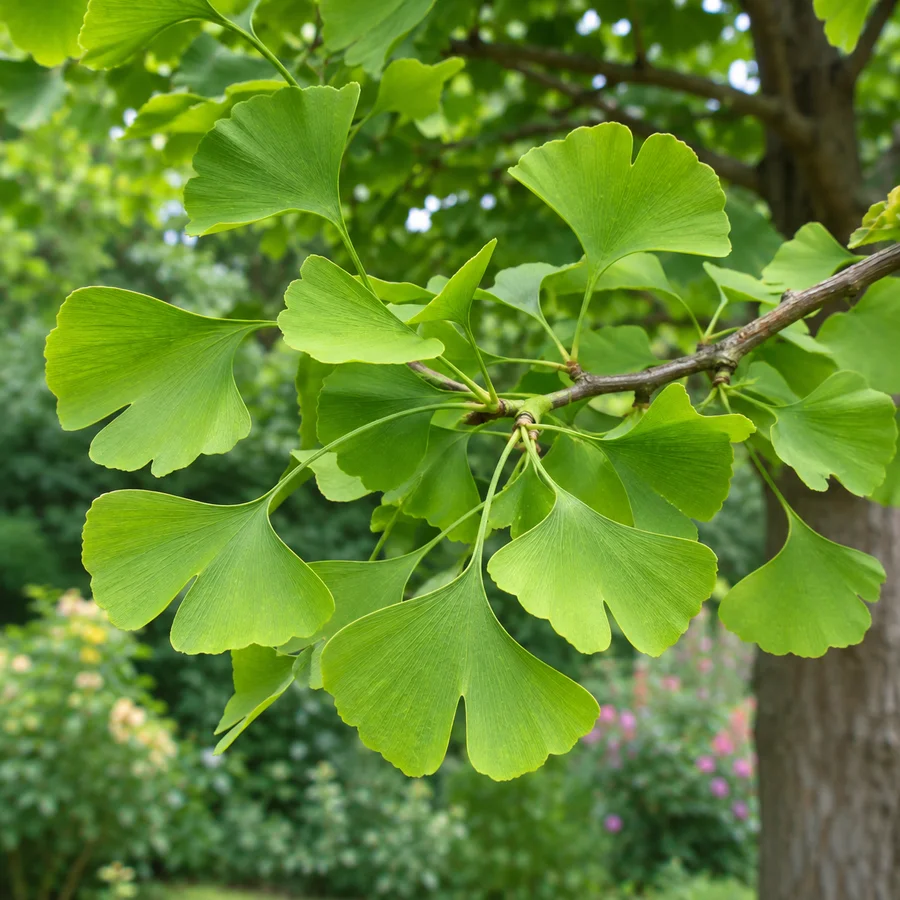
Maidenhair Tree, Ginkgo
Ginkgo biloba
An ancient ornamental tree with unique fan-shaped, two-lobed leaves. In autumn, the foliage turns brilliant golden-yellow. Highly resistant to air pollution, frost, and pests. Slow-growing and long-lived. Warning: raw seeds are poisonous (they contain ginkgotoxin and can cause vomiting and seizures, especially in children and pets), and the fleshy seed coat causes severe contact dermatitis — handle fallen fruits with gloves and keep them away from children, cats and dogs; kernels are eaten only peeled and cooked or roasted, in small amounts.
Stages of growth
Calendar in the garden
How to care
Plant in autumn (October-November) or early spring (March-April). Dig a hole 2 times larger than the root ball. Add sand and compost for drainage.
At planting
compost, aged manure
Abundant watering at planting time, then maintain soil moisture without waterlogging for the first month
- •Choose a location with full sun or light partial shade
- •Avoid wet depressions and areas with water stagnation
- •Stake young trees to prevent wind damage
Difficulty growing
Suitable for beginners. Minimal maintenance, error-resistant.
Growing conditions
Soil preparation
Planting parameters
💡Preparation Tips
- •Dig the bed to a depth of 25-30 cm
- •Add compost or humus (5-10 kg per m²)
- •If necessary, adjust pH with lime or peat
Frequently asked questions(5)
Ginkgo is best planted in early spring (March-April) or autumn (October-November). Avoid planting during peak summer or when temperatures drop below -15°C.
Ginkgo is a slow-growing tree, especially in the first 10-20 years. This is normal and requires no intervention. Over time, growth rate may increase slightly, but the plant remains relatively slow-growing.
Ginkgo foliage turns golden in late autumn, usually in October-November, depending on region and temperature conditions. It is one of the most spectacular autumn displays in the garden.
Ginkgo does not require regular pruning. Remove only broken, diseased, or crossing branches. Perform shaping pruning at a young age to form the crown.
Ginkgo is very cold-hardy and tolerates frost down to -30…-40°C when mature. Young plants in the first 1-2 years should be covered with evergreen branches or burlap for winter.
Role in the garden
Benefit information coming soon
Do you like the plant card?
In the application you will receive personal tasks and a plan for the season specifically for your garden.


