
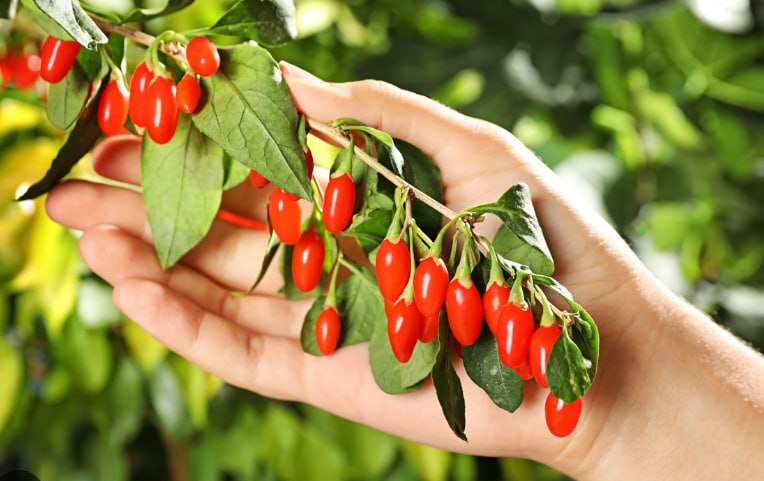
Goji Berry
Lycium barbarum
Goji berry (common wolfberry) — an unpretentious berry shrub with red nutritious fruit. The plant tolerates drought and freezes down to -25°C well, grows quickly and starts fruiting from the second year of life.
Stages of growth
Planting calendar
How to care
Shade the sapling from direct sun for the first days and install a light support.
For the first month water every other day, keeping the soil moist (5-10 l per bush). Excess water causes root rot.
- •Mulch the trunk circle with a 5 cm layer (humus, bark)
- •Remove weak shoots, leaving 3-4 strong ones
- •Watch for pests in the new location
Difficulty growing
Suitable for beginners. Minimal maintenance, error-resistant.
Growing conditions
Nice neighbors.
Soil preparation
Planting parameters
💡Preparation Tips
- •Dig the bed to a depth of 25-30 cm
- •Add compost or humus (5-10 kg per m²)
- •If necessary, adjust pH with lime or peat
Frequently asked questions(5)
The first berries appear in the second year after planting, but only a few. A stable yield comes from the third year; full fruiting is reached at 4-5 years (2-3 kg per bush).
In spring (May-June) — nitrogen fertilizers every 2 weeks (urea 20 g/10 l). In summer (July-August) — phosphorus-potassium (superphosphate 30 g/m², potassium sulfate 20 g/m²). Stop feeding from August so the shoots ripen before winter.
Yes, it is essential. In spring remove dead and damaged branches and shorten last year's shoots by 1/3. In summer after harvest shorten fruited branches by 20-30 cm — this stimulates repeat fruiting.
Mature bushes tolerate down to -25°C and overwinter without cover. Young plants (1-2 years) in regions with frosts below -20°C should be covered with spruce branches or burlap. Remove the cover in spring right after the snow melts.
Yes, but the yield will be lower. The pot should hold at least 15-20 l. More frequent watering and feeding are required. For winter move the pot to a cool room or mulch it deeply.
Benefits and nutrition
Benefit information coming soon
Do you like the plant card?
In the application you will receive personal tasks and a plan for the season specifically for your garden.