
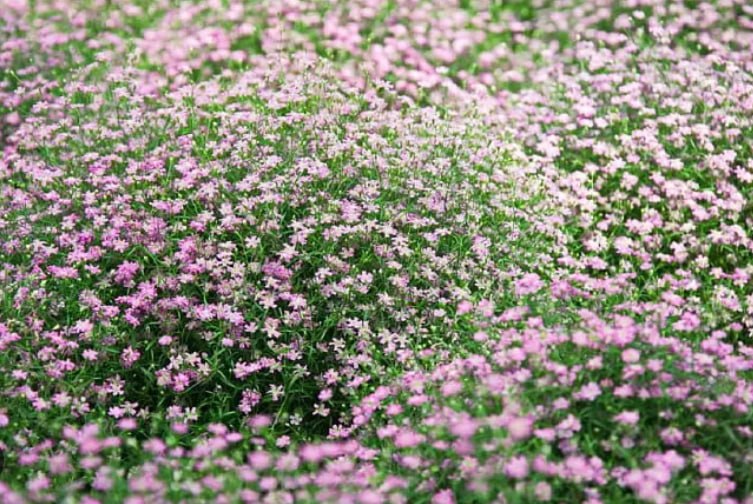
Annual Gypsophila
Gypsophila elegans
Elegant annual plant with tiny white, pink, or red flowers on thin, branching stems. Perfect for bouquets and compositions, undemanding in care. Easily propagated by seeds through direct sowing in soil.
Stages of growth
Calendar in the garden
How to care
Not required
Keep soil slightly moist until seedlings emerge
- •Seeds germinate at 18-20°C temperature
- •Germination takes 7-10 days
- •Avoid overcrowding seedlings for better air circulation
Difficulty growing
Suitable for beginners. Minimal maintenance, error-resistant.
Growing conditions
Nice neighbors.
Soil preparation
Planting parameters
💡Preparation Tips
- •Dig the bed to a depth of 25-30 cm
- •Add compost or humus (5-10 kg per m²)
- •If necessary, adjust pH with lime or peat
Frequently asked questions(5)
Plant gypsophila in open ground in April-June, after the last frost danger and when soil warms to 10-12°C. You can make several sowings at 2-3 week intervals for continuous summer blooms.
Yes, but gypsophila doesn't like transplanting due to its taproot. If growing seedlings, use peat pellets or pots, sowing 2-3 seeds in each. Transplant with the soil intact, without disturbing the root.
Gypsophila is undemanding: it needs full sun, well-drained soil, regular watering (without overwatering), and fertilizing every 2-3 weeks. Removing spent flowers extends blooming.
Poor blooming may be caused by insufficient light, waterlogged soil, overcrowded planting, or nutrient deficiency. Ensure plenty of sun (at least 6-8 hours), adjust watering, and fertilize with a balanced fertilizer high in phosphorus and potassium.
Gypsophila is an ideal addition to other flowers in bouquets. Cut it when about half the inflorescence is open and half remains in bud. Place in water with flower food to extend bouquet life. You can also dry gypsophila by hanging bunches upside down in a cool, dry place.
Role in the garden
Benefit information coming soon
Do you like the plant card?
In the application you will receive personal tasks and a plan for the season specifically for your garden.