
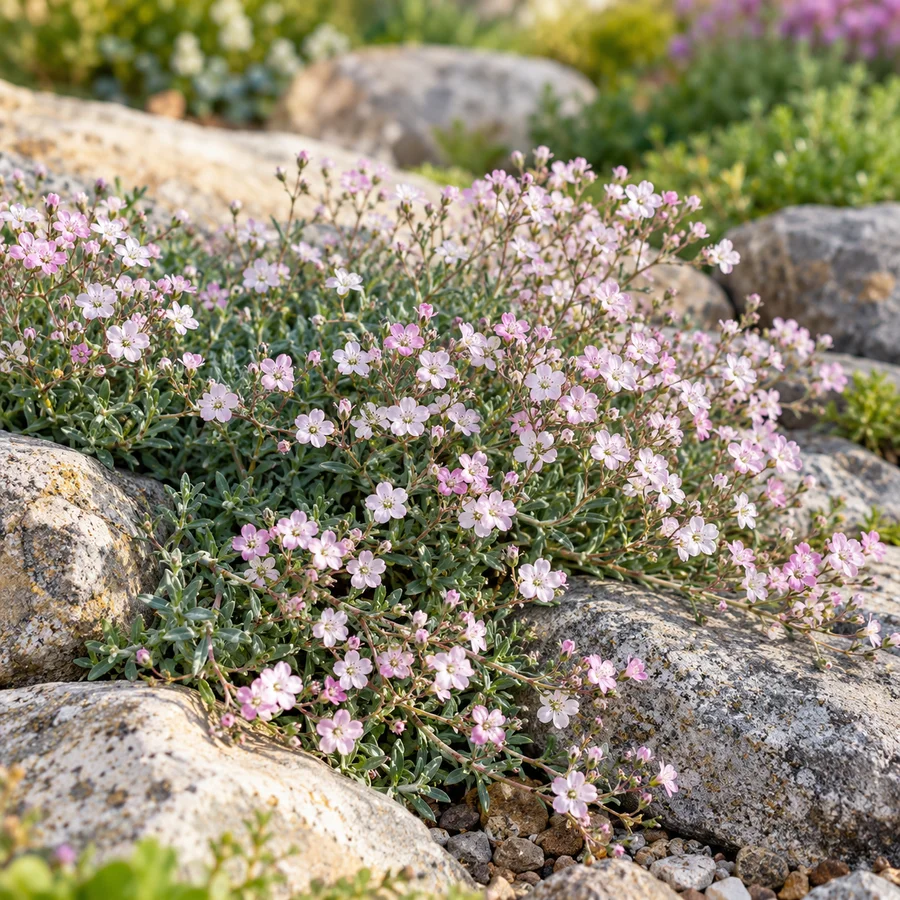
Creeping Gypsophila
Gypsophila repens
A low-growing perennial with thin, branched stems and delicate small flowers in white or pink. Forms a dense mat 15–20 cm tall and blooms profusely in June–July. Unpretentious about soil and drought-tolerant, ideal for alpine rockeries, borders, and hanging baskets. Warning: the plant is not edible — all parts contain saponins and, if eaten, cause irritation of the mouth and digestive tract (vomiting, diarrhoea) in people, cats, dogs and other animals; the sap and dust from dried stems may irritate skin and airways, so keep the plant and cut bouquets away from children and pets.
Stages of growth
Calendar in the garden
How to care
Keep soil moist but not waterlogged; use a spray bottle for gentle watering.
- •Sow seeds in light, well-draining soil (universal or sandy-loam mixture).
- •Cover the seed tray with plastic film to retain moisture until seedlings emerge (7–10 days).
- •After germination, provide bright light (without harsh direct sun); 14–16 hours daily is ideal.
- •Maintain temperature between 18–22°C.
Difficulty growing
Suitable for beginners. Minimal maintenance, error-resistant.
Growing conditions
Nice neighbors.
Soil preparation
Planting parameters
💡Preparation Tips
- •Dig the bed to a depth of 25-30 cm
- •Add compost or humus (5-10 kg per m²)
- •If necessary, adjust pH with lime or peat
Frequently asked questions(5)
Sow seeds from April to May indoors for seedlings, or in late April to early May directly in the garden once frost danger has passed. For flowering in the same year, indoor seeding is preferable.
Insufficient light or excessive nitrogen in the soil can suppress flowering. Plant gypsophila in a sunny location (minimum 4–6 hours of direct sun daily) and avoid over-fertilizing with nitrogen, which promotes leaf growth at the expense of flowers. Ensure the plant receives adequate phosphorus and potassium.
In temperate climates of the CIS region, it is a long-lived perennial (hardy to –35°C, zones 3–9). With good drainage, the plant can live 5–7 years or more. In autumn, cut back the dying stems, leaving the basal rosette intact.
Propagate by seeds (easiest method), plant division (spring or early autumn), or stem cuttings (June–July). Root cuttings in a sand and peat mixture under plastic film at 18–20°C for 2–3 weeks.
Generally no. Thanks to its creeping habit and fine, branching stems, it naturally forms a dense mat. To maintain compactness and abundant flowering, simply remove spent flower clusters and cut back dead stem portions in autumn.
Role in the garden
Benefit information coming soon
Do you like the plant card?
In the application you will receive personal tasks and a plan for the season specifically for your garden.


