
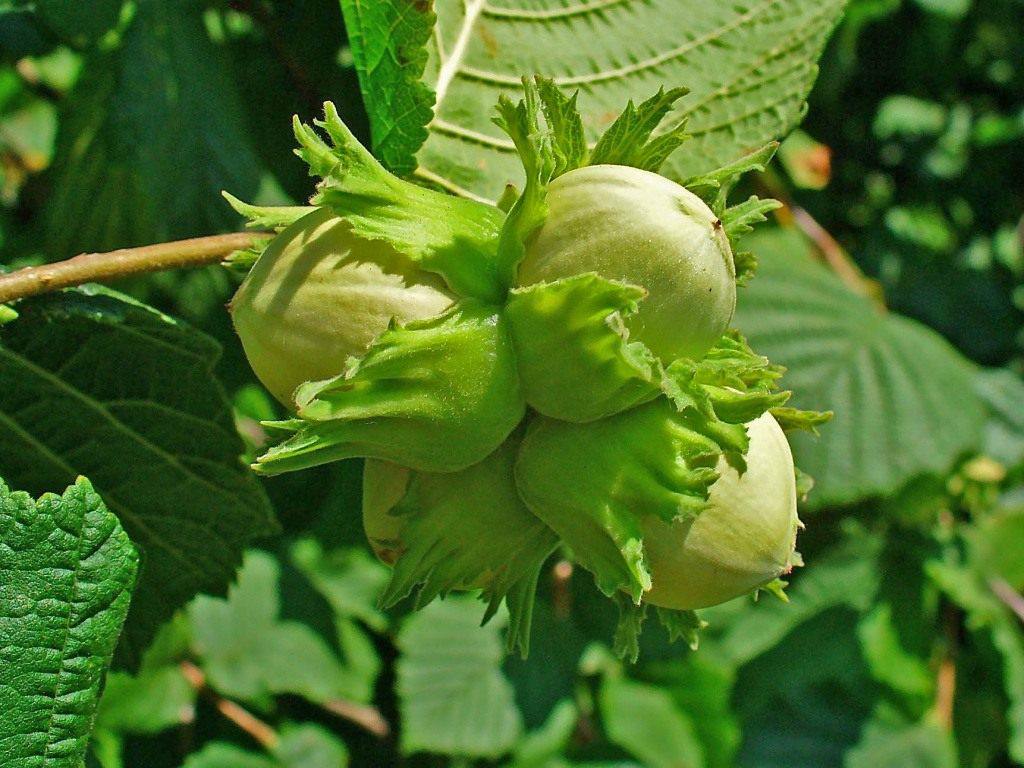
Hazelnut (Filbert)
Corylus avellana
Large nut-bearing shrub or small tree with delicious nuts. Unpretentious, hardy and long-lived (can produce for 50+ years). Decorative in spring during catkin bloom and in autumn.
Stages of growth
Planting calendar
How to care
Do not transplant in the first year if purchased with a closed root system. Keep in the same pot/container until autumn or the following spring.
Water twice a week for the first 2–3 weeks, then switch to moderate watering as the top soil layer dries. Do not let the root ball dry out completely, but avoid waterlogging.
- •When planting in autumn, add 1–2 buckets of compost and humus to the planting hole to improve rooting
- •In spring, mulch the root circle with a 5–7 cm layer (sawdust, compost, peat)
- •If planted in early spring, protect the young bush from sunburn with shading fabric in April–May
- •Install a support stake to prevent wind damage
Difficulty growing
Suitable for beginners. Minimal maintenance, error-resistant.
Growing conditions
Soil preparation
Planting parameters
💡Preparation Tips
- •Dig the bed to a depth of 25-30 cm
- •Add compost or humus (5-10 kg per m²)
- •If necessary, adjust pH with lime or peat
Frequently asked questions(5)
Plant in autumn (September–November) or early spring (March–April). Choose a sunny site with fertile, well-drained soil, pH 6.0–7.5. Prepare a planting hole 60×60×60 cm, add 1–2 buckets of compost, superphosphate, and potassium salt. Do not bury the root collar deeper than 3–5 cm. After planting, water well (20–30 L) and mulch (5–7 cm). Space bushes 3–4 m apart.
Main causes: 1) Lack of pollinator — hazelnut needs another bush of a different variety for cross-pollination. Without one, few or no nuts set. 2) Young bush age — fruiting begins at year 3–4. 3) Incorrect pruning — flower buds develop on last year's shoots; heavy spring pruning before bloom removes them. 4) Poor conditions (insufficient sun, poor soil, summer drought). Solution: plant a second pollinator bush nearby, prune only in September, improve care (watering, feeding, mulching).
Formative pruning: in early spring (March, before bloom) leave 8–12 main trunks, remove thin inner branches, damaged shoots, and basal shoots. Sanitary pruning: in September–October after harvest, remove diseased, broken, and thickening branches. Rejuvenation pruning of old bushes (15–20+ years): cut 2–3 old trunks to ground level each year; fully renew the bush in 4–5 years. Remove basal shoots throughout the year as they appear.
In summer (May–August) hazelnut needs: 1) Regular watering — 1–2 times per week in dry weather, 20–25 L per bush; in very dry summers, crown misting may be necessary. 2) Feeding — 2–3 times with complex fertilizer (May), organic matter (June), and potassium fertilizers (July–August). 3) Remove basal shoots as they appear. 4) Mulch with 5–7 cm layer to retain moisture and suppress weeds. 5) If needed, thin the crown (remove some thin shoots inside) for better ventilation.
After harvest, dry nuts for 2–3 weeks in the sun or in a ventilated room at 15–20°C, spread in a single layer. Then transfer to paper or cloth bags and store in a cool dry place (basement, cellar, pantry) at 40–60% humidity and 5–10°C. With proper storage, nuts retain quality for up to 1 year. Ensure good ventilation and protection from rodents and pests.
Benefits and nutrition
Large ornamental shrub or small tree with productive nut-bearing capacity. Extremely hardy, long-lived (50+ years), and requires minimal maintenance. Excellent spring ornament with catkin flowers and attractive autumn foliage.
*The information is for informational purposes only and does not constitute medical advice.
Do you like the plant card?
In the application you will receive personal tasks and a plan for the season specifically for your garden.


