
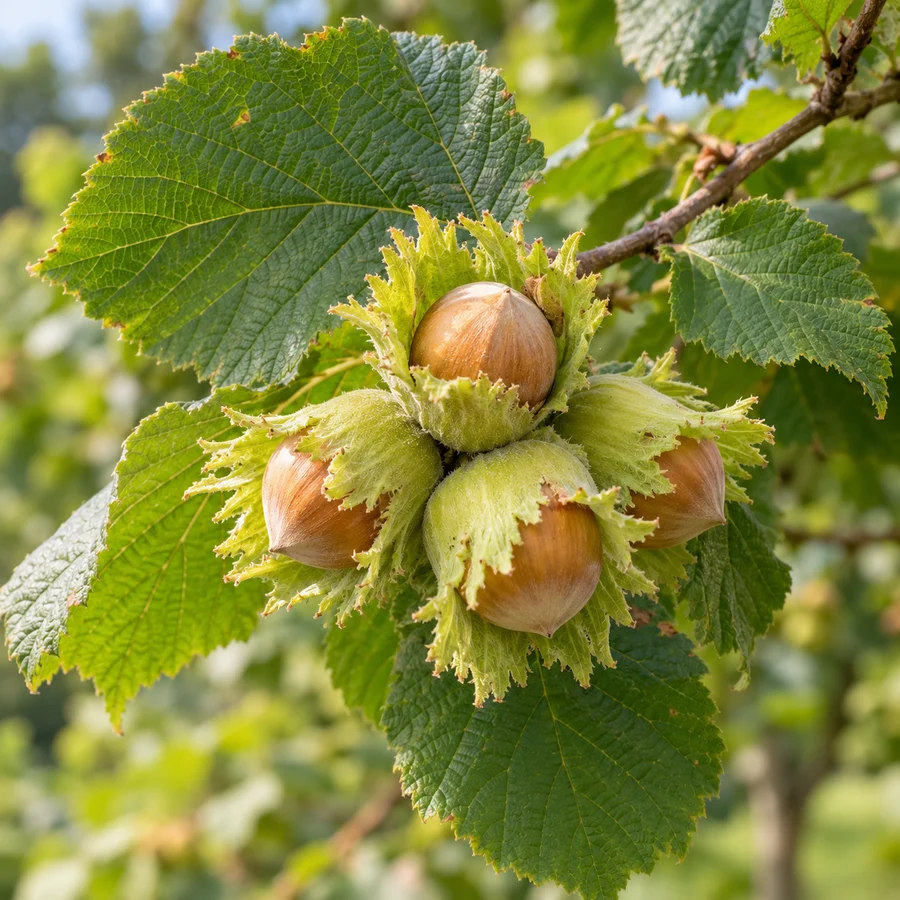
Hazelnut, European Hazel
Corylus avellana
A fruiting shrub producing tasty hazelnuts. Undemanding of soil, winter-hardy, grows quickly. Bears fruit from the 4th–5th year. Nuts ripen in August–September. Requires pollinators for fruit set. Hazelnuts are a potent food allergen: do not eat them if you have a nut allergy.
Stages of growth
Planting calendar
How to care
Once at planting in the hole
Compound mineral fertilizer
Abundant watering at planting, then as the top 5 cm of soil dries
- •Prepare a hole 60×60×60 cm, add compost and wood ash
- •Plant the sapling in spring (March–April) or autumn (October–November)
- •Keep the root collar at soil level, do not bury it
- •After planting, mulch the tree circle with sawdust or compost
Difficulty growing
Requires basic knowledge and regular care.
Growing conditions
Nice neighbors.
Soil preparation
Planting parameters
💡Preparation Tips
- •Dig the bed to a depth of 25-30 cm
- •Add compost or humus (5-10 kg per m²)
- •If necessary, adjust pH with lime or peat
Frequently asked questions(5)
Hazelnut begins producing nuts in the 4th–5th year of bush life. Yield increases gradually; maximum productivity occurs by 10–12 years.
Yes. Hazelnut is self-sterile; you need two or more different varieties flowering simultaneously. Best companions: Beloberezskaya, Pervenets, Tambovskiy Ranniy. Space bushes no more than 5–6 m apart.
Nuts are harvested in August–September, when the yellow-brown husk begins to crack and unfold. Nuts fall on their own or are knocked down by shaking. Dry in the air for 2–3 weeks, then store at humidity ≤15°.
Undemanding. Needs watering during drought (2–3 times per month in summer), annual pruning to shape the bush, feeding in spring and autumn, mulching of the tree circle. Pest protection (hazelnut weevil) in May with insecticide treatment.
Form a young bush by leaving 5–8 main shoots; remove old branches. Prune in early spring (March) or after flowering (April), removing broken, overcrowded and old shoots. Rejuvenate an adult bush by gradually cutting some old branches (no more than ⅓ per year).
Benefits and nutrition
Benefit information coming soon
Do you like the plant card?
In the application you will receive personal tasks and a plan for the season specifically for your garden.


