
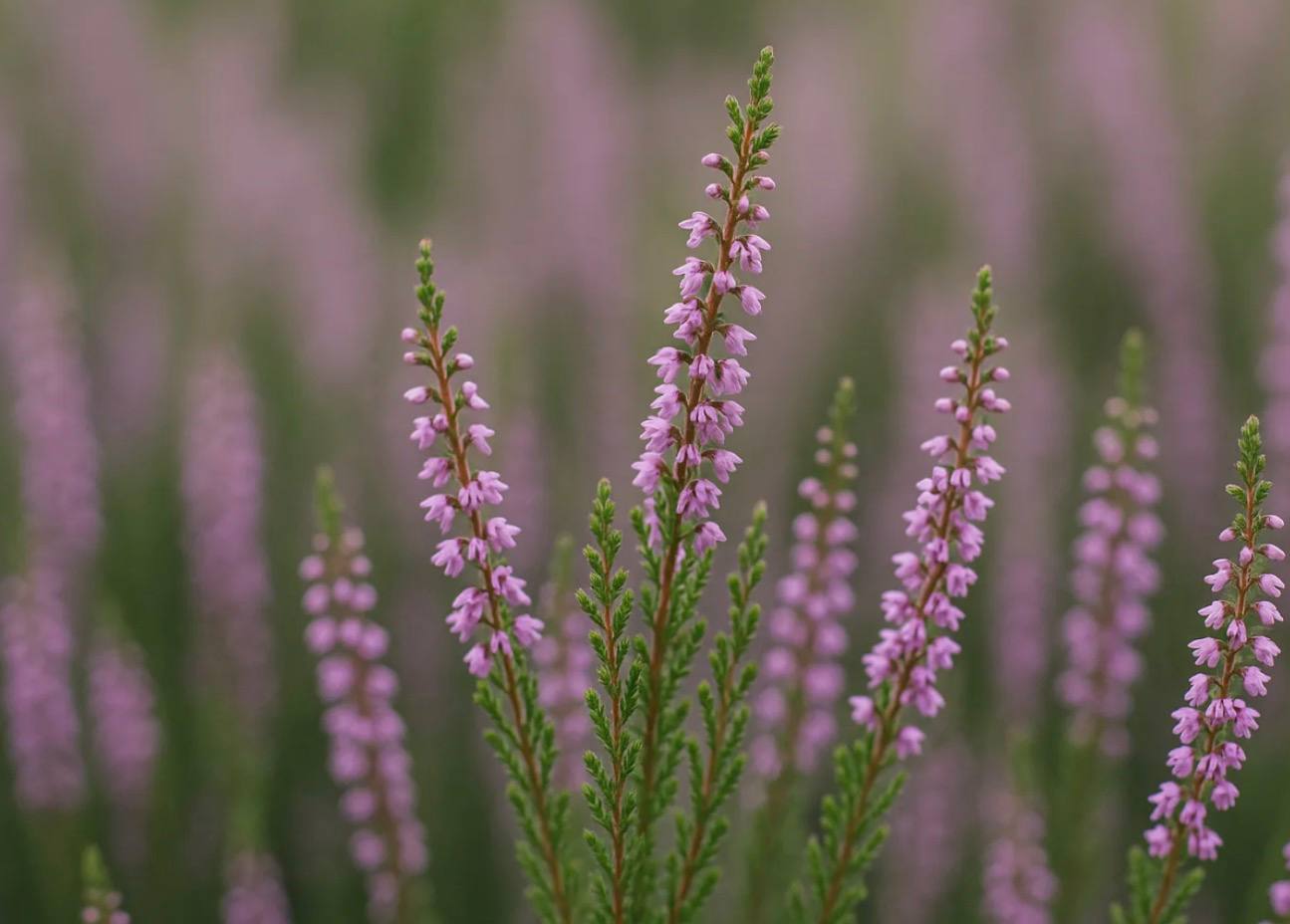
Heather
Calluna vulgaris
Heather is a low evergreen shrub with tiny needle-like foliage and delicate bell-shaped flowers. It blooms from July to October, attracting bees and bumblebees. It prefers acidic soils and well-drained sandy sites in full sun.
Stages of growth
Calendar in the garden
How to care
Plant at root-ball level in a 30×30 cm hole filled with a mix of acidic sphagnum peat, sand and pine litter (3:1:1). Soak the root ball in water for 10-15 minutes before planting — a dried-out peat ball is almost impossible to re-wet.
After planting, water generously (10-15 l of soft water), then every 2-3 days for the first month — the root ball must never dry out.
- •Choose a sunny spot with light, sandy soil
- •Check acidity: heather needs pH 4.5-5.5 — on neutral soil, completely replace the soil in the hole with acidic peat
- •Mulch the planting with pine bark or peat, 5 cm deep
- •Buy only container-grown plants: heather lives in symbiosis with a mycorrhizal fungus and cannot tolerate bare roots
Difficulty growing
Requires basic knowledge and regular care.
Growing conditions
Soil preparation
Planting parameters
💡Preparation Tips
- •Dig the bed to a depth of 25-30 cm
- •Add compost or humus (5-10 kg per m²)
- •If necessary, adjust pH with lime or peat
Frequently asked questions(5)
Plant heather in April-May or September-October in full sun. Dig a hole slightly deeper than the root ball and fill it with a mix of acidic peat and sand. Soak the root ball before planting. Water abundantly after planting. Space bushes 40-60 cm apart.
Heather requires acidic soil (pH 4.5-5.5), full sun and good drainage. On clay or alkaline soils the plant dies. If your soil is neutral, completely replace the soil in the planting hole with sphagnum peat mixed with sand and conifer litter.
Heather prefers moist but not waterlogged soil. Water regularly during the growing season (every 2-3 days in heat), especially in the first year. Mulching with peat or pine bark helps retain moisture and maintain soil acidity.
Heather does not need frequent feeding. Apply fertilizer for rhododendrons and ericaceous (acid-loving) plants 1-2 times per season — in April and June. Avoid manure and ash — they raise soil pH. Peat and conifer-litter mulch already acidify and enrich the soil.
Heather is frost-hardy (down to -30°), but in snowless frosty winters young plants can be damaged. In regions colder than -25°, cover the base with 10 cm of peat or sawdust and shield with spruce branches or fleece. Mature bushes usually overwinter under snow without protection.
Role in the garden
Benefit information coming soon
Do you like the plant card?
In the application you will receive personal tasks and a plan for the season specifically for your garden.