
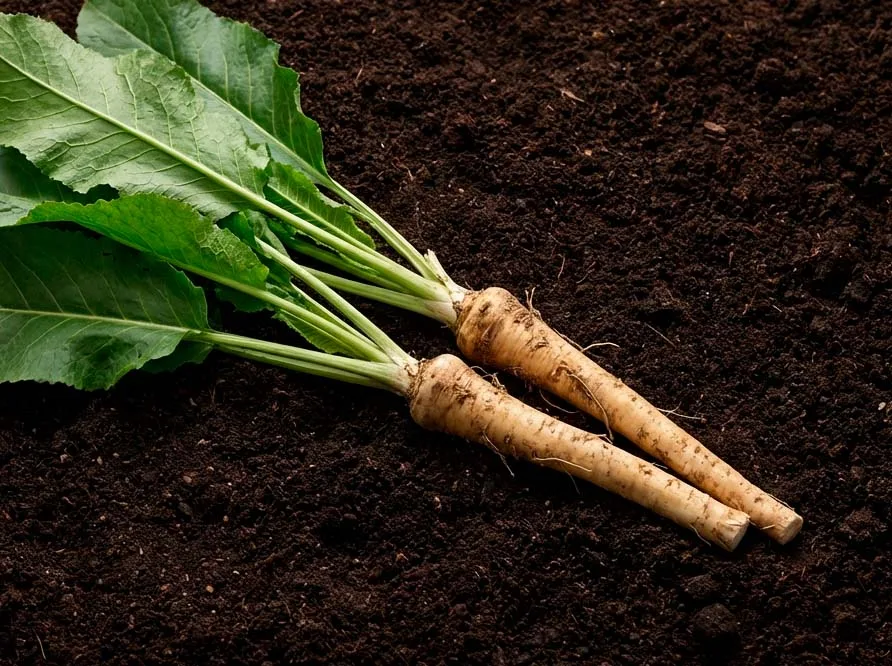
Armoracia rusticana
Armoracia rusticana
Frost-resistant perennial with burning roots; For smooth rhizomes, cutting preparation and formation are important.
Stages of growth
Planting calendar
How to care
- •Use lateral roots 12–15 cm long, finger thick
- •Before planting, be sure to prepare planting material
Difficulty growing
Requires basic knowledge and regular care.
Growing conditions
Nice neighbors.
Soil preparation
Planting parameters
💡Preparation Tips
- •Dig the bed to a depth of 25-30 cm
- •Add compost or humus (5-10 kg per m²)
- •If necessary, adjust pH with lime or peat
Frequently asked questions(8)
Horseradish is planted in open ground in April–September. Optimal temperature for growth: Tolerates cold, prefers moderately warm weather. Sowing depth: Lower end 12–15 cm, upper end 3–5 cm from the surface (planting at 45°). Distance between plants: 35–40 cm in a row.
Horseradish requires regular watering, especially during the period of active growth and fruit formation. Water with warm water at the root, avoiding getting on the leaves. Lighting conditions: full sun. In hot weather, watering is increased; in cool weather, watering is reduced. Mulching helps retain moisture in the soil.
Horseradish grows best in fertile soils. Optimal acidity (pH): 6.0-7.0. Before planting, it is recommended to add compost or humus. Planting pattern: 35–40 cm in a row. Good drainage is important to prevent water stagnation.
Horseradish grows well next to: potatoes. Proper proximity helps protect against pests and improve yields.
Horseradish is harvested in October–November. Regular collection stimulates the formation of new fruits. Do not overexpose the crop in the garden - this reduces the overall yield and quality.
Horseradish is of average difficulty in growing. If you follow the basic rules of agricultural technology, it gives a good harvest. Suitable for gardeners with basic experience.
The main problems when growing horseradish: fungal diseases (powdery mildew, late blight), aphids, spider mites. For prevention, observe crop rotation (do not plant horseradish in one place for 2 years in a row), provide good ventilation, and water at the root. At the first signs of illness, use biological products (Fitosporin, Trichodermin).
The harvested horseradish is stored in a cool, dark place. Before storing, sort them - use damaged fruits first. Optimal storage temperature: 2–5°C at 85–90% humidity. Under the right conditions, horseradish stays fresh for several weeks.
Benefits and nutrition
Contains essential oils, vitamin C and potassium, sodium and calcium salts; stimulates digestion and has an antimicrobial effect.
*The information is for informational purposes only and does not constitute medical advice.
Do you like the plant card?
In the application you will receive personal tasks and a plan for the season specifically for your garden.