
Hydrangea
Hydrangea
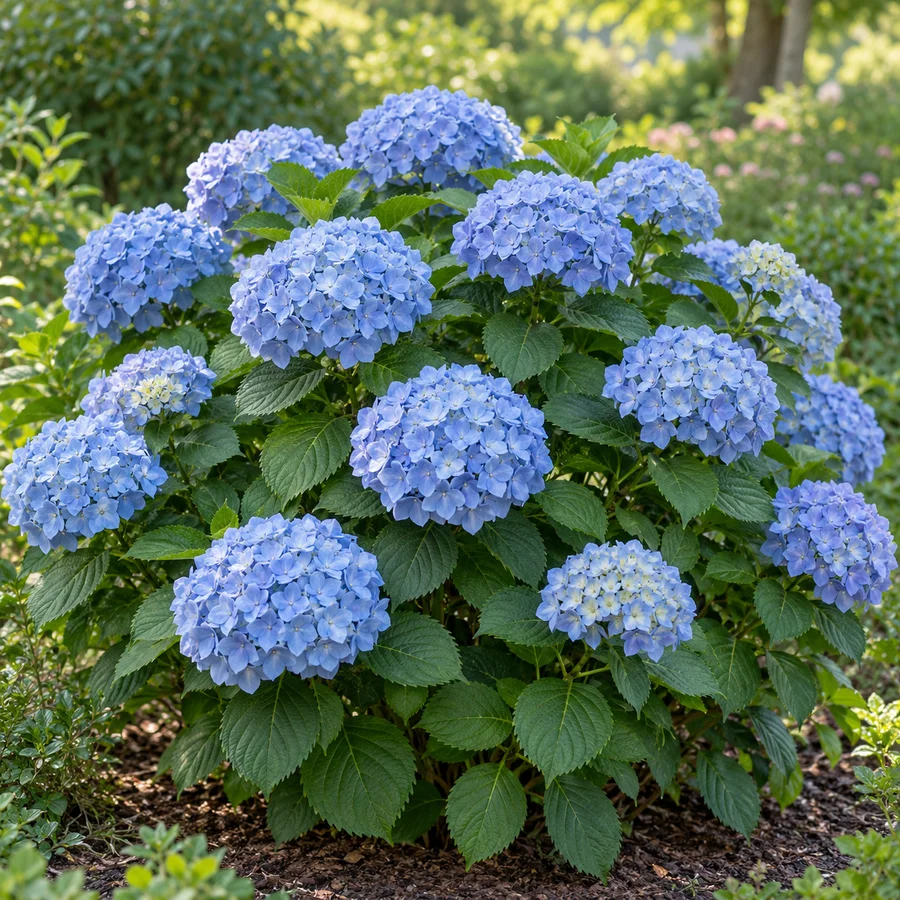
A deciduous ornamental shrub with large, showy flower clusters that change colour depending on soil pH. In acidic soil, flowers are blue; in neutral soil, pink or purple; in alkaline soil, red. Prefers partial shade, moist soil, and protection from strong winds. Blooms from July to September and attracts bees and bumblebees. Warning: all parts of hydrangea (leaves, flowers, shoots) are poisonous — they contain cyanogenic glycosides; never eat them or brew them as tea, and keep the plant away from children, cats, dogs and horses.
Stages of growth
Calendar in the garden
How to care
Check that the sapling has taken root and inspect the root system. If potted, transplant to permanent location within the first month.
Water daily for the first 2–3 weeks with small amounts, keeping the soil evenly moist. Avoid both drying out and waterlogging.
- •Mulch with peat or wood chips at 5–7 cm depth around the bush
- •Protect young plant from strong winds and afternoon sun
- •Add organic matter to planting hole (compost, well-rotted manure)
Difficulty growing
Requires basic knowledge and regular care.
Growing conditions
Nice neighbors.
Unwanted Neighbors
Soil preparation
Planting parameters
💡Preparation Tips
- •Dig the bed to a depth of 25-30 cm
- •Add compost or humus (5-10 kg per m²)
- •If necessary, adjust pH with lime or peat
Frequently asked questions(5)
Plant hydrangea in early spring (April) or autumn (September–October). Choose a location in partial shade, sheltered from strong winds. Make a planting hole 50×50×50 cm, add organic matter and drainage to the bottom. Position the sapling so the root collar is level with the soil. Water generously and mulch with peat.
Possible causes: too much sun (needs partial shade 2–4 hours daily), insufficient feeding (especially phosphorus and potassium), wrong pruning timing (prune only after flowering), winter frost damage to buds (protect in winter), young bush age (flowering begins in year 2–3). Check watering schedule and soil pH.
Flower colour depends on soil pH: acidic soil (pH < 6) → blue flowers, neutral (pH 6–7) → pink or purple, alkaline (pH > 7) → red. For blue flowers apply aluminium sulphate, for pink apply lime. Changes occur gradually over 1–2 seasons.
Main structural pruning is done in autumn (November) or early spring (March). Remove weak, diseased and crossing branches, leaving strong canes 30–50 cm long. In spring remove frost-damaged tips. In summer pinch back tips for branching and remove spent flowers (deadheading).
In late October–November, prune the bush removing diseased and weak shoots. Mulch the base with peat, compost or leaf litter to 10–15 cm depth. In regions with harsh winters (below -25°) cover the bush with spunbond, burlap or protective frame. In spring gradually clear mulch once frost risk has passed.
Role in the garden
Showy ornamental shrub with large flower clusters that change colour depending on soil pH. On acidic soil flowers are blue, on neutral soil pink or purple, on alkaline soil red. Prefers partial shade, moist soil and wind protection. Blooms July to September, attracts bees and bumblebees. Caution: all parts of hydrangea (leaves, flowers, stems) are toxic—they contain cyanogenic glycosides; do not use for food or tea, keep away from children, cats, dogs and horses.
*For reference: the plant is grown primarily as an ornamental.
Do you like the plant card?
In the application you will receive personal tasks and a plan for the season specifically for your garden.


