
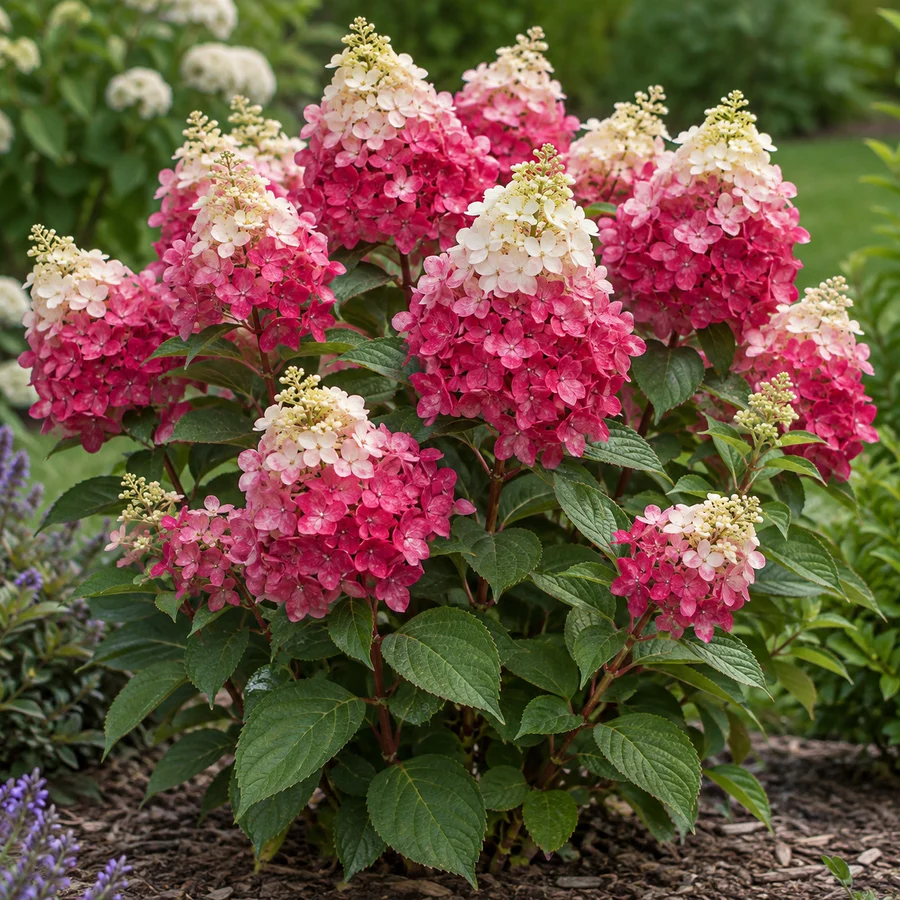
Panicle Hydrangea 'Samarskaya Lidiya'
Hydrangea paniculata 'Samarskaya Lidiya'
Ornamental shrub with paniculate flower clusters blooming from July to September. Flowers start white or cream-colored, then gradually turn pink, and in autumn become deep maroon. The 'Samarskaya Lidiya' cultivar is distinguished by abundant flowering and compact shrub form, reaching 1.5–2 m in height. Hardy to –35°C, grows well in the temperate zone of the CIS. Warning: all parts of hydrangea are toxic if eaten (cyanogenic glycosides) — dangerous for people, cats, dogs and horses; never use it as food and keep it away from children and pets.
Stages of growth
Calendar in the garden
How to care
Water abundantly after planting, then maintain soil moisture for the first 2 weeks
- •Planting hole should be twice as wide as the root ball
- •Add peat, compost and fertilizer for acid-loving plants to the bottom of the hole
- •Mulch the root zone with peat to a depth of 5–7 cm
Difficulty growing
Suitable for beginners. Minimal maintenance, error-resistant.
Growing conditions
Soil preparation
Planting parameters
💡Preparation Tips
- •Dig the bed to a depth of 25-30 cm
- •Add compost or humus (5-10 kg per m²)
- •If necessary, adjust pH with lime or peat
Frequently asked questions(5)
Prune in early spring (March–April) before buds break, leaving 20–30 cm of stem above ground. This promotes strong shoot development and abundant flowering. In summer, remove spent or damaged branches.
Main causes: insufficient light (needs at least 6 hours of sun), dry soil, nutrient deficiency (especially phosphorus and potassium), or overly aggressive pruning the previous year. Also check that the bush hasn't been frost-damaged (panicle hydrangea is quite hardy).
Hydrangea prefers acidic to neutral soil (pH 5.5–7.0), rich in organic matter, loose and well-drained. Add peat, compost, and leaf mold when planting. Avoid waterlogging and alkaline soils.
Panicle hydrangea is frost-hardy to –35°C. In autumn, mound soil or peat around the base to 15–20 cm. In severe winters, young plants can be covered with evergreen branches or burlap. In spring, uncover and remove mulch after soil thaws.
Yes, in June–July cut semi-woody cuttings 10–12 cm long with two nodes each. Treat the lower cut with rooting hormone (like Rootone) and plant in moist substrate (peat + sand 1:1) under plastic. Rooting occurs in 3–4 weeks.
Role in the garden
A beautiful deciduous shrub with pyramidal panicles that bloom from July to September. Flowers emerge white or cream and gradually turn pink, deepening to deep magenta by autumn. 'Samarskaya Lidiya' is noted for abundant blooms and compact form, reaching 1.5–2 m tall. Hardy to –35°C, thrives in the temperate zone of the CIS region.
*For reference: the plant is grown primarily as an ornamental.
Do you like the plant card?
In the application you will receive personal tasks and a plan for the season specifically for your garden.


