
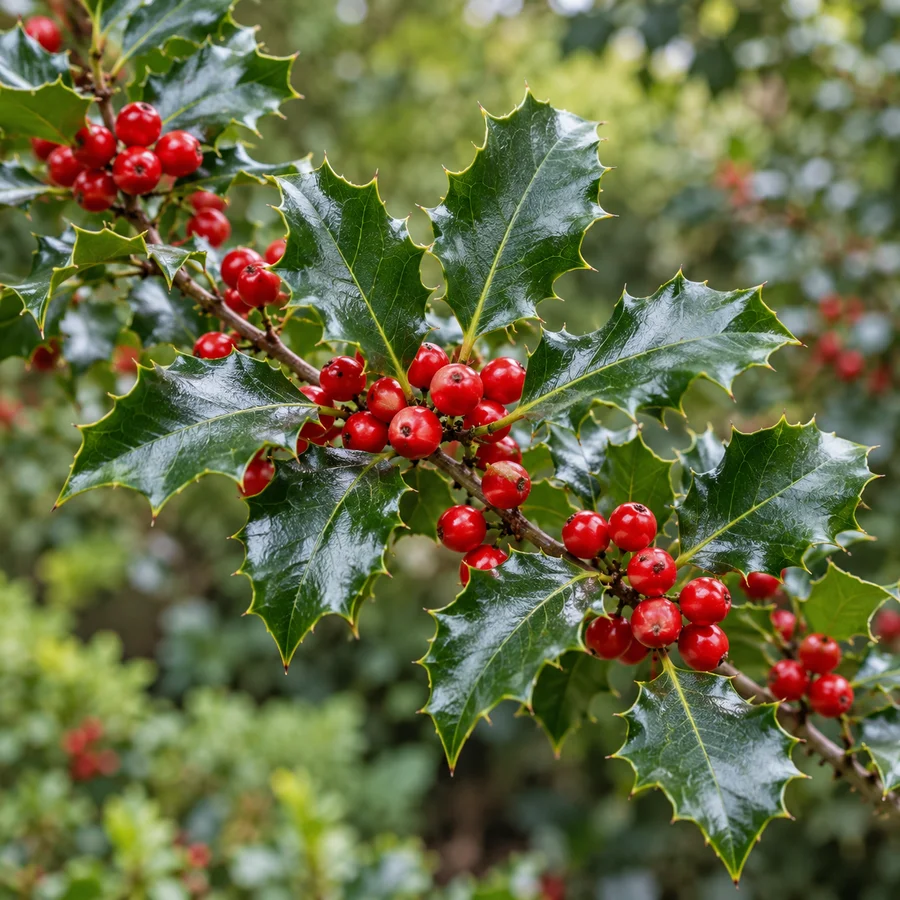
Common Holly
Ilex aquifolium
An evergreen ornamental shrub or small tree 3–8 m tall with dark-green glossy leaves bearing sharp spines and bright red berries. In the temperate zone of the CIS, it requires winter protection and prefers partial shade and moist, well-drained soils. Valued for hedging, topiary, and as a symbol of festive Christmas decoration. Warning: all parts of the plant, especially the red berries and the leaves, are poisonous — they cause vomiting and diarrhoea in children and are toxic to cats, dogs, horses and birds; keep berried branches out of their reach.
Stages of growth
Calendar in the garden
How to care
Abundant watering immediately after planting, then maintaining soil moisture (avoid waterlogging); in dry weather water 2–3 times per week
- •Spread a mulch layer (peat, fallen leaves) 5–8 cm thick around the base to retain moisture
- •In the first year protect from winds with spunbond or evergreen branch shelter
- •Do not fertilise in the first month (nutrients from planting pit)
Difficulty growing
Requires basic knowledge and regular care.
Growing conditions
Soil preparation
Planting parameters
💡Preparation Tips
- •Dig the bed to a depth of 25-30 cm
- •Add compost or humus (5-10 kg per m²)
- •If necessary, adjust pH with lime or peat
Frequently asked questions(5)
The best time is early spring (March–April) or autumn (September–October). Choose a location in partial shade, protected from cold winds. The planting hole should be 1.5–2 times the size of the rootball; place drainage material (gravel, sand) at the bottom, then a mix of peat and garden soil. Do not break up the rootball. The root collar remains at soil level. Water abundantly and mulch with peat or leaves (5–8 cm).
Berries appear only on female plants. Pollination requires a male bush nearby (approximately 20–30 m distance; bees and wind pollinate). If the male is too far away, berry set may be weak. In hedges, plant roughly 1 male for every 8–10 females. Weak berry set can also result from poor nutrition or insufficient moisture during flowering (May–June).
Common holly is frost-hardy to zone 6 (temperatures down to –20°C). In the Moscow region and central Russia, mature bushes tolerate normal winters without protection. Young plants (first 3–5 years) should be covered with fleece material to 0.5–1 m height. In severe winters or northern regions (zone 5 and colder), mulch the root collar with peat or leaves to 10 cm thickness.
In CIS conditions, holly is relatively resistant. Main problems: spider mite in dry weather (spray with insecticide), scale insect, and powdery mildew on leaves (in wet springs). Canker can occur from frost damage to bark. Good ventilation, sanitary pruning, and removal of affected branches prevent diseases. If problems are detected, apply fungicide (copper sulphate, topaz).
Holly berries are TOXIC and not suitable for consumption. They contain glycosides and other substances causing vomiting, diarrhoea, and weakness. Not only the berries but also the leaves are toxic, so the plant is dangerous for children and pets — cats, dogs, horses, and birds. The plant is valued solely as an ornamental, with berries used for Christmas decoration in places inaccessible to children and animals.
Role in the garden
Benefit information coming soon
Do you like the plant card?
In the application you will receive personal tasks and a plan for the season specifically for your garden.


